Polestar’s Push for a Carbon Neutral Future with Smarter Growth

Table of Contents
Polestar’s latest Sustainability Report shows what the future of clean mobility could look like. In 2022, the electric carmaker managed to cut relative CO2 emissions per vehicle sold by 8% compared to 2021 and by 13% since 2020, even while scaling production. Deliveries jumped to over 51,000 cars in 2022, up 80% from the year before, yet Polestar kept emissions intensity moving downward.
This progress underscores a bigger point: growth and sustainability do not have to be at odds when innovation and accountability drive decision-making.
Smarter Materials and Cleaner Energy
Polestar has been rethinking how cars are made, not just how they’re powered. One step was switching to aluminum suppliers using hydro-powered smelters, trimming 1.2 tonnes of weight per vehicle while slashing the footprint of high-carbon materials.
Their manufacturing plant for the Polestar 2 now runs entirely on renewable electricity, showing how renewable energy in production can scale alongside EV adoption. The company is also diversifying its lineup with single-motor models, which require fewer resources and energy to build.
For businesses watching Polestar’s journey, this highlights a key lesson: decarbonization isn’t just about the end product but about every step in the value chain.
Blockchain and Ethical Supply Chains
The EV industry often faces criticism over raw material sourcing, especially for cobalt, nickel, and lithium. Polestar is tackling this head-on with blockchain traceability, tracking materials back to their mines to identify and mitigate social and environmental risks.
The company currently traces cobalt, mica, lithium, nickel, leather, and wool. This level of transparency is increasingly demanded by ESG frameworks and is fast becoming a benchmark for sustainable startups across industries.
The Polestar 0 Project
Polestar’s most ambitious goal is clear: build a climate-neutral car by 2030 without relying on offsetting. The Polestar 0 project, supported by more than 20 cross-industry partners, focuses on eliminating CO2 at every stage of design, sourcing, and production.
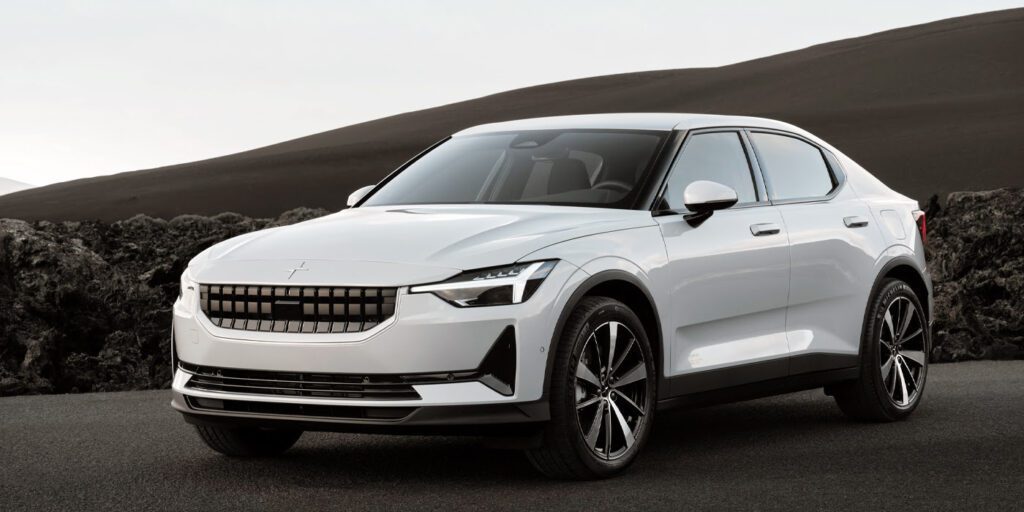
This kind of collaboration could reshape automotive manufacturing. Instead of passing the responsibility onto offset markets, Polestar is working to redesign the entire process. For businesses with similar ESG targets, the approach offers inspiration for how cross-sector partnerships can accelerate progress.
Recognition and Road Ahead
In 2023, Polestar received a low-risk ESG certification score of 17 from Sustainalytics, signaling strong management of sustainability risks. The company has also partnered with Circle Economy and STENA Recycling to measure circularity, aiming to improve raw material efficiency, recyclability, and biodiversity impacts.
The advantage of this recognition is credibility in a market where “greenwashing” accusations are common. However, there are challenges too. Absolute emissions are still rising as production scales, and meeting the 2030 climate-neutral car target will demand breakthroughs that the industry has not yet fully solved.
Why This Matters Beyond Automobiles
Polestar’s strategy is bigger than cars. It reflects a shift in how businesses are judged, with ESG performance becoming as important as financial growth. Sustainable startups and established companies alike can learn from this model: reduce intensity, embrace transparency, measure circularity, and pursue innovation without falling back on offsetting.
Electrification alone won’t save the planet, but companies like Polestar show how sustainable design, supply chain accountability, and bold targets can drive both growth and climate action.