Table of Contents
But can Canada’s infrastructure handle the Electric Vehicle Boom?
There are a few things to consider.
In the coming years, we expect the number of electric vehicles on the road to grow rapidly. According to the federal government, electric vehicles only made up 5.3% of new vehicle registrations in Canada in 2021. However, the government expects that number to increase to 5% by 2026, 16% by 2030, and 40% by 2035.
This means that there will need to be a dramatic increase in the number of charging stations across the country. The federal government has committed to building 84,000 charging stations over the next four years, but that’s just a start.

Another challenge is that electric vehicles are still relatively expensive. The average price of an electric vehicle in Canada is about $50,000. That is significantly more than the average price of a gasoline-powered car.
The government is offering a number of incentives to make electric vehicles more affordable, such as rebates and tax credits. However, it remains to be seen whether these incentives will be enough to make electric vehicles more accessible to the average Canadian.
Despite these challenges, there are reasons to be optimistic about Canada’s electric vehicle future. In the coming years, we expect the cost of electric vehicles to come down. The Canadian government is committed to investing in infrastructure.
In St. Thomas, Ont., a new Volkswagen “GigaFactory” will begin producing electric vehicle batteries in 2027. That will create up to 3,000 jobs in the area. The factory is expected to help alleviate some of the infrastructure challenges facing electric vehicles in Canada.
General Motors has also joined the electric vehicle market, converting their facility in Ingersol, Ont. to become Canada’s first full-scale electric vehicle manufacturer. By 2025, the plant is expected to produce 50,000 electric vehicles annually.
With continued investment and support, Canada can make the transition to electric vehicles and help to reduce its emissions.
Canada’s Electrical Grid and the Rise of Electric Vehicles
According to a study conducted by the Canadian Climate Institute. The transition from fossil fuels to clean energy in electricity consumption will exert much greater pressure on Canada’s electrical grid, particularly during peak hours – typically between 5 p.m. and 9 p.m. – when most individuals arrive home from work and begin using their appliances. It is also the preferred time to charge their vehicles overnight.
The study, headed by Claude El-Bayeh, a postdoctoral fellow in the Department of Electrical and Computer Engineering at the University of Concordia, found that a massive influx of electric vehicles charging concurrently could result in numerous network issues. In the worst-case scenario, a power blackout.
To address this challenge
Some provinces are rolling out studies and testing their electrical infrastructure. In Alberta, FortisAlberta, an electricity distribution provider, offered customers who owned electric vehicles up to $250 to sign up for a study based on their car’s charging data.
The study found that most EV owners charge their cars overnight when electricity demand is lower. This is good news for the grid, but it also means that EV owners may have to wait longer for their cars to charge during peak hours.
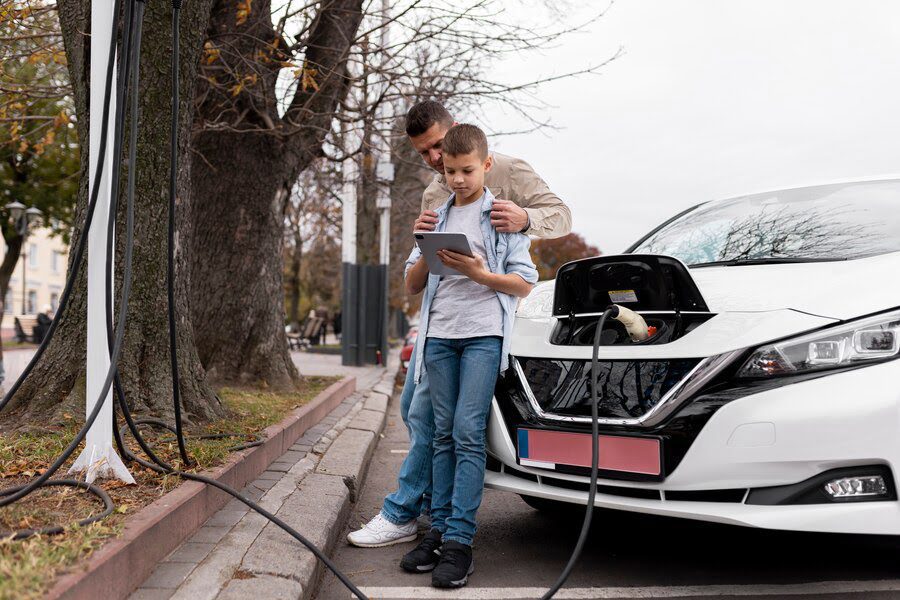
Another challenge is that EVs can add to the variability of electricity demand. This is because EV owners can choose when to charge their cars, and they may not always charge them at the same time. This can make it difficult for grid operators to balance supply and demand.
To address this challenge, some experts are suggesting that bidirectional batteries be used. Bidirectional batteries can store electricity and then discharge it back into the grid. This would allow EV owners to help balance the grid and earn money at the same time.
The transition to EVs is a challenge, but it is also an opportunity. By investing in our electrical grid and developing new technologies, we can make the transition to EVs a success.
The Weighty Issue of Electric Vehicles
EVs are significantly heavier than gas-powered vehicles. This is because they need to carry large batteries, which are necessary to power the vehicle.
David Adams, the president of the Global Automakers of Canada, has declared that it is a matter of physics and emphasized that both the batteries and the vehicles themselves are exceptionally hefty. The more massive the car, the larger and more substantial the battery must be to operate, which makes it increasingly hazardous to drive on roads.
The heavier weight of EVs can have a number of negative consequences, including:
- More strain on roads: The extra weight of EVs can put more strain on roads, leading to potholes and other damage.
- Increased risk of accidents: When an EV collides with a gas-powered vehicle, the EV’s greater weight can increase the risk of serious injury or death.
- Reduced fuel efficiency: The extra weight of EVs can reduce their fuel efficiency, making them less environmentally friendly.
There are a number of things that can be done to address the weight issue of EVs. One option is to develop lighter batteries. Another option is to design EVs with lighter materials. Finally, governments can offer incentives to manufacturers to develop lighter EVs.
Canada’s Electric Vehicle Charging Infrastructure
Electric vehicles require charging stations, and in order to make EVs a viable option for Canadians, we need to ensure that there are enough charging stations across the country. Thankfully, Canada has made progress in this area. The federal government has pledged to build a network of electric vehicle charging stations across the country, with a goal of installing 50,000 charging stations by 2025.
Some regions have more charging stations than others, and charging stations are not evenly distributed across the country. This can make it difficult for Canadians to travel long distances in their electric vehicles.
In addition, some charging stations are located in areas where they are not easily accessible. This can make it challenging for Canadians who live in rural areas to adopt electric vehicles.
Charging an Electric Vehicle at Home
Charging an electric vehicle (EV) at home may sound simple, but it’s a little more complicated than just plugging your car into an outlet. There are three main ways to charge an EV at home:

- Level 1: This is the slowest charging method, and it uses a standard 120-volt household outlet. Level 1 charging can add about 3 to 8 miles of range per hour of charging.
- Level 2: This is a faster charging method that uses a 240-volt outlet, like the type used for an electric stove or dryer. Level 2 charging can add about 16 to 97 miles of range per hour of charging.
- DC fast charging: This is the fastest charging method, and it can add up to 80 miles of range in just 15 minutes. Public places such as shopping malls and highway rest stops typically have DC fast chargers.
The type of charger you need will depend on your driving habits and your home’s electrical setup. If you only drive short distances, a Level 1 charger may be sufficient. However, if you have a long commute or you frequently take road trips, you’ll want to install a Level 2 charger.
If you’re not sure which type of charger is right for you, you can consult with an electrician or a certified EV installer.
Home Charging Tips
Here are a few tips for charging your EV at home:
- Plan your charging schedule: If you can, try to charge your EV during off-peak hours when electricity rates are lower.
- Use a smart charger: A smart charger can help you save money on your electricity bill by automatically charging your EV when rates are lowest.
- Install a Level 2 charger: If you have the budget, installing a Level 2 charger is the fastest and most convenient way to charge your EV at home.
- Keep your EV’s battery charged: The longer your EV’s battery sits unused, the more it will degrade. Try to keep your battery charged to at least 50% when you’re not using it.
By following these tips, you can make sure that your EV is always charged and ready to go.
What is the future of Canada’s Electric Vehicle Industry?
The future of the Canadian electric vehicle industry is bright. The country has a number of advantages that make it well-positioned to be a leader in the global EV market. These advantages include:
- Abundant natural resources: Canada is a major producer of lithium, nickel, and other minerals that are essential for EV batteries.
- A skilled workforce: Canada has a strong manufacturing sector and a highly skilled workforce that is well-positioned to build and assemble EVs.
- A supportive government: The Canadian government is committed to supporting the growth of the EV industry. The federal government has set a target of having 50% of new light-duty vehicles sold in Canada be zero-emission by 2030.
As a result of these advantages, the Canadian electric vehicle industry is growing rapidly. In 2021, EV sales in Canada grew by 60%. This growth is expected to continue in the coming years, as more and more Canadians adopt EVs.
The growth of the Canadian electric vehicle industry will have a number of benefits for the country. These benefits include:
- Reduced greenhouse gas emissions: EVs produce zero emissions, which will help to reduce Canada’s greenhouse gas emissions and combat climate change.
- Improved air quality: EVs produce fewer pollutants than gasoline-powered vehicles, which will improve air quality in Canadian cities.
- Job creation: The growth of the EV industry will create jobs in manufacturing, sales, and service.
- Economic growth: The growth of the EV industry will boost the Canadian economy and create new opportunities for businesses and workers.
The future of the Canadian electric vehicle industry is bright. The country has a number of advantages that make it well-positioned to be a leader in the global EV market.
FAQ
Canada is making progress in preparing its infrastructure for the electric vehicle (EV) boom. The federal government has committed to investing $1 billion to build 84,000 charging stations over the next four years. In addition, many provinces and municipalities are also investing in EV infrastructure. However, there is still more work to be done. The number of charging stations in Canada is still far short of what is needed to support the expected growth in EV sales. In addition, some of the existing charging stations are not reliable or easy to use.
There are a number of challenges facing Canada’s infrastructure in supporting the electric vehicle boom. These challenges include:
The lack of charging stations: There are not enough charging stations in Canada to support the expected growth in EV sales. In addition, some of the existing charging stations are not reliable or easy to use.
The cost of charging: The cost of charging an electric vehicle can be higher than the cost of refueling a gasoline-powered vehicle.
Range anxiety: Some drivers are concerned about the range of electric vehicles and whether they will be able to make long trips without having to recharge.
The lack of knowledge: Many people are not familiar with electric vehicles and how they work. This can lead to confusion and uncertainty about whether or not an electric vehicle is the right choice for them.
As of March 8, 2023, there are a total of 20,478 public charging stations in Canada. This includes both Level 2 and DC fast chargers. Of these, 16,579 are Level 2 chargers and 3,899 are DC fast chargers. The majority of charging stations are located in urban areas, with the largest concentration in Toronto. However, there are also a growing number of charging stations in rural areas.
The time it takes to charge an electric vehicle at a public charging station depends on the type of charger and the size of the battery.
Level 1 chargers: These are the slowest chargers, and they can take up to 12 hours to fully charge a car.
Level 2 chargers: These chargers are faster than Level 1 chargers, and they can take about 2-4 hours to fully charge a car.
DC fast chargers: These are the fastest chargers, and they can take about 15-30 minutes to fully charge a car.
The majority of public charging stations in Canada are Level 2 chargers. However, there is a growing number of DC fast chargers being installed.
It is important to note that the time it takes to charge an electric vehicle can also be affected by the ambient temperature. In cold weather, it can take longer to charge a car because the battery has to work harder to heat up.
Related Blog Posts