


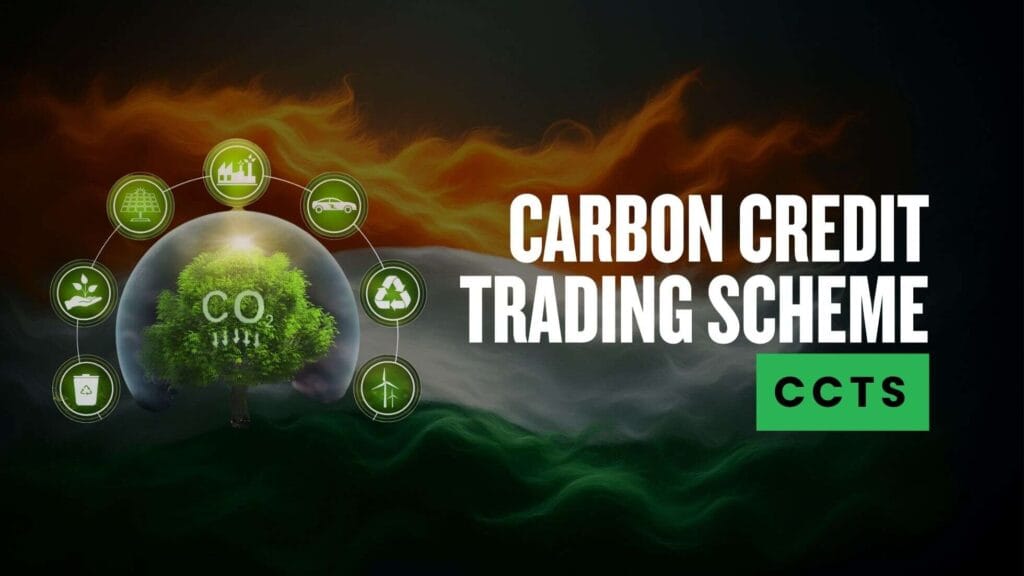
Carbon markets are now a key part of how countries fight climate change and measure business success. Around the world, nations use trading systems that put a price on emissions, so businesses can earn credits by cutting their carbon footprint.
Table of Contents
India is joining this movement with the Carbon Credit Trading Scheme (CCTS), which is quickly becoming an important climate policy. For businesses focused on sustainability, this is more than a regulation. It changes how companies measure and reduce emissions, and it may affect their strategies and costs. To adapt, businesses should review their current emissions and find the best areas for improvement. Setting up teams to manage carbon strategy and seeking advice from experts can help align business goals with the CCTS. Taking these steps can turn compliance into a business advantage.
This is a chance for companies to innovate, attract investment, and prepare for a low-carbon future. For instance, a technology company in Europe used carbon trading to cut costs and gain more market share by improving its sustainability image. Indian companies could see similar benefits by joining the CCTS and making carbon management part of their business strategy.
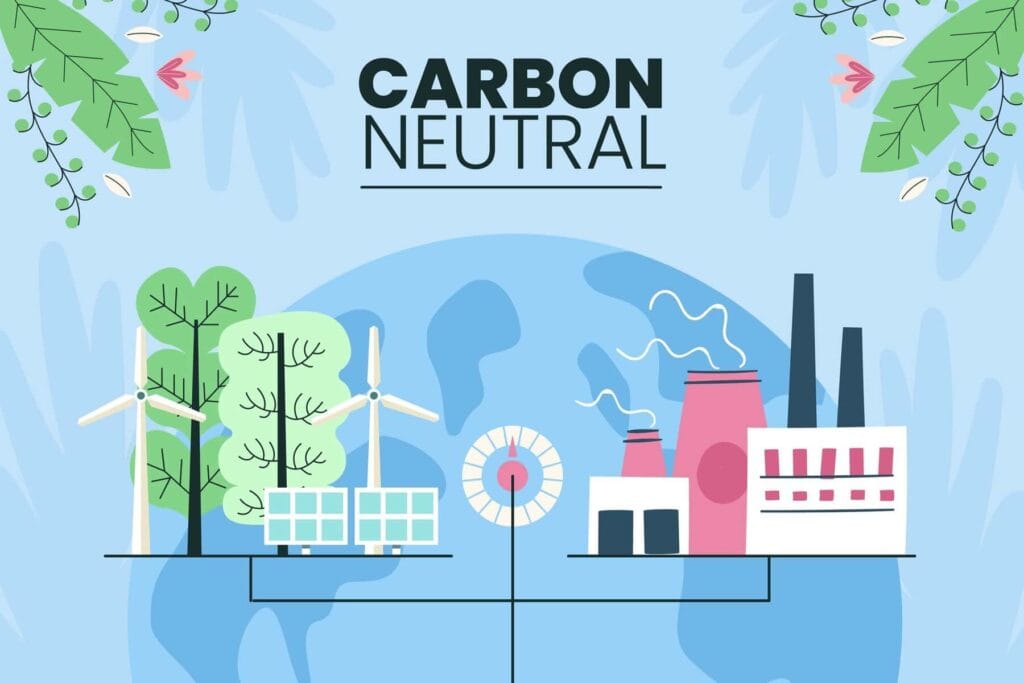
With this in mind, let’s examine how the CCTS is guiding India toward net zero—and what this means for businesses looking to participate in the carbon market.
What is the Carbon Credit Trading Scheme?
The CCTS was officially notified in June 2023 under the Energy Conservation (Amendment) Act, 2022, forming the legal backbone for a unified Indian carbon market.
It is managed by the Ministry of Power, MoEFCC, BEE, and CERC, with the Grid Controller of India overseeing the registry.
The scheme combines compliance and voluntary mechanisms. Large industrial units must meet emission intensity targets, while climate-positive projects (renewable energy, afforestation, methane capture) can generate credits.
Each Carbon Credit Certificate (CCC) represents one tonne of CO₂ equivalent reduced or removed.
Credits are traded on regulated power exchanges, backed by IPCC-aligned monitoring, reporting, and verification (MRV) protocols with third-party oversight. This ensures the market stays credible and transparent.
How the Indian Carbon Market Works
At its heart, the CCTS is a rate-based emissions trading system, meaning it focuses on emissions intensity rather than absolute caps. Businesses earn or buy credits depending on whether they exceed or fall short of their targets.
The scheme’s architecture is simple but powerful. The compliance market drives reductions in core industrial sectors, while the voluntary market encourages smaller businesses and projects to participate, creating a broader ecosystem of green impact. Trading, banking, and MRV systems give companies flexibility and confidence that their actions are measurable and recognized.
Key Facts About India’s Carbon Market in 2025
Some numbers highlight the scale of opportunity.
- The market is expected to reach 180 million tCO₂e by 2030, equating to ~₹45,000 crore/year at ₹250/tonne.
- Carbon prices in India averaged $2.35/tonne in 2024, lower than regional peers.
- Phase I covers 282 industrial units, with compliance expanding to 500+ across subsequent phases.
- The scheme could unlock $467 billion for low-carbon transitions by 2030.
- The Indian regulated carbon market is set to open in 2026.
Globally, India is now on par with emerging carbon markets like Brazil, China, and Türkiye in terms of regulatory maturity.
Sectors Under CCTS
The scheme currently focuses on nine key sectors, rolled out in phases: steel, cement, aluminium, chlor-alkali, pulp & paper, petro-refining, chemicals, fertilizers, and textiles. Targets vary, but most industries aim for a 2–3% annual reduction in emission intensity until 2027.
This phased rollout ensures that companies can gradually adjust operations, invest in energy efficiency, and innovate without disrupting growth. It also gives sustainable startups and service providers a roadmap for opportunities in supporting decarbonization.
The Voluntary Carbon Market
India’s voluntary market hosts over 5,000 registered projects, encompassing renewables, energy efficiency, waste management, and agroforestry. Eight new crediting methodologies approved in March 2025 are expanding participation.
Cross-border trade discussions with the EU and ASEAN aim for interoperability by 2026, opening the door for Indian projects to earn recognition and revenue on global platforms.
Challenges remain, particularly around verification, transparency, and credit quality. But with robust MRV and proper governance, voluntary markets can become a key lever for sustainable business growth.
Why CCTS Matters for India and Businesses
CCTS is more than compliance; it’s an enabler of green finance, cost-saving, and innovation.
Companies that integrate carbon management:
- Reduce operational costs through energy efficiency.
- Unlock green financing through tradable credits.
- Gain early mover advantage in low-carbon products and services.
The scheme merges and improves upon India’s earlier PAT system, expanding coverage to include indirect emissions and potentially supply-chain emissions in the future. It rewards growth-friendly emission reductions, ensuring businesses can scale sustainably.
Challenges and the Road Ahead
While promising, the market faces several hurdles.
- Avoiding credit oversupply to prevent price collapse
- Ensuring verification and transparency to maintain trust
- Expanding coverage beyond 2027 to sectors like power, transport, and agriculture
- Increasing liquidity and global market integration to attract investors
- Power sector and large-scale transport rules remain under consultation.
- Supply-chain (Scope 3) inclusion is still a future objective.
- Demand-side credit retirement and market distortion prevention mechanisms remain to be finalized.
These challenges are also opportunities. Enterprising businesses can innovate solutions for MRV, credit trading platforms, or sectoral decarbonization services.
What if you built a startup that revolutionizes the way carbon credits are traded, or a new technology that enhances MRV processes? This is the moment for entrepreneurs to seize these opportunities and create innovative business models that drive sustainable growth and reduce emissions effectively.
The Carbon Credit Trading Scheme is shaping the way India approaches climate action and sustainable business. For companies and startups, it’s a chance to align strategy with net-zero goals, participate in a growing market, and demonstrate climate leadership.
CCTS is more than policy, it’s a gateway to a low-carbon economy, global competitiveness, and a future where business growth and climate action go hand in hand. For businesses ready to engage, the time is now.








Pls contact me
Rakesh Singh Jindal Power
i am farmer in Maharashtra, can we register our farm, tree as a carbon register benefit
Yes, you can. Please read this article, which explains the overall process about Agriculture realted carbon credits – https://natnavi.com/generating-agricultural-carbon-credits/
Is this an upcoming policy?