How to Reduce Your Carbon Footprint with an Electric Vehicle
The world is on track to surpass 9 billion people by 2050, creating unprecedented demand for food, water, and energy. To meet these needs sustainably, businesses and individuals must look for innovative solutions to cut carbon emissions.
Table of Contents
Transportation accounts for nearly 24 % of direct CO₂ emissions from fuel combustion globally (IEA), and electric vehicles (EVs) are emerging as one of the most effective ways to lower this footprint.
For sustainable businesses and eco-conscious consumers alike, EVs are more than just a cleaner mode of travel. They represent a long-term strategy for efficiency, savings, and resilience.
Energy Efficiency That Cuts Emissions
Electric vehicles convert over 60 % of grid energy into motion, compared to internal combustion engines that convert less than 20 % (U.S. Department of Energy). This efficiency translates into fewer resources consumed and lower carbon emissions per mile driven.
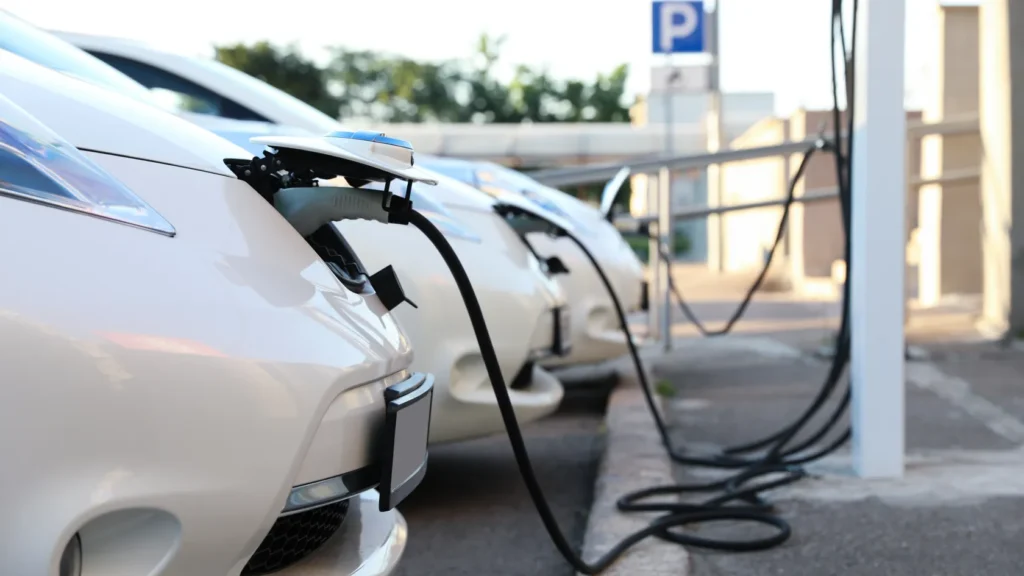
An EV travelling 100 miles typically uses around 30 kWh of electricity, whereas a gasoline vehicle would need the energy equivalent of nearly three times that amount. Over time, this gap directly reduces the demand for fossil fuels and greenhouse gas emissions.
For businesses, fleet electrification offers measurable results. Replacing 10 gasoline vans with EVs can save more than 50 metric tons of CO₂ annually, while also cutting operational costs.
Cost Savings Paired with Sustainability
EVs are about 60 % cheaper to operate per mile than conventional cars, thanks to lower fuel costs and reduced maintenance needs. Fewer moving parts mean less wear and tear, making EV ownership more predictable and cost-stable.
For businesses, these savings add up. A delivery company running 50 EVs instead of gas-powered vans can save upwards of $200,000 annually in fuel and maintenance costs while reinforcing its sustainability credentials.
These savings grow even larger when EVs are powered by renewable energy sources such as solar or wind, further cutting emissions and making the switch a double win for profitability and sustainability.
Addressing the Battery Question
Critics often highlight the carbon intensity of EV battery production. Manufacturing batteries indeed produces higher upfront emissions compared to traditional vehicles. However, studies from the International Council on Clean Transportation (ICCT) show that EVs offset these emissions within 1.5 to 2 years of average driving. Over their lifetime, EVs produce 50 to 70 % fewer emissions than internal combustion engine vehicles.

The sustainability story does not end at production. EV batteries can be repurposed for second-life applications like stationary energy storage, extending their value. Recycling technologies are also advancing, with companies such as Redwood Materials and Li-Cycle working on processes that recover up to 95 % of critical metals like lithium, cobalt, and nickel.
The Role of Charging Infrastructure
Charging networks are the backbone of sustainable EV adoption. Today, the global EV charging market is expanding rapidly, with more than 3 million public chargers installed worldwide as of 2023 (IEA).
For individuals, home charging paired with rooftop solar panels offers near-zero-emission driving. For businesses, workplace chargers not only reduce emissions but also attract eco-conscious employees and customers. Fleets that integrate smart charging systems can align charging schedules with renewable energy peaks, cutting both costs and carbon footprints.
Incentives and Policy Support
Governments are accelerating EV adoption with strong policies. The U.S. offers tax credits of up to $7,500 per EV, while the EU and India are investing heavily in charging infrastructure and subsidies for both consumers and businesses.
For sustainable businesses, these incentives lower upfront investment risks and create opportunities for early adoption advantages. Companies transitioning fleets to EVs can also improve ESG scores, a growing factor in investor decisions.
Real-World Adoption
Major corporations are proving the case for EVs at scale. Amazon has committed to deploying 100,000 electric delivery vans by 2030, while FedEx aims for a fully electric pickup and delivery fleet by 2040. These moves not only reduce emissions but also enhance brand reputation and long-term cost efficiency.
Small and medium businesses can follow similar strategies. Even adopting a handful of EVs in a local fleet demonstrates a clear sustainability commitment and positions the business competitively in a market increasingly driven by green credentials.
A Practical Path Toward Net Zero
Switching to EVs is not a silver bullet, but it is one of the most impactful steps individuals and businesses can take to reduce their carbon footprint. By combining efficiency, cost savings, renewable energy integration, and long-term battery solutions, EVs offer a practical pathway toward net zero.
For sustainable businesses, this transition is more than environmental; it is strategic. EV adoption signals innovation, responsibility, and readiness for a future where green practices define market leadership.