

Corporate Social Responsibility is often seen as something only large corporations can afford.
But in reality, SMEs (Small and Medium Enterprises) have just as much to gain from acting responsibly and building a business that supports people, communities, and the environment.
Table of Contents
CSR simply means taking responsibility for the wider impact your business creates.
It is about going beyond profits and making choices that reflect your values in daily operations. For small and medium businesses, this mindset builds reputation, loyalty, and long-term resilience.
What CSR Really Means for SMEs
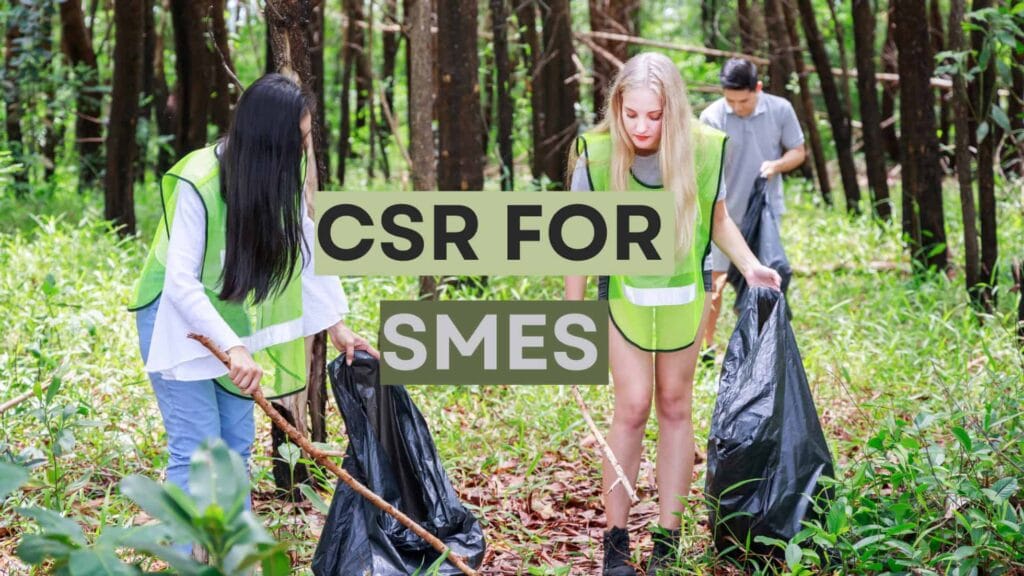
CSR for SMEs is not about launching huge philanthropic programs. It is about adopting responsible habits that match your size and your community.
This can include choosing ethical suppliers, engaging with local initiatives, reducing waste in your operations, or building a workplace where people feel supported and valued.
CSR is already expanding across the global business landscape as more companies explore guidance from the United Nations Global Compact, which encourages businesses of all sizes to align with principles covering human rights, labour, environment, and anti-corruption.
For SMEs, the goal is not complexity. The goal is authenticity.
CSR vs ESG for Small and Medium Businesses
Many small business owners hear the terms CSR and ESG used interchangeably, but they are not the same.
Corporate Social Responsibility focuses on the actions a business takes to create a positive impact on society and the environment. These activities may include community engagement, employee wellbeing initiatives, ethical sourcing, charitable programs, or efforts to reduce waste.
Environmental, Social, and Governance (ESG) is a broader framework used to measure and report a company’s sustainability performance. While CSR focuses on what a business does, ESG focuses on how those efforts can be tracked, measured, and communicated to stakeholders, investors, customers, and regulators.
For many SMEs, CSR is often the first step in their sustainability journey. As sustainability expectations continue to grow, businesses are increasingly moving from informal CSR initiatives toward structured ESG reporting and performance measurement.
Understanding the relationship between CSR and ESG can help SMEs build a more sustainable business while preparing for future reporting and compliance requirements.
Why CSR Matters for SMEs
CSR helps small and medium businesses stand out in crowded markets.
Customers increasingly prefer brands that act responsibly and show genuine care for their community.
Responsible business practices build trust, which directly supports long-term customer loyalty. CSR also drives innovation when teams look for sustainable solutions, whether that means eco-friendly product ideas or more efficient internal processes.
Employee motivation is another big benefit. People enjoy working for companies that care about more than profit. This becomes a competitive advantage when hiring and retaining talent.
SMEs that consistently show responsible behaviour often find it easier to enter new markets or form partnerships, especially as larger companies prefer suppliers with credible sustainability practices.
Real World CSR Examples for SMEs
CSR does not always require large budgets or dedicated sustainability teams. Many small and medium businesses already practice CSR through everyday business decisions.
A local café may choose to source ingredients from nearby farmers, supporting the local economy while reducing transportation emissions. A small manufacturing company might switch to recyclable packaging materials to reduce waste and improve environmental performance.
Technology firms often support employee wellbeing through flexible work policies, mental health programs, and volunteer initiatives that allow staff to contribute to community projects during work hours.
Retail businesses can also strengthen their social impact by partnering with local charities, donating surplus products, or organizing community events that address local needs.
These examples show that effective CSR is often built through consistent actions that align with a company’s values, customers, and business goals.
Unique Challenges SMEs Face in CSR
SMEs often operate with limited time, money, and staff. This makes CSR feel overwhelming, even when the intentions are strong.
Many smaller businesses depend on the founder’s personal values to guide decisions because they do not have a dedicated sustainability team. This can make CSR informal and inconsistent.
Profitability pressures also play a role. It is hard to invest in long-term initiatives when short-term survival feels urgent.
On top of that, many SMEs are not aware of the strategic advantages that CSR can bring.
They may see it as charity rather than a driver of stronger brand perception and customer trust.
The good news is that CSR does not have to be expensive or complicated for SMEs to benefit from it.
Practical CSR Strategies SMEs Can Start With
Start small and choose actions that match your existing values. Supporting local suppliers, reducing waste at the workplace, or participating in neighbourhood events can all create a meaningful impact with minimal cost.
Employee well-being is another powerful CSR area. Flexible work policies, skills training, and open communication build trust and keep teams motivated.
SMEs can also engage with local schools, health programs, or social organisations. These efforts create real value in the community and position the business as a responsible neighbour.
Collaborations can help too. Partnering with NGOs or joining collective initiatives inspired by groups like the United Nations Global Compact allows SMEs to contribute even when they have limited resources.
Most importantly, communicate your efforts. Share what you are doing with customers, partners, and employees.
Transparency builds a deeper connection and strengthens your brand identity.
Simple CSR Metrics SMEs Can Track
Many SMEs assume CSR efforts are difficult to measure. In reality, even simple metrics can help businesses understand the impact of their initiatives and identify areas for improvement.
Some practical CSR metrics include:
| CSR Area | Example Metric |
|---|---|
| Employee Wellbeing | Employee retention rate, training hours, employee satisfaction |
| Community Engagement | Volunteer hours, local partnerships, community events supported |
| Environmental Impact | Energy consumption, waste reduction, recycling rates |
| Responsible Sourcing | Percentage of local or certified suppliers |
| Customer Trust | Customer retention, reviews, and feedback scores |
Tracking a few relevant metrics allows SMEs to move beyond good intentions and demonstrate tangible results. Over time, these measurements can also support sustainability reporting and help businesses communicate their impact to customers, investors, and other stakeholders.
How CSR Can Prepare SMEs for Future ESG Requirements
Many small businesses view CSR as a voluntary initiative, but it can also serve as a foundation for more structured sustainability practices.
Activities such as reducing waste, supporting employee wellbeing, engaging with local communities, and sourcing responsibly generate valuable information about a company’s environmental and social impact. As sustainability expectations continue to increase across supply chains, investors, customers, and regulators are placing greater emphasis on measurable sustainability performance.
SMEs that already track CSR initiatives are often better positioned to adapt to future ESG reporting requirements. The data collected through CSR programs can help businesses identify relevant sustainability metrics, establish internal reporting processes, and demonstrate progress over time.
Rather than viewing CSR and ESG as separate concepts, SMEs can treat CSR as the practical starting point of a broader sustainability journey. Businesses that begin measuring and improving their impact today may find it easier to meet future stakeholder expectations and reporting obligations.
CSR as a Long-Term Value Builder
Corporate Social Responsibility is no longer limited to large corporations with dedicated sustainability teams. Small and medium businesses can create meaningful impact through practical actions such as supporting employees, reducing waste, engaging with local communities, and making responsible sourcing decisions.
While individual CSR initiatives may seem small, their cumulative effect can strengthen customer trust, improve operational efficiency, enhance employee engagement, and support long-term business resilience.
For many SMEs, CSR also serves as the first step toward a more structured approach to sustainability. By tracking initiatives, measuring outcomes, and continuously improving performance, businesses can build a foundation that supports future sustainability reporting and evolving stakeholder expectations.
The most successful CSR programs are not defined by their size or budget. They are defined by consistency, measurable impact, and alignment with the values and goals of the business.
From CSR Activities to ESG Readiness
Many SMEs begin their sustainability journey through CSR initiatives without realizing they are already creating data that can support future ESG reporting.
| CSR Activity | ESG Area Supported | Example Metric |
|---|---|---|
| Employee training | Social | Training hours per employee |
| Community volunteering | Social | Volunteer hours contributed |
| Waste reduction | Environmental | Waste diverted from landfill |
| Energy efficiency projects | Environmental | Energy consumption reduction |
| Ethical supplier selection | Governance & Social | Percentage of screened suppliers |
| Workplace safety programs | Social | Incident rate and safety training completion |
This progression demonstrates how practical CSR initiatives can evolve into measurable sustainability performance indicators. SMEs that start collecting this information early are often better prepared for future reporting requirements and stakeholder expectations.