



Sustainability has become more than a corporate responsibility initiative. Today, it influences investment decisions, procurement processes, customer trust, regulatory compliance, and long-term business competitiveness. As organisations increasingly promote their environmental and social commitments, the credibility of those claims has become just as important as the initiatives themselves.
Table of Contents
This growing focus on sustainability has also created an opportunity for businesses to exaggerate, misrepresent, or oversimplify their environmental achievements. Known as greenwashing, these practices can mislead customers, investors, and business partners while exposing organisations to regulatory scrutiny and reputational damage.
Understanding greenwashing is no longer just about identifying misleading marketing. It is about recognising the importance of transparent, verifiable sustainability claims in a business environment where credibility has become a competitive advantage. This article explains what greenwashing is, why it happens, the risks it creates, and how businesses can build greater trust through authentic sustainability practices.
Why Sustainability Claims Matter More Than Ever
Sustainability has evolved from a voluntary corporate initiative into a strategic business priority. Today, sustainability performance influences investment decisions, procurement requirements, access to financing, regulatory compliance, and customer trust. Businesses are increasingly expected to demonstrate measurable progress rather than simply communicate good intentions.
This shift has been driven by multiple factors, including evolving ESG expectations, climate-related regulations, investor scrutiny, and growing demand for supply chain transparency. As sustainability becomes integrated into everyday business operations, organisations are making more public commitments about reducing emissions, improving resource efficiency, adopting circular business models, and strengthening social responsibility.
However, greater visibility also brings greater accountability. Every sustainability claim, whether it appears in an annual report, product label, marketing campaign, or investor presentation, is increasingly subject to verification by customers, regulators, investors, and business partners. Claims that cannot be supported with credible evidence can quickly become a source of reputational, financial, and regulatory risk.
This growing emphasis on accountability has made credibility a competitive advantage. Organisations that communicate transparent, evidence-based sustainability achievements are better positioned to build long-term trust, while unsupported claims face increasing scrutiny in an environment where sustainability performance is becoming a measurable business expectation.
Why Greenwashing Has Become a Growing Business Concern
As sustainability becomes a competitive advantage, organisations are under increasing pressure to demonstrate environmental and social responsibility. Customers expect greater transparency, investors assess sustainability performance alongside financial results, procurement teams evaluate supplier credentials, and regulators are introducing stricter disclosure requirements.
This pressure has encouraged many organisations to communicate their sustainability initiatives more openly. While many businesses are making genuine progress, others overstate achievements, use vague environmental language, or make claims that cannot be supported with reliable evidence.
The result is a growing credibility challenge. When sustainability claims cannot be verified, stakeholders find it difficult to distinguish meaningful progress from marketing. This undermines trust, creates uncertainty across supply chains, and increases the risk of regulatory action and reputational damage.
What Is Greenwashing?
Greenwashing is the practice of making sustainability or environmental claims that are misleading, exaggerated, or unsupported by credible evidence. These claims may appear in product labels, marketing campaigns, ESG reports, investor communications, or corporate sustainability statements.
It may involve promoting minor sustainability initiatives while ignoring larger environmental impacts, using vague or undefined terms such as “eco-friendly” or “green,” or presenting selective information that creates a misleading impression of overall sustainability performance.
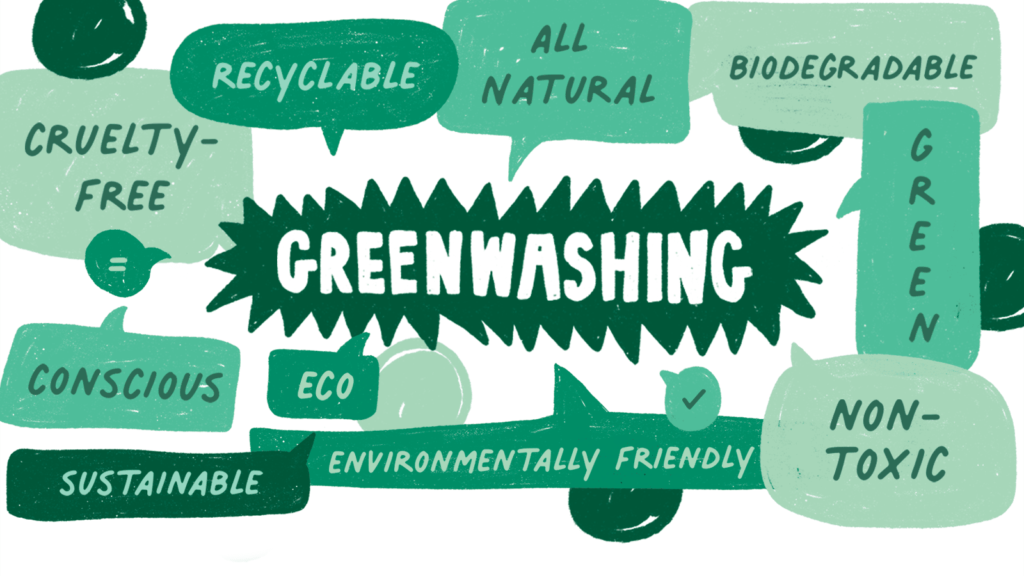
Greenwashing is not always the result of deliberate deception. In some cases, businesses communicate sustainability achievements without sufficient data, independent verification, or consistent reporting standards. Regardless of intent, unsupported claims can mislead customers, investors, regulators, and business partners, weakening trust in both the organisation and the broader sustainability movement.
As sustainability reporting and disclosure requirements continue to evolve, businesses are expected to support public claims with measurable data, recognised standards, certifications, or independent verification wherever appropriate. Transparency is no longer optional; it has become an essential part of building long-term business credibility.
7 Common Greenwashing Tactics Businesses Should Avoid
1. The Hidden Trade-Off
A business highlights one positive sustainability initiative while overlooking other activities that have a much larger environmental or social impact. While the promoted claim may be accurate, it creates a misleading impression of the organisation’s overall sustainability performance.
For example, a fashion brand may promote the use of organic cotton in one clothing collection while remaining silent about carbon-intensive manufacturing, excessive water consumption, or poor labour practices elsewhere in its supply chain.
Business takeaway: Investors, procurement teams, and regulators increasingly evaluate a company’s overall sustainability performance rather than isolated initiatives. Selective sustainability messaging may create short-term marketing value, but comprehensive and transparent reporting builds long-term credibility.
2. Lack of Proof
Some businesses make environmental claims without providing credible evidence, recognised certifications, or transparent documentation to support them. Without verifiable information, stakeholders have no reliable way to assess whether these claims are accurate.
For example, a cleaning product may advertise itself as biodegradable while providing no independent testing results or recognised certification to support the claim. The absence of evidence makes it difficult for customers or procurement teams to evaluate its environmental performance.
Business takeaway: Sustainability claims should always be supported by measurable data, recognised standards, or independent verification. Evidence builds trust, while unsupported claims create uncertainty.
3. Vagueness
Some organisations rely on broad marketing terms such as “green,” “eco-friendly,” or “environmentally safe” without explaining what those claims actually mean. While these words sound positive, they often lack measurable or verifiable definitions.
For example, a food packaging company may describe its products as environmentally friendly without explaining whether they are recyclable, compostable, made from recycled materials, or manufactured using lower-carbon processes.
Business takeaway: Clear, measurable language is far more credible than generic sustainability buzzwords. Specific claims backed by evidence strengthen stakeholder confidence.
4. Irrelevance
Businesses sometimes highlight environmental information that is technically true but no longer meaningful or relevant. These claims can distract stakeholders from more significant sustainability issues.
For example, a product may proudly advertise that it is free from a substance already prohibited by law, creating the impression of environmental leadership without offering any genuine sustainability benefit.
Business takeaway: Sustainability communication should focus on meaningful achievements rather than highlighting compliance with existing legal requirements.
5. Lesser of Two Evils
A business promotes sustainability improvements within a product or service that remains fundamentally associated with significant environmental or social impacts. Although individual improvements may be genuine, they should not overshadow the broader impact of the business.
For example, a fossil fuel company may heavily promote investments in renewable energy while the majority of its revenue continues to come from oil and gas operations.
Business takeaway: Stakeholders increasingly assess an organisation’s overall sustainability strategy rather than isolated initiatives. Genuine progress requires transparency across the entire business.
6. Fibbing
Fibbing occurs when a company makes sustainability claims that are simply false. Unlike exaggerated marketing, these statements are factually incorrect and can expose businesses to legal action, regulatory penalties, and lasting reputational damage.
For example, a manufacturer claims its operations are carbon neutral despite having no recognised carbon accounting process or credible offset programme to support that statement.
Business takeaway: False sustainability claims can quickly become compliance issues. Accuracy and evidence should always take priority over marketing.
7. False Labels
Some organisations use fake certifications, misleading logos, or self-created labels that resemble recognised sustainability standards. These visuals can create an impression of third-party verification where none exists.
For example, a company places an “Eco Certified” logo on its packaging even though the certification does not exist or has never been issued by an independent organisation.
Business takeaway: Independent certifications build credibility only when they come from recognised and trustworthy organisations. Misleading labels undermine confidence in both the business and legitimate certification schemes.
| Greenwashing | Credible Sustainability |
|---|---|
| Uses vague environmental claims | Uses specific, measurable claims |
| Relies on marketing language | Relies on verified evidence |
| Highlights isolated achievements | Reports overall sustainability performance |
| Uses self-created labels | Uses recognised certifications where appropriate |
| Creates short-term reputation | Builds long-term trust |
Business Lessons from High-Profile Greenwashing Cases
Greenwashing is not just a theoretical concept. Several high-profile cases have demonstrated how unsupported sustainability claims can result in regulatory action, financial losses, and long-term reputational damage. These examples highlight why transparency and evidence have become essential business requirements.
Volkswagen’s Diesel Emissions Scandal
Volkswagen promoted certain diesel vehicles as environmentally friendly while using software to manipulate emissions tests. When the deception was exposed, the company faced billions of dollars in fines, legal settlements, vehicle recalls, and lasting reputational damage.
Business lesson: Sustainability claims must be supported by genuine operational performance. Misrepresenting environmental performance can create financial and legal consequences that far outweigh any short-term marketing benefit.
The scandal became one of the most expensive corporate environmental controversies in history, demonstrating how misleading sustainability claims can create financial consequences far beyond regulatory fines.
H&M’s Sustainability Scorecard Controversy
H&M promoted sustainability scorecards to help customers compare the environmental impact of clothing products. Investigations later found that some of the published sustainability data was inaccurate or misleading, leading the company to remove the scorecards from several markets.
Business lesson: Sustainability data is only valuable when it is accurate, transparent, and consistently verified. Even well-intentioned initiatives can undermine trust if the supporting data cannot withstand scrutiny.
Keurig’s Recyclable Coffee Pod Claims
Keurig promoted its coffee pods as recyclable, but in many regions the local recycling infrastructure could not actually process them. Regulators argued that the marketing created a misleading impression about the product’s environmental impact.
Business lesson: Sustainability claims should reflect real-world outcomes, not just technical possibilities. Businesses should consider whether customers can realistically achieve the environmental benefit being promoted.
How Businesses Can Avoid Greenwashing
Avoiding greenwashing requires more than careful marketing. It requires organisations to build sustainability into the way they measure, manage, and communicate their environmental and social performance.
Businesses can strengthen the credibility of their sustainability claims by following a few key principles:
- Support public claims with measurable data and documented evidence.
- Use recognised reporting frameworks, certifications, or independent verification where appropriate.
- Communicate both achievements and ongoing challenges rather than presenting sustainability as a completed journey.
- Ensure marketing, sustainability, legal, and leadership teams work together so public statements accurately reflect operational performance.
- Regularly review sustainability communications as regulations, reporting standards, and stakeholder expectations continue to evolve.
Building credibility is an ongoing process rather than a one-time achievement. Organisations that consistently communicate transparent, evidence-based progress are better positioned to earn long-term trust from customers, investors, regulators, and business partners.
The Future of Sustainability Credibility
Sustainability is moving beyond voluntary commitments and marketing campaigns. Around the world, regulators, investors, customers, and procurement teams increasingly expect organisations to demonstrate measurable environmental and social performance rather than simply make ambitious claims.
As reporting standards mature and independent verification becomes more common, business credibility will increasingly depend on the ability to support sustainability claims with reliable evidence. Organisations that embrace transparency will be better positioned to build trust, strengthen stakeholder relationships, and create long-term competitive advantage.
Greenwashing is therefore no longer just a communications issue. It is a business risk that influences reputation, compliance, investment, and market access.
In the years ahead, the organisations that earn the greatest trust will not be those making the boldest sustainability claims, but those that can consistently demonstrate them with transparency, evidence, and measurable results.






Great