

Governments have committed billions of dollars to green hydrogen, yet global production remains a fraction of what was promised. The reason isn’t the technology. It’s the economics.
Green hydrogen still costs $3.50 to $7 per kg to produce in Western markets in 2026, compared to $1.50 to $2.50 for conventional grey hydrogen. That gap is the single biggest reason the technology hasn’t scaled the way early forecasts predicted.
But the gap is closing unevenly. China is on track to produce green hydrogen below $2/kg by 2030. India’s SIGHT programme has already discovered green ammonia prices well under global benchmarks.
Table of Contents
For businesses in steel, shipping, fertiliser, and chemicals, the question isn’t whether green hydrogen matters. It’s when it becomes cheap enough to switch, and where.
Lets breaks down how green hydrogen is made, why the cost gap exists, which governments and companies are actually building capacity, and what it means if you’re planning around it.
What Is Green Hydrogen and How Is It Produced
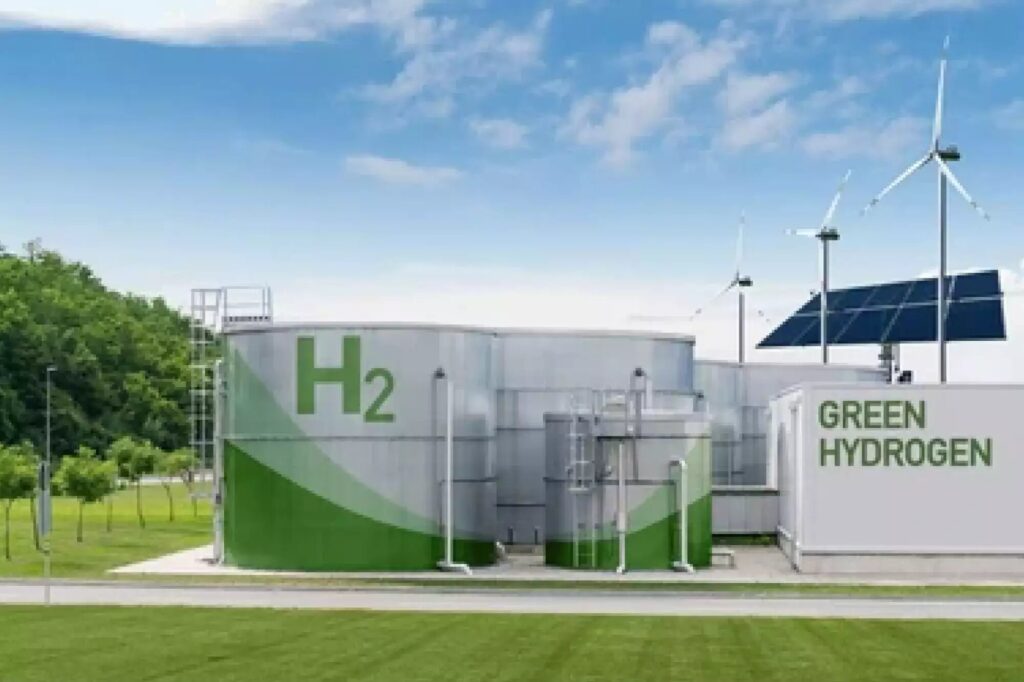
Green hydrogen is simply hydrogen produced using renewable electricity rather than natural gas. For businesses, the distinction matters because it dramatically reduces lifecycle emissions and helps meet emerging carbon regulations. Electrolysis involves splitting water molecules (H2O) into hydrogen (H2) and oxygen (O2) through the application of an electric current.
The resulting gas can be stored and used across transportation, heating, power generation, and industrial processes. What makes it “green” specifically is the electricity source. Swap in coal power and the same electrolysis process produces hydrogen with a large carbon footprint.
| Hydrogen Type | Production | Carbon | Cost |
|---|---|---|---|
| Grey | Natural gas | High | $1.5–2.5/kg |
| Blue | Natural gas + CCS | Medium | Higher |
| Green | Renewable electricity | Very Low | $3.5–7/kg |
Why Businesses Are Investing in Green Hydrogen
Hard-to-abate industries have no other decarbonization path. Steel, ammonia, and chemicals manufacturing can’t run on batteries. Green hydrogen is one of the only credible ways to cut emissions in these sectors, which is why steelmakers and fertiliser producers are the earliest commercial buyers, not passenger vehicles or home heating.
It solves a grid problem, not just a fuel problem. Solar and wind produce power on their own schedule, not on demand. Excess renewable generation can be converted into hydrogen, stored, and turned back into electricity later. This is increasingly relevant for grid operators managing high renewable penetration, not just an environmental talking point.
Governments are backing it with real money. India’s National Green Hydrogen Mission has allocated ₹19,744 crore (about $2.4 billion) and pays production incentives of up to ₹50 per kg for three years under its SIGHT programme. The EU runs its own Hydrogen Bank auctions. The US offers the 45V production tax credit. These aren’t symbolic gestures. They exist because green hydrogen doesn’t pencil out commercially without support yet.
Early movers are already signing contracts. JSW Neo commissioned a 3,800 tonne-per-year green hydrogen plant in India backed by a seven-year offtake agreement. SECI has awarded green ammonia supply contracts to Indian Oil, Bharat Petroleum, and Hindustan Petroleum refineries. These deals show what a real customer contract looks like in this market, not just pilot announcements.
Cost, Infrastructure, and Regulatory Challenges Businesses Should Know
Cost remains the core barrier. Unsubsidized green hydrogen runs $3.50-$7/kg in Western markets in 2026, against $1.50-$2.50 for grey hydrogen made from natural gas. The IEA doesn’t expect broad cost parity before 2030, and expects China to reach it first, with production potentially under $2/kg there by then. Businesses evaluating hydrogen offtake agreements should treat 2026-2028 pricing as a subsidy-dependent market, not a mature one.
The “buyer’s dilemma” is slowing projects more than technology. Heavy industry buyers have been reluctant to sign the long-term offtake agreements that make hydrogen projects bankable. This isn’t a minor detail. It’s why several major projects under the EU Hydrogen Bank’s second auction round were withdrawn in late 2025 despite winning subsidy support. Any business exploring a hydrogen supply deal should expect this financing friction to shape counterparty terms.
India illustrates the gap between targets and delivery. The National Green Hydrogen Mission targets 5 million metric tonnes of annual production by 2030. As of February 2026, only around 8,000 tonnes per year had actually been commissioned. That’s real progress after years of policy discussion, but it also means the 2030 target is treated by most analysts as aspirational rather than a forecast. Businesses building supply chain plans around Indian green hydrogen should track commissioned capacity, not headline targets.
Regional strategy matters more than a single global cost curve. The IEA’s 2026 outlook points to China as the likely cost leader, with the Middle East, India, and Chile reaching competitive pricing before Europe and the US. Businesses with flexible sourcing should factor region into procurement timelines rather than assuming a single global price trajectory.
Where the Near-Term Opportunity Is
For sustainability consultants, ESG teams, and green business owners, three areas are worth watching over the next 12-24 months:
Steel and fertiliser first, transport later. Hydrogen fuel-cell vehicles get more media attention, but the commercial deals happening right now are in steel decarbonization and green ammonia for fertiliser plants. That’s where near-term consulting, compliance, and supply chain work is concentrated.
India as a manufacturing and export play. Between SIGHT incentives, electrolyser production-linked incentives, and low-cost renewables, India is positioning itself as a low-cost green hydrogen and green ammonia exporter. Businesses in logistics, EPC, or industrial equipment supply chains have a genuine window here.
Watch offtake agreements, not just announcements. Any green hydrogen news release is easy to publish. A signed, multi-year offtake agreement is the signal that a project will actually get built. When evaluating a potential supplier or partner, ask for the offtake status before the capacity figures.
Green hydrogen isn’t cost-competitive with fossil-based hydrogen yet, and won’t be broadly until 2030 at the earliest. That’s the reality behind the headlines. But subsidy programs in India, the EU, and the US exist precisely to close that gap, and early offtake agreements in steel and fertiliser show the model can work commercially today, not just in pilot projects.
For businesses in hard-to-abate sectors, the practical move isn’t waiting for hydrogen to get cheap. It’s tracking which regions and which subsidy programs are turning announcements into commissioned capacity, and building supplier relationships before the market tightens.
The companies that benefit most from green hydrogen may not be the ones producing it. They could be the suppliers, engineering firms, infrastructure developers, and industrial buyers that establish partnerships before the market reaches cost parity.