

Table of Contents
Aviation plays a vital role in connecting people, businesses, and global supply chains, but it is also one of the most challenging industries to decarbonize. Unlike road transport, where electric vehicles are becoming increasingly common, commercial aviation requires energy-dense fuels capable of powering long-distance flights. As governments strengthen climate policies and airlines commit to achieving net zero emissions, the search for practical alternatives to conventional jet fuel has become a global priority.
Sustainable Aviation Fuel (SAF) has emerged as one of the most promising solutions for reducing the aviation sector’s carbon footprint without requiring major modifications to most existing aircraft and fuel infrastructure. Produced from renewable and waste-based feedstocks, SAF can significantly lower lifecycle greenhouse gas emissions while supporting the aviation industry’s transition toward cleaner operations.
However, the future of sustainable aviation extends beyond replacing fossil fuels. It involves advances in biofuels, synthetic electrofuels, hydrogen-powered aircraft, supportive government policies, and large-scale investments across the aviation value chain. Together, these developments are creating new opportunities for fuel producers, technology companies, airports, investors, and sustainable businesses.
In this article, we explore how Sustainable Aviation Fuel is transforming the aviation industry, the technologies driving its growth, the challenges limiting wider adoption, and the business opportunities shaping the future of low carbon aviation.
The Growing Concern Over Aviation Emissions
The environmental impact of aviation cannot be overlooked. While cars and trucks are significant contributors to greenhouse gas emissions, airplanes also play a substantial role. According to the International Air Transport Association (IATA), the aviation sector is responsible for around 2-3% of global CO2 emissions. With air travel expected to increase in the coming years, the need for sustainable solutions has never been more urgent.
Unlike many other industries, aviation cannot easily transition to battery-electric power because commercial aircraft require lightweight, energy-dense fuels to travel long distances while carrying passengers and cargo. Current battery technology is suitable for small aircraft and short regional flights, but it remains impractical for most commercial aviation due to weight and energy storage limitations.
At the same time, global passenger demand continues to grow, particularly in emerging economies where air travel is becoming more accessible. This creates a complex challenge for the aviation industry: reducing greenhouse gas emissions while continuing to support economic growth, tourism, and international trade.
As a result, the industry is pursuing multiple decarbonization strategies, including improvements in aircraft efficiency, optimized flight operations, hydrogen-powered aircraft, electric aviation for short-haul routes, and most importantly, Sustainable Aviation Fuel (SAF). Among these, SAF is considered the most practical near-term solution because it can be integrated into existing aircraft and fueling systems with minimal operational disruption.
Why Sustainable Aviation Fuel Is Transforming Aviation
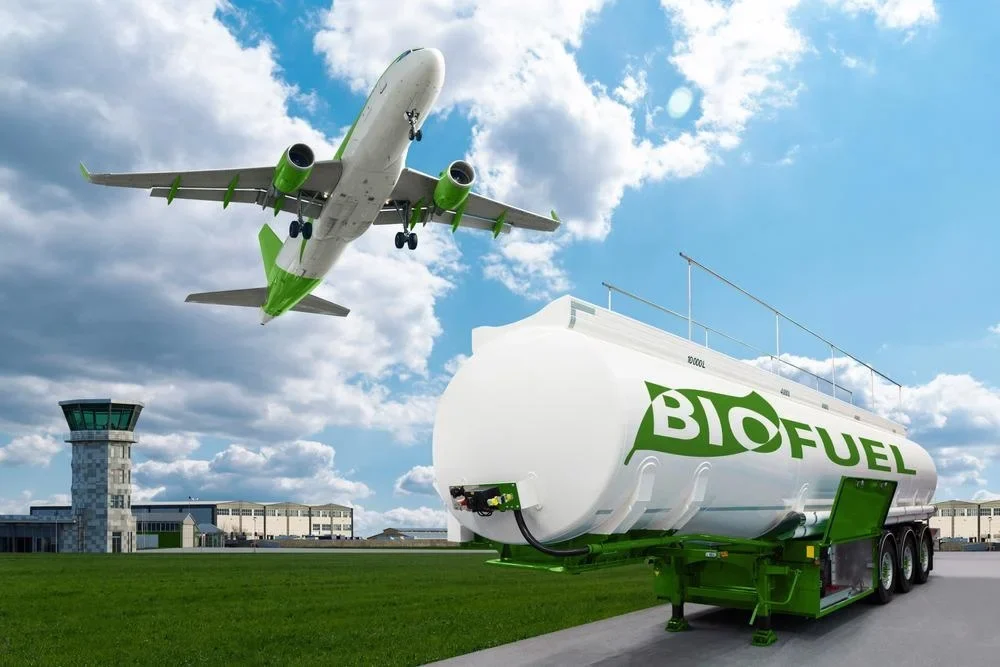
One of the most significant developments in aviation’s decarbonization journey is the rapid advancement of Sustainable Aviation Fuel (SAF). Unlike conventional jet fuel, which is refined from crude oil, SAF is produced using renewable and waste-based feedstocks that can substantially reduce lifecycle greenhouse gas emissions while maintaining the performance standards required for commercial aviation.
Rather than referring to a single type of fuel, Sustainable Aviation Fuel represents a family of certified fuels produced through different technologies and raw materials. Depending on the production pathway, SAF can be manufactured using used cooking oil, agricultural residues, forestry waste, municipal solid waste, animal fats, algae, and synthetic fuels created from renewable electricity, captured carbon dioxide, and water.
One of the biggest advantages of SAF is that it functions as a “drop-in fuel.” This means approved SAF blends can be used alongside conventional jet fuel without requiring airlines to replace aircraft engines or significantly modify existing airport fueling infrastructure. This compatibility allows airlines to begin reducing emissions while continuing to operate their existing fleets.
Although SAF still produces carbon dioxide during flight, its environmental advantage comes from significantly lower lifecycle emissions. Because many feedstocks originate from renewable biological sources or recycled waste materials, the carbon released during combustion can be partially offset by the carbon absorbed during biomass growth or avoided through waste utilization. As a result, many SAF production pathways can reduce lifecycle greenhouse gas emissions by up to 80% compared to conventional jet fuel, depending on the feedstock, production process, and supply chain. Additionally, unlike conventional jet fuel derived from crude oil, biofuels used in SAF (such as HEFA) contain virtually no sulfur compounds. This results in near-zero sulfur dioxide (SO₂) emissions when burned, helping to reduce air pollution, acid rain, and respiratory health impacts.
Growing corporate sustainability commitments, investor expectations, carbon reduction targets, and government incentives are accelerating global demand for Sustainable Aviation Fuel. Major airlines are increasingly signing long-term SAF supply agreements as they work toward achieving net zero emissions while meeting evolving regulatory requirements and customer expectations.
Major Sustainable Aviation Fuel Production Technologies
Researchers, fuel producers, and technology companies around the world are actively developing scalable Sustainable Aviation Fuel production technologies. Some of the most promising approaches include.
| Technology | Feedstock | Commercial Readiness | Estimated Lifecycle Emission Reduction | Key Challenge |
|---|---|---|---|---|
| HEFA | Waste oils, animal fats | High | Up to 80%* | Limited feedstock |
| ATJ | Ethanol, isobutanol | Medium | Varies by pathway | Scaling production |
| Electrofuels | Green hydrogen + captured CO₂ | Emerging | Very high potential | High production cost |
| Green Hydrogen | Renewable electricity | Early stage | Near-zero direct emissions | Aircraft and infrastructure redesign |
*Actual lifecycle greenhouse gas emission reductions depend on feedstock, production pathway, and supply chain conditions.
Biofuels (HEFA and Biomass-Based Fuels)
Biofuels are currently the most commercially available form of Sustainable Aviation Fuel and account for the majority of global SAF production today. They are produced from renewable feedstocks such as used cooking oil, animal fats, agricultural residues, forestry waste, and certain non-food energy crops. One of the most widely used production pathways is Hydroprocessed Esters and Fatty Acids (HEFA), which converts waste oils and fats into high-quality aviation fuel.
Because HEFA fuels are already certified for commercial use, airlines around the world are increasingly adopting them to reduce lifecycle greenhouse gas emissions. Companies including Neste, World Energy, and Honeywell UOP have played an important role in scaling commercial SAF production using these technologies.
Electrofuels
Electrofuels, also known as e-fuels or synthetic aviation fuels, represent one of the most promising long-term solutions for achieving near-carbon-neutral aviation. These fuels are produced by combining green hydrogen, generated through renewable-powered electrolysis, with captured carbon dioxide to create synthetic hydrocarbons that closely resemble conventional jet fuel.
Although commercial production remains limited due to high costs and renewable electricity requirements, electrofuels offer significant potential because they do not depend on biological feedstocks. As renewable energy capacity expands and production technologies mature, electrofuels are expected to become an increasingly important part of the future aviation fuel mix.
Green Hydrogen
Hydrogen is another technology attracting significant investment from aircraft manufacturers and governments worldwide. Unlike Sustainable Aviation Fuel, hydrogen is not simply a replacement fuel but may require entirely new aircraft designs, storage systems, and airport infrastructure.
When produced using renewable electricity, often referred to as green hydrogen, it can enable aviation with little or no direct carbon emissions. However, challenges related to storage, aircraft design, fuel distribution, and certification mean that hydrogen-powered commercial aviation is likely to develop gradually over the coming decades. Companies such as Airbus are actively investing in hydrogen-powered aircraft concepts aimed at transforming long-distance aviation in the future.
Alcohol-to-Jet (ATJ) Fuels
Another emerging production pathway is Alcohol-to-Jet (ATJ) technology, which converts renewable alcohols such as ethanol and isobutanol into sustainable aviation fuel. These alcohols can be produced from agricultural waste, biomass, or other renewable feedstocks before undergoing chemical conversion into jet fuel.
Although ATJ currently represents a smaller share of global SAF production than HEFA fuels, it expands the range of available feedstocks and reduces dependence on waste oils. As production technologies improve, ATJ is expected to play an increasingly important role in diversifying the global sustainable aviation fuel supply chain.
No single production technology is expected to meet the aviation industry’s future fuel demand on its own. Instead, experts anticipate that multiple SAF production pathways will develop simultaneously, supported by regional feedstock availability, technological innovation, renewable energy expansion, and government policies. This diversified approach will be essential for scaling sustainable aviation fuel production while maintaining long-term energy security and reducing global aviation emissions.
The Challenges Ahead
Despite its enormous potential, Sustainable Aviation Fuel is still far from becoming the dominant fuel used by the global aviation industry. Several technical, economic, and supply chain challenges must be addressed before SAF can be produced at the scale required to meet future demand.
High Production Costs
The biggest barrier to widespread adoption is cost. Depending on the production pathway and feedstock, Sustainable Aviation Fuel can cost significantly more than conventional jet fuel. Airlines already operate on relatively thin profit margins, making it difficult to absorb higher fuel costs without government incentives, long-term purchase agreements, or customers willing to pay sustainability premiums.
As production volumes increase and new manufacturing facilities become operational, industry experts expect economies of scale and technological improvements to gradually reduce production costs over the coming years.
Limited Feedstock Availability
Many current SAF production pathways rely on waste cooking oil, animal fats, agricultural residues, or forestry waste. While these feedstocks provide important environmental benefits, their global supply is limited. Meeting future aviation fuel demand will require the development of additional feedstock sources, including municipal waste, algae, renewable electricity, and synthetic fuels.
Creating a diversified feedstock ecosystem will be essential for ensuring long-term fuel security while avoiding competition with food production and land use.
Production Capacity and Infrastructure
Global demand for Sustainable Aviation Fuel is growing much faster than production capacity. Building new refineries, expanding transportation infrastructure, developing storage facilities, and establishing reliable supply chains will require billions of dollars in long-term investment from both the public and private sectors.
Many airports are also beginning to upgrade fuel handling systems and logistics networks to support increasing SAF distribution as commercial availability expands.
Policy and Regulatory Uncertainty
Government policies will play a critical role in determining how quickly Sustainable Aviation Fuel scales globally. Tax incentives, blending mandates, carbon pricing mechanisms, and research funding can significantly accelerate adoption, while inconsistent regulations across countries may slow investment and create uncertainty for producers and airlines.
Greater international cooperation will be essential to establish common sustainability standards, certification processes, and lifecycle emissions accounting.
Although these challenges are significant, they also represent major opportunities for innovation, investment, and collaboration. Companies developing new feedstocks, production technologies, certification systems, carbon accounting solutions, and aviation infrastructure are expected to play a central role in building the next generation of sustainable aviation.
Global Market Growth and Business Opportunities
The rapid growth of Sustainable Aviation Fuel is creating opportunities far beyond the aviation industry itself. As airlines, governments, and corporations work toward achieving net zero commitments, demand for SAF is expected to increase significantly over the next decade, creating new investment opportunities across energy, manufacturing, logistics, and climate technology.
According to the International Air Transport Association, global SAF production reached approximately 1 million tonnes in 2024, accounting for only a small fraction of total aviation fuel demand. However, production capacity is expected to expand rapidly as governments introduce supportive policies and private investment accelerates. Industry analysts estimate that global SAF demand could increase several times over by 2030 as commercial aviation moves toward stricter emissions reduction targets.
This growing market is encouraging investment throughout the entire aviation value chain. Beyond fuel producers, companies involved in waste management, biomass collection, renewable electricity generation, green hydrogen production, carbon capture, fuel transportation, airport infrastructure, and sustainability certification are expected to benefit from the industry’s transition.
Large corporations are also becoming important drivers of SAF adoption. Many multinational companies are purchasing Sustainable Aviation Fuel certificates and participating in corporate travel decarbonization programs to reduce Scope 3 emissions associated with business travel. This growing corporate demand is creating additional revenue streams for airlines and fuel suppliers while strengthening the broader sustainable aviation ecosystem.
As production technologies mature and economies of scale improve, Sustainable Aviation Fuel is expected to become an increasingly important component of global climate strategies. For sustainable businesses, the transition represents not only an environmental milestone but also a long-term commercial opportunity driven by innovation, policy support, and changing market expectations.
Industry and Government Initiatives
Governments, aviation regulators, fuel producers, and aircraft manufacturers all have a critical role to play in accelerating the adoption of Sustainable Aviation Fuel. Since SAF remains more expensive than conventional jet fuel, public policy and long-term industry collaboration are essential to encourage investment and expand production capacity.
Several countries have introduced policies designed to increase SAF production and reduce emissions from aviation. In the United States, the Sustainable Aviation Fuel Grand Challenge aims to significantly increase domestic SAF production while supporting innovation across the aviation fuel supply chain. The European Union has introduced the ReFuelEU Aviation initiative, which gradually increases the minimum SAF blending requirements for fuel supplied at European airports. Similar strategies are also being developed in countries including the United Kingdom, Japan, Singapore, and Australia.
Airlines are also making long-term commitments to secure future SAF supplies. Major carriers including United Airlines, Delta Air Lines, Lufthansa, British Airways, and Qantas have announced agreements with SAF producers as part of their broader net zero strategies. These long-term purchase agreements help fuel producers justify investments in new production facilities while providing airlines with greater certainty over future fuel availability.
According to IATA, airlines will require hundreds of millions of tonnes of Sustainable Aviation Fuel annually by 2050 to achieve the aviation industry’s net zero commitments, highlighting the enormous scale of future production needed.
Aircraft manufacturers continue to support the transition by designing engines and aircraft capable of operating with higher SAF blends while investing in research on hydrogen-powered and next-generation propulsion technologies. At the same time, airports are upgrading fuel storage, distribution systems, and logistics infrastructure to accommodate increasing SAF demand.
Although policies differ across regions, the overall direction is clear. Governments and industry leaders increasingly recognize that achieving aviation decarbonization will require coordinated investment, supportive regulation, technological innovation, and international collaboration over the coming decades.
What This Means for Sustainable Businesses
The transition to Sustainable Aviation Fuel is creating opportunities that extend far beyond airlines and fuel producers. As governments strengthen climate policies and corporations increase investment in decarbonization, businesses across multiple industries can participate in building the sustainable aviation ecosystem.
Renewable energy developers, waste management companies, agricultural businesses, carbon capture technology providers, hydrogen producers, logistics companies, airport operators, and sustainability consultants all have a role to play in supporting SAF production and adoption. At the same time, software providers offering carbon accounting, ESG reporting, supply chain transparency, and lifecycle emissions management are becoming increasingly valuable partners within the aviation sector.
For sustainable startups, the growth of SAF represents an opportunity to develop innovative technologies that improve feedstock availability, production efficiency, emissions monitoring, and regulatory compliance. Companies that can solve challenges related to scalability, certification, infrastructure, or carbon verification are likely to benefit as governments and private investors continue funding aviation decarbonization initiatives.
Rather than viewing Sustainable Aviation Fuel as simply an alternative fuel, businesses should recognize it as part of a much broader transition toward low-carbon transportation and climate-resilient supply chains. Organizations that understand these market shifts today will be better positioned to participate in one of the fastest-growing segments of the global clean energy economy.
A Greener Future for Aviation
Sustainable Aviation Fuel is no longer an experimental concept. It is becoming a key pillar of the aviation industry’s strategy to reduce carbon emissions while maintaining global connectivity and economic growth. Although challenges such as production costs, feedstock availability, and infrastructure development remain, continued technological innovation and supportive government policies are accelerating progress toward large-scale adoption.
The transition to Sustainable Aviation Fuel is also reshaping the broader business landscape. From renewable energy and waste management to carbon accounting, green hydrogen, and climate technology, the shift toward cleaner aviation is creating new opportunities for innovation, investment, and cross-industry collaboration.
As airlines, manufacturers, policymakers, and sustainable businesses work together, Sustainable Aviation Fuel is expected to play an increasingly important role in achieving global climate goals. Organizations that understand these emerging trends today will be better prepared to contribute to, and benefit from, the future of low-carbon aviation.