


As airlines face increasing pressure to reduce emissions, hydrogen-electric propulsion is emerging as one of the most closely watched technologies in aviation. Among the companies leading this transition, ZeroAvia has positioned itself at the forefront of commercial hydrogen-electric flight.
Table of Contents
By offering an alternative propulsion system that eliminates direct fossil fuel combustion, ZeroAvia is exploring a pathway toward lower-emission regional aviation.

One of the company’s most promising steps forward? A powerful partnership with Alaska Airlines, aimed at developing the largest hydrogen-electric aircraft the world has ever seen. This isn’t just innovation for the sake of hype — it’s a bold move toward a net-zero aviation future.
ZeroAvia’s Mission: Clean Flight for a Cleaner Planet
Founded with a clear vision of zero-emission flight, ZeroAvia is focused on replacing polluting jet engines with hydrogen-electric propulsion systems. These engines use fuel cells to convert hydrogen into electricity, which then powers electric motors to spin the aircraft’s propellers — all without burning a single drop of fossil fuel.

The goal? To make sustainable regional flight commercially viable — and not just in the distant future, but in this decade.
Hydrogen-Electric Propulsion: What Makes It Game-Changing?
ZeroAvia’s propulsion system is built on three key components:
- A multi-megawatt modular electric motor system
- High-temperature PEM fuel cells
- Advanced power electronics
Together, they enable the development of large, powerful engines capable of flying 40–80 seat regional aircraft, such as the Bombardier Q400. The certifiable ZA2000 powertrain delivers the energy density required for real-world, scalable zero-emission aviation.
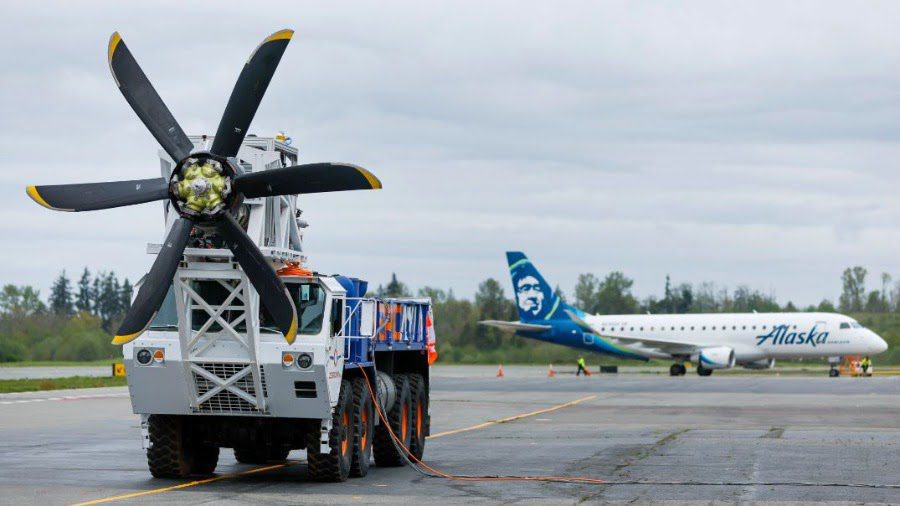
This isn’t lab-only theory — it’s been brought to life through rigorous testing, including ZeroAvia’s 15-ton HyperTruck ground test rig, which successfully demonstrated the electric motor system in action.
The Alaska Airlines Collaboration
One of ZeroAvia’s most exciting breakthroughs came in the form of a high-profile partnership with Alaska Airlines and its regional carrier, Horizon Air.
A key milestone in the partnership was Horizon Air’s handover of a 76-seat Bombardier Q400 aircraft to ZeroAvia for conversion into a hydrogen-electric demonstrator aircraft.
This move marks a key milestone in the company’s journey to build the world’s largest zero-emission, hydrogen-electric aircraft.
The aircraft even received a custom livery, symbolizing the shared mission between Alaska Airlines and ZeroAvia: to lead the transformation of aviation toward sustainability.
Why the Retrofit Model Could Accelerate Sustainable Aviation
One of the most commercially significant aspects of the Alaska Airlines partnership is not the hydrogen technology itself, but the business model behind it.
Rather than designing an entirely new aircraft platform from scratch, ZeroAvia is focusing on retrofitting existing regional aircraft with hydrogen-electric propulsion systems. Aircraft such as the Bombardier Q400 and De Havilland Dash 8 already operate across regional airline networks worldwide, giving carriers an opportunity to reduce emissions without replacing their entire fleets.
This approach could significantly reduce development costs, shorten deployment timelines, and allow airlines to leverage existing maintenance infrastructure and pilot training programs.
For regional carriers facing increasing pressure to reduce emissions while maintaining profitability, retrofitting existing aircraft may prove to be one of the most practical pathways toward decarbonisation.
The Alaska Airlines and Horizon Air collaboration therefore represents more than a technology demonstration. It serves as an early test of whether hydrogen-electric retrofits can become a commercially viable solution for the aviation industry.
From Regional Demonstrations to Commercial Scale
ZeroAvia’s development strategy follows a phased approach.
The company’s ZA600 powertrain is designed for smaller aircraft carrying approximately 9 to 19 passengers on regional routes approaching 300 miles. The larger ZA2000 system currently being developed for the Bombardier Q400 targets aircraft carrying between 40 and 80 passengers on routes approaching 500 miles, significantly expanding the potential market for hydrogen-electric aviation.
While the ZA600 is focused on near-term commercial deployment, the ZA2000 project aims to demonstrate that hydrogen-electric propulsion can support larger regional aircraft operating on commercially relevant routes.
This progression is important because regional aviation represents one of the most practical entry points for aviation decarbonisation, where route distances, passenger capacity, and operational requirements are better suited to emerging hydrogen technologies than long-haul international travel.
Collaborations That Matter
ZeroAvia’s progress isn’t happening in isolation. The company has formed an engineering partnership with De Havilland of Canada, the original manufacturer of the Dash 8 aircraft family, to accelerate the development process.
By combining airframe expertise with advanced propulsion systems, ZeroAvia is working to ensure that the technology isn’t just innovative — it’s practical, certifiable, and ready for commercial deployment.
Val Miftakhov, founder and CEO of ZeroAvia, captured the excitement around the partnership:
“Demonstrating this size of aircraft in flight, powered entirely by novel propulsion, would have been unthinkable a few years ago. Launching this program puts us on track for a test flight next year and accelerates our progress toward the future of zero-emission flight for Alaska Airlines and the world at large.”
Ben Minicucci, CEO of Alaska Airlines, shared a similar vision:
“This is a great step forward in aviation innovation, to help create a new future of flight right here at home. Alaska Airlines has defined a five-part journey to achieve net-zero carbon emissions, but we can’t get there alone. We’re thrilled to partner with industry leader ZeroAvia to make new zero-emissions options a reality.”
The Regulatory Challenge Ahead
Technology alone will not determine the success of hydrogen-electric aviation.
Before commercial passengers can fly on hydrogen-powered aircraft, regulators such as the Federal Aviation Administration (FAA) and the European Union Aviation Safety Agency (EASA) must certify entirely new propulsion architectures, fuel storage systems, and safety procedures.
Unlike conventional aircraft engines, hydrogen-electric systems introduce new considerations around fuel storage, thermal management, emergency procedures, and maintenance standards. These factors create a complex certification pathway that can take several years to complete.
While ZeroAvia has already achieved important testing milestones and secured experimental flight approvals for earlier prototypes, obtaining full commercial certification remains one of the industry’s most significant hurdles.
For investors, airlines, and manufacturers, regulatory approval timelines may ultimately prove just as important as technological breakthroughs.
The Green Hydrogen Bottleneck
While hydrogen-electric propulsion offers a promising pathway to decarbonising aviation, the aircraft itself is only one part of the equation. The broader challenge lies in building a reliable green hydrogen ecosystem capable of supporting commercial flight operations.
Unlike conventional jet fuel, hydrogen requires specialised production, storage, transportation, and refuelling infrastructure. Airports will need dedicated hydrogen handling facilities, safety systems, and supply chains capable of delivering fuel at scale. These infrastructure investments create opportunities not only for airlines, but also for energy providers, airport operators, equipment manufacturers, and hydrogen logistics companies.
The environmental benefits also depend heavily on how the hydrogen is produced. Hydrogen generated using renewable energy sources, commonly referred to as green hydrogen, offers the greatest emissions reduction potential. However, global green hydrogen production remains limited and often comes at a higher cost than conventional fuels.
For hydrogen-electric aviation to achieve widespread adoption, advances in aircraft technology must be matched by investments in renewable energy, hydrogen production facilities, airport infrastructure, and supporting supply chains. Companies such as ZeroAvia are helping drive demand, but the transition will require collaboration across the entire aviation ecosystem.
A Greener Sky Is Within Reach
ZeroAvia’s progress demonstrates that aviation decarbonisation is moving beyond research projects and into commercial reality. Through hydrogen-electric propulsion, strategic airline partnerships, and a retrofit-focused deployment model, the company is helping redefine how regional aviation could operate in a low-carbon economy.
The potential impact extends beyond technology innovation. Regional airlines face increasing pressure from investors, regulators, and customers to reduce operational emissions and strengthen their environmental commitments. Replacing conventional turboprop aircraft with hydrogen-electric alternatives could significantly reduce Scope 1 emissions on regional routes while supporting broader net-zero strategies.
Significant challenges remain, particularly around certification, hydrogen infrastructure, and fuel availability. However, the collaboration between airlines, aircraft manufacturers, regulators, and clean technology companies suggests that the foundations for a new aviation ecosystem are already being built.
If successful, hydrogen-electric aviation may not only transform how aircraft are powered but also reshape how airlines approach ESG performance, sustainability reporting, and long-term climate commitments.