

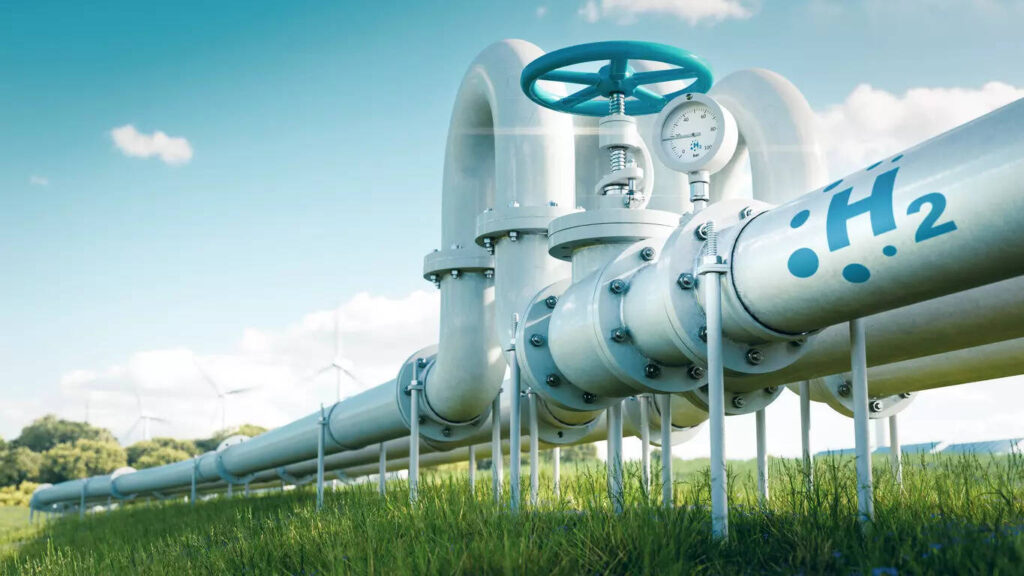
Green hydrogen is often positioned as the future of clean energy, but for most businesses, it still feels distant.
The reason is simple. Cost and scalability.
Table of Contents
For industrial players, hydrogen is not a vision problem. It is an economics problem.
Ossus Biorenewables, a Bengaluru-based startup, is attempting to change that equation by rethinking how hydrogen is produced in the first place. Instead of relying on energy-intensive electrolysis, the company is generating hydrogen directly from industrial wastewater.
This is not just an energy innovation. It is a process innovation.
Turning Waste Streams into Energy Assets
At the core of Ossus’ model is its OB HydraCel bioreactor, which uses microorganisms present in industrial effluents to produce hydrogen.
What makes this approach different is where it fits in the value chain.
Traditional hydrogen production is external. It requires sourcing, transportation, storage, and integration into operations.
Ossus flips this completely.
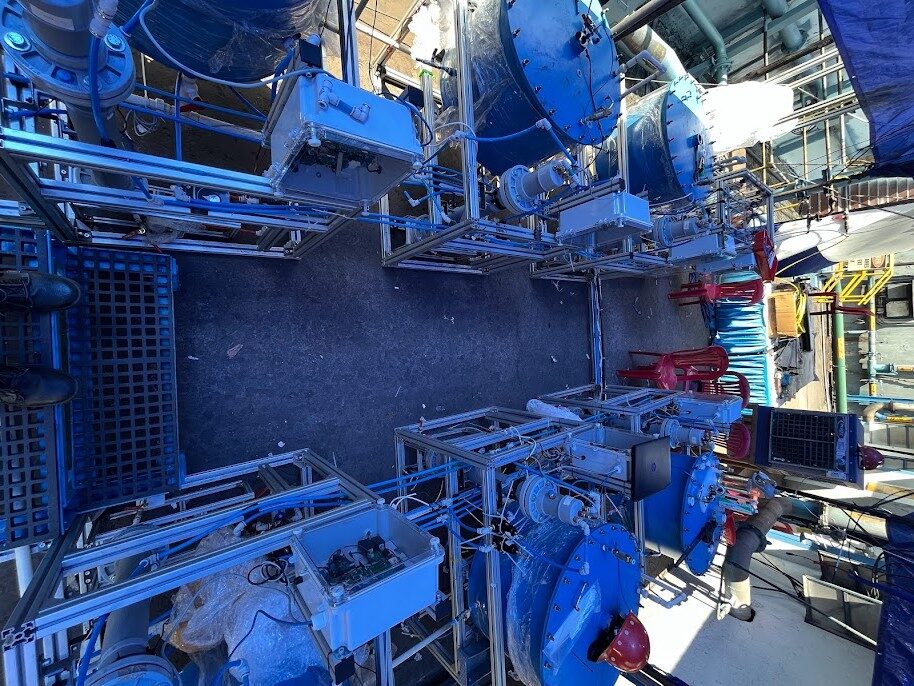
Hydrogen is generated on site, directly from waste streams that companies are already paying to treat or dispose of.
This creates a dual function system.
Wastewater treatment becomes energy production.
For industries like refining, chemicals, food processing, brewing, and pharmaceuticals, this is not a marginal improvement. It is a structural shift in how waste is handled.
Instead of being a compliance cost, waste becomes an input for energy generation.
Why This Matters for ESG and Compliance
Most companies are currently approaching sustainability through reporting frameworks.
Scope 1, Scope 2, Scope 3.
Targets, disclosures, audits.
But the real shift is happening at the operational level.
Technologies like waste to hydrogen directly impact Scope 1 emissions because they change how energy is produced and consumed within the facility.
They also reduce environmental liability tied to wastewater discharge.
For ESG leaders, this creates three immediate advantages.
Lower emissions intensity without relying entirely on external offsets.
Reduced compliance pressure around industrial effluents.
Improved energy resilience through on site production.
This is the kind of intervention that moves sustainability from reporting to execution.
The Cost Equation That Changes Adoption
One of the biggest barriers to green hydrogen adoption has been cost.
Global benchmarks still place green hydrogen production in the range of 4 to 6 dollars per kilogram.
Ossus claims it can deliver hydrogen at less than 1 dollar per kilogram.
If this holds true at scale, the implication is significant.
Hydrogen shifts from being a premium sustainability choice to a viable operational alternative.
For industries with thin margins, this is the difference between experimentation and adoption.
However, cost claims alone do not drive transformation.
Reliability, scalability, and integration into existing systems will determine whether this model can move beyond pilot deployments.
Scaling Beyond Pilot Projects
Ossus has already deployed its technology at a large steel plant in Jharkhand, signaling early commercial validation.
The recent 2.4 million dollar funding round is aimed at scaling manufacturing, improving bio processing capabilities, and expanding into international markets.
But scaling in industrial environments is not just about production capacity.
It is about consistency.
Industrial clients will expect predictable output, stable performance, and seamless integration with existing infrastructure.
This is where most clean tech innovations face their real test.
India’s Role in the Hydrogen Transition
India’s National Green Hydrogen Mission targets 5 million metric tons of annual production.
While much of the conversation has focused on large scale electrolysis and renewable energy integration, decentralized models like Ossus introduce a different pathway.
One that is localized, modular, and embedded within industrial ecosystems.
For India, this has two strategic implications.
Reduced dependence on imported technologies.
Faster adoption across mid sized industrial clusters that may not have access to large renewable infrastructure.
For businesses, this opens up new opportunities to align with national policy while improving operational efficiency.
The Real Opportunity for Businesses
The bigger takeaway here is not just about hydrogen.
It is about how companies start viewing waste.
Industrial waste has traditionally been treated as a cost center.
Technologies like HydraCel reposition it as a resource.
This shift has implications beyond energy.
It changes how companies think about circularity, resource efficiency, and process design.
However, adoption will depend on capital investment decisions, internal alignment between sustainability and operations teams, and regulatory clarity.
What Comes Next
The momentum around green hydrogen is real, but not all solutions will scale.
The ones that will succeed are those that integrate directly into existing industrial processes, reduce costs, and solve multiple problems at once.
Waste to hydrogen sits at that intersection.
For decision makers, the question is no longer whether hydrogen will play a role in the energy transition.
It is where in the value chain it fits for their business.
And whether innovations like this can turn sustainability from a reporting requirement into a competitive advantage.