

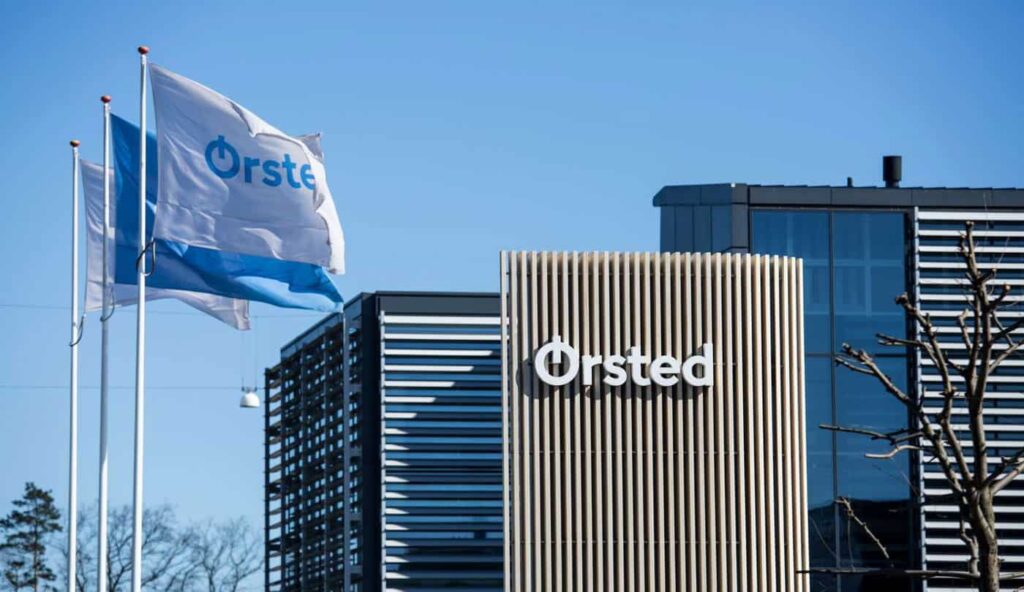
Orsted’s story is not just based on ambition but on execution. What makes this transformation significant is not the shift to renewables, but the systems and discipline required to execute it at scale.
Once, it was one of Europe’s most coal-intensive utilities. Today, the Danish company has transformed into a renewable energy giant whose business now runs almost entirely on clean power.
Orsted is widely seen as proof that sustainability can sit at the core of commercial strategy rather than exist as a parallel ESG initiative. This transformation was not driven by ambition alone, but by measurable targets, capital allocation discipline, and continuous tracking of operational data.
According to Orsted’s own disclosures, nearly all of its power generation now comes from renewable sources. This Ørsted renewable energy review treats the company as energy infrastructure, measured by execution, scale, and outcomes, not ESG narratives. Read on!
Company Overview: A Former Coal Giant That Rewrote Its Identity
Orsted began its transformation in 2008. At the time, it was responsible for about one-third of Denmark’s total carbon emissions. Instead of managing decline, the company chose reinvention, laying the foundation for a long-term net-zero transition by 2025 and beyond.
- Orsted sets its target through the Science Based Target initiative (SBTi)-approved process. It plans to reduce Scope 1 and 2 emissions to net zero by 2040. It has already mitigated the intensity of these emissions by 98% from 2006 to 2025.
- Orsted is also listed on Nasdaq Copenhagen. It plans to invest DKK 145 billion between 2025 and 2027 to ramp up renewable capacity.
- It operates in Europe, North America, and the Asia-Pacific, having fixed offshore wind as the central growth engine.
- Such a large-scale emissions reduction required baseline measurement, continuous tracking of Scope 1 and 2 emissions, and alignment with externally validated frameworks like SBTi.
- This reflects a shift from sustainability commitments to data-backed operational accountability.
Renewable Energy Projects in the USA – Offshore Wind as a Strategic Stress Test
The United States is one of Orsted’s most important growth markets and also its most complex. The company is a major developer of American offshore wind through projects such as Sunrise Wind and Revolution Wind.
Here are some facts to consider:
- The U.S. Department of Energy has recognized the significance of offshore wind for long-term grid decarbonization.
- The Clean Investment Monitor also reveals how offshore wind and clean energy supply chains have become central to US climate investment.
The US expansion also reveals how delicate huge clean energy initiatives can be. At the end of 2025, lease suspension orders issued by the Bureau of Ocean Energy Management suspended all activities of major projects under construction.
In 2026, Orsted announced it would take legal action due to the severe financial impact. As reported by Reuters, the Sunrise Wind project was already 45% complete and scheduled to begin electricity production in 2026. This shows the level of capital already committed.
The disruption also highlights a key reality for energy developers, project risk is not just technical or financial, but regulatory. For companies, this makes scenario planning and risk-adjusted capital allocation essential, especially when projects are tied to long-term ESG targets.
Global Sustainability Leadership – Recognition Built on Measurable Action
Orsted’s sustainability reputation is based on third-party validation rather than self-declared leadership.
- The company is listed on the CDP Climate Change A List, which recognizes the world’s strongest climate governance frameworks.
- It has also been ranked the world’s most sustainable energy company in the Corporate Knights Global 100 and holds high ESG ratings from agencies such as EcoVadis.
- SBTi’s case studies highlight Orsted as a benchmark for how energy companies can align capital planning with climate science.
These recognitions are not symbolic, they depend on structured disclosures, audited data, and transparent reporting frameworks.
Business Impact & Numbers: Clean Energy at Industrial Scale
Orsted is a heavy-asset energy company operating at a national infrastructure scale. As of Q3 2025, Orsted has:
- Installed renewable energy capacity of 18.5 GW
- 8.9 GW under construction
- A target of 27GW in installed capacity by 2027
Within that, the amount of offshore wind alone stands well over 10 GW. According to Deloitte, real decarbonization requires an industrial-scale rollout, not pilot projects.
Managing renewable capacity at this scale requires real-time operational data, asset-level monitoring, and integration between financial and sustainability metrics. It also shows how energy transition is increasingly tied to data infrastructure, not just physical infrastructure. This is where energy companies increasingly resemble data-driven enterprises rather than traditional utilities.
Market Challenges & Risks – Where Clean Energy Meets Reality
Orsted operates in one of the most capital-intensive sectors in the world. Some of the big risks are:
- Regulatory uncertainty (as seen in the US lease suspensions)
- Inflation-driven cost increases
- Supply-chain pressure
- Interest-rate sensitivity
- Political volatility around climate policy
Forbes has noted that clean energy development is now as much a political challenge as a technical one.
Orsted has previously paused or cancelled projects when financial assumptions no longer aligned with market conditions. This shows Orsted’s disciplined but cautious approach to growth.
These risks make it critical for companies to continuously reassess project viability using updated cost, policy, and performance data.
Sustainability & ESG Perspective: Beyond Carbon Accounting
Orsted’s ESG strategy is built on two foundations:
1. Decarbonization as Operations, not PR
The company considers the reduction of emissions a responsibility within the value chain for Scope 1, 2, and 3 and has included climate goals in capital spending and supply chain engagement.
This requires integrating emissions data into core business systems, where climate performance is tracked alongside financial performance.
2. Biodiversity as Infrastructure Risk Management
Orsted developed the industry’s first Biodiversity Measurement Framework, a system that tracks ecological impact from early planning through project operation.
The framework includes:
- Risk screening
- Baseline biodiversity mapping
- Impact modelling
- Net-positive interventions
- Long-term monitoring
From 2030, Orsted’s projects are projected to achieve an overall positive biodiversity outcome.
This approach turns biodiversity from a qualitative concept into a measurable system, where ecological impact can be tracked, reported, and improved over time. It reflects how ESG is evolving into structured data models that can be monitored across the lifecycle of large infrastructure projects.
What This Transformation Means for Modern Businesses
Orsted has proved that a fossil fuel company can successfully transform into a renewable energy leader. All this while maintaining business discipline.
- For operators, this shows that sustainability must be integrated into core systems, not treated as a parallel initiative.
- For investors, it reinforces that clean energy is now infrastructure-grade and dependent on execution discipline.
- For ESG teams, it highlights a clear shift, from narrative reporting to data-driven performance tracking.
Orsted is not flawless. It faces regulatory uncertainty, market volatility, and capital risk. But few companies demonstrate the clean energy transition that Orsted has built, turbine by turbine, grid by grid.
Without structured reporting, even strong sustainability strategies cannot scale. ESG is no longer a reporting exercise done at the end of the year. It is becoming an operational layer embedded into decision-making, risk management, and capital allocation.
Companies that cannot measure their transition will struggle to execute it.