

Despite decades of innovation, weed management in agriculture remains a cost-intensive and compliance-sensitive operation. Farmers continue to rely on manual labor or chemical herbicides, both of which are increasingly under pressure due to rising labor costs and tightening environmental regulations.
For large-scale farms and agribusiness operators, this is no longer just an operational challenge, it is a strategic one.
However, laser weeding is an innovative solution for green business. In fact, the efficiency of laser weeding with a Carbon Robotics unit in comparison to herbicides on beets, spinach, and peas was assessed in 2024 in trials conducted in New Jersey and New York.
The emergence of AI-driven laser weeding by Carbon Robotics introduces a new category of solution that directly impacts cost structures, sustainability metrics, and regulatory exposure.
The results showed that laser weeding reduced biomass by ≥97% and increased crop growth by ≥30%, making it as successful as or even more effective than herbicides at controlling weeds.
For sustainable business owners and investors exploring the future of AgTech, lets evaluates whether laser weeding is simply a sustainability upgrade or a viable operational alternative for modern agriculture businesses.
Technology Overview and Operational Capabilities of Carbon Robotics AI Laser Weeder
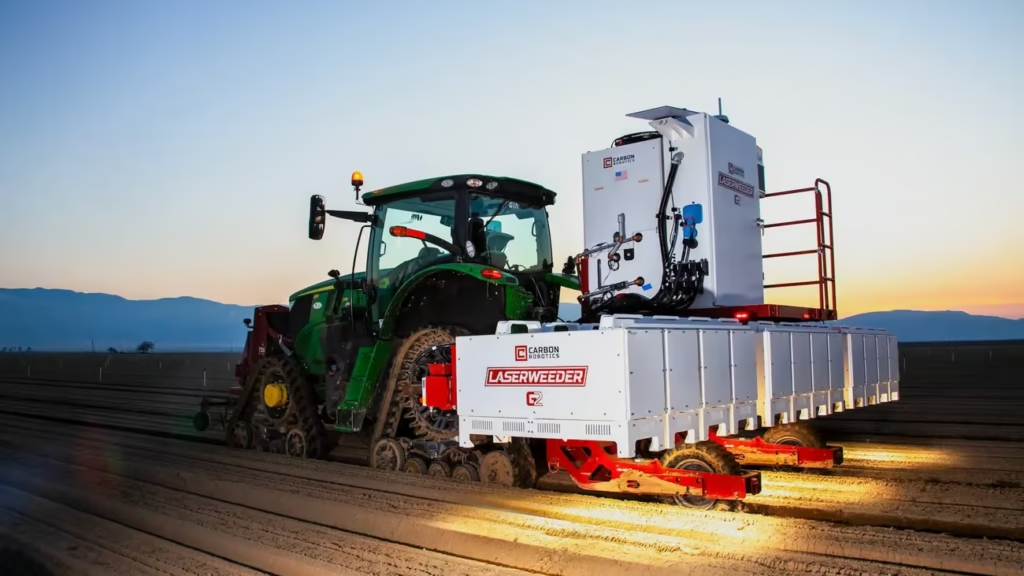
The Carbon Robotics AI Laser Weeder is an autonomous agricultural robot that detects and removes weeds without the need for chemicals or disturbing the soil, utilizing computer vision and lasers.
It has the potential to become a cost-effective alternative depending on scale and deployment conditions to herbicides. Some of the top Features include:
- Advanced AI and computer vision for precision weed detection
- High-power CO2 lasers for targeted destruction
- Computer vision with high-resolution cameras
- An iPad touchscreen UI for flexible functions
How Does Carbon Robotics’ AI‑driven Laser Weeding Work?
Carbon Robotics’ invention relies on the advanced integration of laser technology and AI. The system utilizes computer vision and high-resolution sensors to scan large fields in real-time and detect weeds with high accuracy.
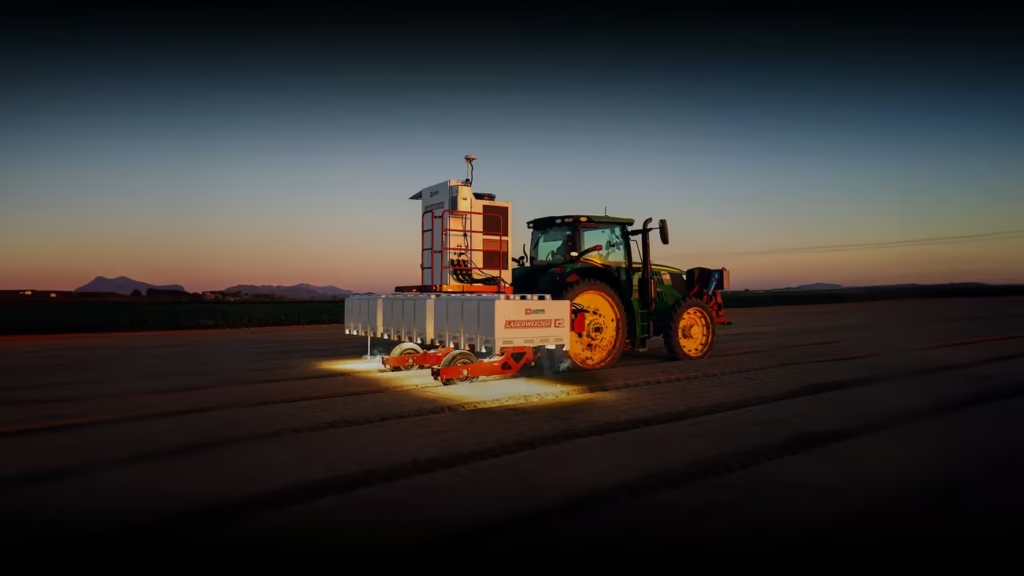
Once it spots the weeds, the laser technology sends out precise pulses that instantly destroy them. Best part? It does not endanger nearby crops or soil life. This clear-cut method reduces herbicide use and revitalizes soil health.
For large-scale farms, it brings in two benefits: Improved efficiency and cost-effective agricultural practices.
What This Means for Agricultural Businesses and ESG Reporting
For agribusiness operators, the relevance of AI-based laser weeding goes beyond sustainability claims and enters core operational decision-making.
From a cost perspective, the technology replaces a recurring expense, labor and herbicides, with a capital investment. This shift becomes viable in regions where labor availability is inconsistent or wages are rising. For large-scale farms, this can significantly stabilize operational costs over time.
From a compliance standpoint, the reduction or elimination of herbicide usage directly aligns with tightening regulatory frameworks around chemical inputs, particularly in export-driven agriculture markets. This positions farms using laser weeding more favorably in global supply chains that increasingly demand traceability and low chemical residue.
From an ESG reporting perspective, the impact is measurable. Reduced chemical usage, improved soil health, and lower indirect emissions from herbicide production contribute to stronger environmental performance metrics. For companies preparing sustainability disclosures or aligning with ESG frameworks, this creates a clear data advantage.
However, adoption is not universal.
The economics of laser weeding are currently more suited to large farms with high acreage and consistent crop cycles. Smaller farms or those with limited capital access may find the upfront investment difficult to justify in the short term.
In that sense, laser weeding is not just a technology shift, it is a scale-driven competitive advantage.
Funding, Adoption, and Market Position
Carbon Robotics has attracted a lot of interest and backing. The company’s total investment now stands at over $99 million after successfully raising $67 million in a Series C funding round as of 2023. This support indicates how confident investors are in the technology’s ability to upend traditional weed management techniques.
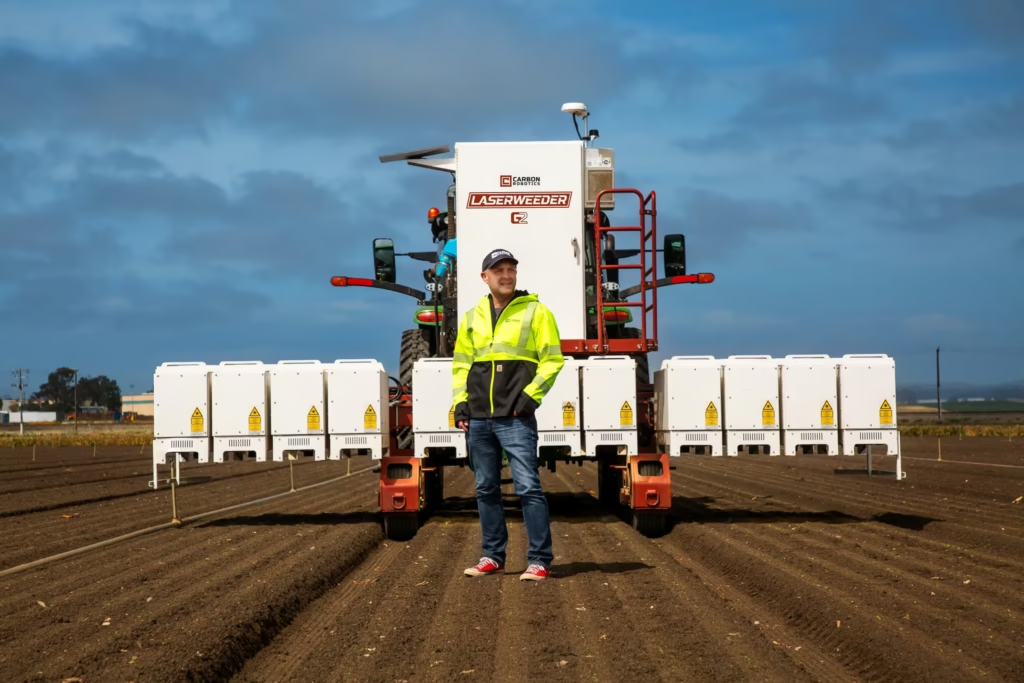
Adoption statistics draw an interesting picture: hundreds of LaserWeeders will be in use throughout North America by 2024. This suggests that large-scale farms seeking to enhance sustainability are adopting AI-driven, chemical-free weed management.
In the $30 billion worldwide weed management business, market analysts view this technology as a formidable substitute as farmers look for more pragmatic and ecologically friendly solutions.
Sustainability Score Factors
When considering the sustainability credentials of carbon laser weeding, several factors come into play.
- Zero Chemical Runoff: Laser weeding cuts down on the use of herbicides to prevent water pollution and protect ecosystems.
- Protect the Ecology of Soil: Encourages practitioners to adopt organic methods that leave no chemical residues in the soil.
- Usage of Energy vs. Efficiency: Even though the laser weeder is powered by electricity, it consumes less energy than the total of manufacturing, shipping, and application of chemical herbicides.
- Durability: Built for outdoor use with sturdy components; regular upkeep extends equipment lifespan.
- Getting a Better Product: Some of the R&D objectives are to increase energy efficiency and reduce consumption to attain a zero-carbon target for sustainable businesses.
- Long-Term Viability: Designed to be an economical and environmentally responsible investment for large farms that are dedicated to sustainability.
Strategic Outlook for AgTech and Sustainable Operations
The rise of AI-driven farming technologies like laser weeding signals a broader transition in agriculture, from input-heavy practices to precision-based operations.
For businesses, this shift is not only about sustainability positioning but also about long-term operational resilience. Technologies that reduce dependency on volatile inputs such as labor and chemicals will define the next phase of agricultural competitiveness.
Carbon Robotics is currently positioned at the forefront of this transition, but the real impact will depend on how quickly the technology becomes economically accessible across different farm sizes and geographies.
For decision-makers in agriculture, the question is no longer whether such technologies will emerge, but when it becomes necessary to adopt them to remain competitive in a rapidly evolving market.