


At a recent board meeting, the CEO of a mid-sized manufacturing firm addressed concerns about upcoming EU carbon regulations. The new rules, effective next quarter, require significant reductions in the company’s carbon footprint, necessitating urgent changes to supply chains and processes.
To prepare for these regulations, business leaders can take practical first steps, such as conducting a thorough audit of their current carbon emissions to identify key areas for improvement. Additionally, they could initiate partnerships with sustainability experts or invest in carbon offset programs to mitigate immediate impacts.
Prioritising the implementation of green technologies in key operations and reevaluating their supply chains for sustainability compliance are crucial actions that can be undertaken without delay.
Across the world, governments are tightening climate regulations, investors are redirecting capital into low-carbon solutions, and businesses are realising that sustainability is now a competitiveness issue, not just a reputation one.
This period is distinct from earlier clean-tech trends due to its scale. Renewable energy is no longer standing alone. It is being paired with advanced storage, AI-driven grids, new fuels like green hydrogen, and circular material systems that rethink how products are designed, used and reused.
At the same time, innovation is no longer confined to labs. Offshore wind farms are becoming hubs for hydrogen production. Buildings are turning into energy assets. Farms are becoming data platforms. Wastewater plants are evolving into power generators.
What is green technology?
Green technology refers to products, systems, and practices designed to reduce environmental harm and conserve natural resources.
The category includes clean energy solutions like solar and wind power, wastewater treatment systems, waste management innovations, carbon capture technologies, and energy-efficient appliances.
You’ll often see the terms “green tech,” “clean tech,” and “climate tech” used interchangeably, though each has a slightly different focus.
What is the key difference between green tech, clean tech, and climate tech
These three terms overlap significantly, but understanding their distinctions is helpful when evaluating solutions or reading industry reports.
| Term | Primary Focus | Common Examples |
| Green Tech | Reducing environmental impact broadly | Recycling systems, eco-friendly packaging, water conservation |
| Clean Tech | Eliminating pollution at the source | Solar panels, electric vehicles, wind turbines |
| Climate Tech | Targeting greenhouse gas reduction specifically | Carbon capture, methane monitoring, direct air capture |
In practice, many innovations fit multiple categories. A solar panel qualifies as both clean tech (no emissions during operation) and climate tech (reduces CO2 from energy generation).
The distinctions matter most when seeking funding or navigating regulations, where specific definitions may apply.
31 green technology innovations reshaping the future
The following innovations represent significant advances across green technology categories. Each offers practical applications for businesses, governments, and individuals working toward sustainability goals.
1. Clean energy generation
Clean energy innovation is moving beyond incremental efficiency gains. The focus today is scale, material impact, land efficiency, and system integration.
Power generation is becoming larger, smarter, and increasingly intertwined with storage, hydrogen, and digital infrastructure.
1. Offshore wind and next‑gen turbines
Offshore wind has become one of the fastest scaling clean energy technologies globally. Europe continues to lead in installed capacity, while China is building at unprecedented speed, and the US is finally entering commercial-scale deployment.
The UK’s Hornsea projects alone are expected to exceed 6 GW once all phases are complete, enough to power millions of homes, making it one of the largest offshore wind clusters in the world, according to data from 6 GW capacity estimates published by Ørsted and UK energy authorities.
At the same time, China added around 17 GW of offshore wind in 2021 alone, the largest single‑year increase in history and far more than half of global offshore additions that year, as reported by the Global Wind Energy Council.
Next-generation turbines are driving this scale. Rotor diameters are now crossing 220 metres, with single turbines capable of producing up to 15 MW.
Taller towers and larger swept areas are pushing capacity factors higher and helping reduce the levelized cost of offshore wind electricity, particularly at high‑resource sites.
2. Low‑emission and recycled‑steel turbine components
As turbines scale up, the embodied carbon of materials is coming under scrutiny. Steel alone accounts for a significant share of a wind turbine’s lifecycle emissions.
Manufacturers and suppliers are increasingly using recycled scrap steel in electric arc furnaces powered by low‑carbon electricity, cutting lifecycle emissions by roughly 70–80% compared with conventional blast‑furnace steel, according to life‑cycle studies from the World Steel Association.
This shift aligns with Europe’s broader push toward green steel, where hydrogen and electric arc furnaces replace coal-based processes.
Several turbine OEMs have committed to sourcing low-emission steel for towers, nacelles, and foundations over the next decade.
While this does not change turbine performance, it materially improves the carbon payback period of offshore and onshore wind projects, which is increasingly important for climate-aligned investors and public procurement.
3. Perovskite and tandem solar cells
Solar innovation is no longer only about scaling silicon. Perovskite and tandem solar cells are emerging as one of the most promising next steps in photovoltaic technology.
Perovskite is a mineral structure that can be printed onto flexible surfaces, dramatically expanding where solar panels can be installed.
Research into stretchable solar cells further pushes the boundaries of flexible solar applications. Perovskite cells are cheaper to manufacture than traditional silicon and can achieve comparable efficiency, contributing to solar’s 31% growth in the first half of 2025.
Companies like Oxford PV are already commercialising this technology.
4. Floating solar PV and hybrid sites
Floating solar PV is gaining traction in regions where land availability is constrained or expensive. By placing panels on reservoirs, mining pits, and industrial water bodies, developers avoid land use conflicts while improving panel efficiency through natural cooling.
Singapore has already deployed large-scale floating solar systems on drinking water reservoirs, while India is expanding floating PV across hydroelectric dams and irrigation infrastructure.
According to the World Bank, global floating solar potential could exceed 400 GW when suitable water bodies are considered.
Hybrid projects are becoming increasingly common.
Floating solar is often paired with hydropower, allowing operators to balance variable solar output with dispatchable hydro generation.
In some regions, floating PV is also being combined with offshore wind, sharing grid connections and maintenance infrastructure to lower overall system costs.
5. Wave, tidal, and ocean energy
Unlike wind and solar, ocean energy offers predictability. Tidal cycles are known years in advance, making tidal stream energy particularly attractive for grid stability.
The UK and parts of Europe remain leaders in this space, with tidal stream turbines deployed in Scotland and France.
Asia is also advancing pilot projects, particularly in South Korea and China. While global installed capacity remains small, tidal energy projects have demonstrated capacity factors in the 30–40% range, comparable to offshore wind, according to an IEA technology brief on marine energy.
2. Energy storage and smarter grids
As renewable energy scales, the challenge is no longer generation alone. Wind and solar are variable by nature, and without storage and digital coordination, high renewable penetration can strain grids instead of strengthening them.
1. Molten salt and thermal energy storage
Thermal energy storage has proven its value in concentrated solar power plants, where molten salt systems store heat at temperatures above 500°C and release it to generate electricity long after sunset.
Modern molten‑salt thermal storage systems in CSP plants are typically sized for about 6–15 hours of energy storage, enabling solar plants to operate much more like conventional thermal power stations.
This capability has driven deployment in sun-rich regions such as the Middle East, the southwestern US, and North Africa, where dispatchable solar reduces reliance on gas peaker plants.
According to analysis by the International Renewable Energy Agency, thermal energy storage is an important flexibility option that helps integrate high shares of solar and other variable renewables and support more stable power system operation.
Beyond power generation, similar thermal storage concepts are now being adapted for industrial heat, where storing energy as heat is often more efficient and cost-effective than converting it back into electricity.
2. Long‑duration energy storage (LDES)
As grids approach 60% to 80% renewable penetration, short-duration lithium-ion batteries are no longer enough. This is where long-duration energy storage comes in.
LDES is generally defined as storage that can discharge at rated power for 10 hours or more, and in many concepts extends to multiple days, bridging periods of low wind or sun. These include flow batteries, gravity-based systems, compressed air energy storage, and pumped hydro variants adapted for new geographies.
The global pipeline for LDES is expanding rapidly. Analysis by the Long Duration Energy Storage Councilestimates that over 85 TW-hours of long-duration storage could be required globally by 2040 to support net-zero power systems.
Europe, China, and Australia are emerging as key markets, driven by coal retirements and aggressive renewable targets.
While costs remain higher than short-duration batteries, LDES is increasingly viewed as critical infrastructure rather than optional backup.
3. High‑temperature thermal storage for industry
Industry accounts for a significant share of global emissions, largely due to the need for high-temperature heat rather than electricity.
New thermal storage systems can store heat at 600°C and, in some cases, well above 1 000 °C and discharge it on demand for industrial processes such as cement production, chemical manufacturing, and food processing. Instead of burning fossil fuels continuously, factories can increasingly rely on stored renewable heat.
According to the International Energy Agency, industrial heat makes up roughly two‑thirds of industrial energy use and about one‑fifth of total global energy consumption, making thermal storage one of the most direct levers for industrial decarbonisation.
These systems are particularly attractive where electrification alone is expensive or technically complex.
4. Smart meters and responsive demand
Smart meters are one of the most underappreciated clean energy technologies. By enabling two-way communication between consumers and utilities, they allow electricity demand to respond dynamically to grid conditions.
According to figures published by the European Commission, EU member states are on track to deploy well over 200 million smart meters by the late 2020s, covering the vast majority of households. Similar rollouts are underway in the US and parts of Asia.
Smart meters enable time-of-use pricing, peak load reduction, and automated demand response. When combined with rooftop solar, home batteries, and EV chargers, they turn consumers into active participants in grid stability.
5. AI‑ and IoT‑enabled smart grids and buildings
As energy systems become more complex, manual grid management is no longer sufficient.
AI and IoT systems now ingest real-time data from millions of endpoints, including solar plants, EV chargers, buildings, and substations.
These systems forecast demand, optimise power flows, integrate electric vehicles, and dynamically adjust heating and cooling in buildings.
In commercial buildings, advanced control and energy management strategies supported by the U.S. Department of Energy have been shown to cut HVAC energy use by up to about 30%, and efficiency measures overall can reduce energy costs by roughly 10–30%.
6. Climate and energy digital twins
Digital twins are emerging as one of the most powerful planning tools in the energy transition. These virtual replicas of physical assets, grids or entire cities allow operators to simulate scenarios before making real-world investments.
Utilities use digital twins to test grid upgrades, assess extreme weather impacts, and optimise renewable integration. City planners use them to model heat stress, energy demand growth and infrastructure resilience under climate change scenarios.
According to analysis by McKinsey, digital twins can improve capital efficiency and operational performance of large infrastructure projects by around 20–30%, significantly boosting the return on investment and enabling more reliable, better-optimised systems.
As climate volatility increases, digital twins are becoming essential for risk-aware energy planning rather than optional analytics tools.
3. Mobility and new fuels
Transport is one of the hardest sectors to decarbonise. It depends on liquid fuels, long asset lifecycles, and infrastructure built around fossil energy. The shift underway is not just about replacing engines, but about redesigning vehicles, fuels, and grid interaction as one integrated system.
1. Electric vehicles and advanced EV platforms
Electric vehicles have moved well beyond early adoption. Passenger cars, buses, and trucks are now being produced at scale by manufacturers across the US, Europe, and China, with electric drivetrains expanding into off-road, adventure, and commercial segments.
Global EV sales crossed 14 million vehicles in 2023, representing nearly 18% of all new car sales, according to data published by the International Energy Agency. This rapid growth is being driven not only by batteries but by platform-level innovation.
Modern EVs are increasingly built on modular skateboard platforms with centralised software architectures.
These platforms allow manufacturers to roll out multiple vehicle models from a shared base, cutting development time and reducing cost per unit.
Software-defined vehicles also enable over-the-air updates, feature upgrades, and tighter integration with energy systems over the vehicle’s lifetime.
2. High‑performance EV batteries and integrated systems
Battery innovation remains the core enabler of electric mobility. Manufacturers are improving not just energy density, but safety, thermal control, and system integration.
Blade-style batteries, popularised by Chinese manufacturers, use elongated cell designs that improve structural strength and reduce fire risk. At the system level, integrated powertrains such as 8-in-1 and 12-in-1 drive units combine motors, inverters, chargers, and control electronics into a single package, reducing weight and energy losses.
According to BloombergNEF, average lithium-ion battery pack prices have fallen by nearly 90% since 2010, reaching around 139 dollars per kilowatt-hour in 2023, a key threshold for EV cost parity with internal combustion vehicles.
Ongoing gains in thermal management and packaging efficiency are now extending range while shortening fast-charging times.
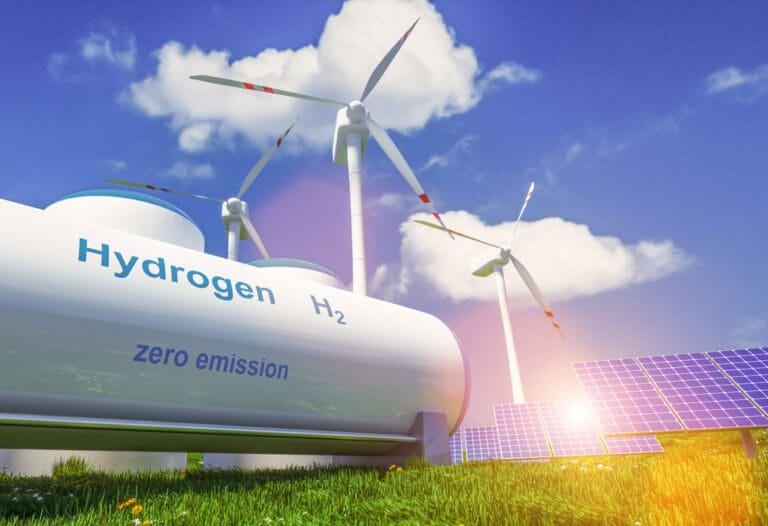
3. Green hydrogen from renewables
While batteries dominate light-duty transport, green hydrogen is emerging as a complementary solution for heavy transport, industry, and long-range applications.
Green hydrogen is produced using electrolysers powered by renewable electricity, resulting in near-zero operational emissions.
Electrolyser deployment is accelerating rapidly. According to the International Energy Agency, global installed electrolyser capacity for hydrogen is still below 1 GW today, but announced projects could raise this to several hundred gigawatts by 2030. If announced projects proceed, with some industry analyses estimating on the order of 170 GW or more of capacity in the project pipeline.
In transport, hydrogen is being explored for long-haul trucking, buses, rail, and maritime fuels, where battery weight and charging time become limiting factors. It also plays a strategic role in balancing power systems by converting surplus renewable electricity into a storable energy carrier.
4. Wind‑to‑hydrogen turbines and hybrid projects
One of the most interesting convergence trends is the direct coupling of renewable generation with hydrogen production.
Offshore wind-to-hydrogen projects integrate electrolysers directly with wind farms, either on offshore platforms or at coastal landing points. This reduces grid congestion and allows hydrogen to be produced where renewable resources are strongest.
According to the European Commission’s REPowerEU strategy, the EU aims to produce 10 million tonnes of renewable hydrogen domestically and import a further 10 million tonnes by 2030, supporting decarbonisation of shipping fuels, steelmaking and chemical hubs.
Several pilot projects in the North Sea are already testing this model as part of Europe’s broader offshore energy strategy.
5. Smart charging and vehicle‑to‑grid (V2G)
As EV adoption scales, vehicles themselves are becoming energy assets.
Smart charging systems adjust charging times based on grid conditions, electricity prices and renewable availability. Vehicle-to-grid technology goes a step further, allowing EVs to send electricity back to homes or the grid when needed.
Real-world trials have demonstrated the impact. According to the US Department of Energy’s Vehicles-to-Grid Integration Assessment and other international studies, V2G pilots and simulations in several countries have shown double‑digit reductions in local peak loads when a sufficient share of EVs participates in grid services.
4. Carbon, circularity and materials
Decarbonisation is no longer only about reducing future emissions. It is increasingly about dealing with carbon already released, cutting material intensity, and redesigning industrial systems so resources circulate rather than get discarded.
This is where carbon technologies, circular materials, and digital traceability intersect.
1. Carbon capture, utilisation and storage (CCUS)
Carbon capture technologies are designed to intercept CO₂ before it reaches the atmosphere or remove it from existing emissions streams. Most current deployments focus on capturing CO₂ from industrial flue gases such as cement, steel, refining, and power generation.
Globally, operational CCUS facilities can capture over 50 million tonnes of CO₂ per year, based on project tracking by the International Energy Agency, as detailed in its CCUS database.
Large-scale CCUS hubs are emerging in the US Gulf Coast, the North Sea, and the Middle East, where shared pipelines and storage sites lower costs.
Captured carbon is either stored permanently in geological formations or reused in products such as synthetic fuels, chemicals, and construction materials.
While CCUS is not a substitute for emissions reduction, it is increasingly viewed as essential for sectors where emissions are hard to eliminate entirely.
2. Direct air capture (DAC) and mineralisation
Direct air capture (DAC) goes a step further by removing CO₂ directly from ambient air rather than from point sources. Although energy-intensive, DAC addresses historical emissions and residual emissions that cannot be avoided.
In Iceland, Climeworks operates direct air capture facilities that remove CO₂ from the air and permanently store it underground through mineralisation in basalt formations. Its Mammoth plant, launched in 2024, is designed for a nameplate capture capacity of up to 36,000 tonnes of CO₂ per year and is described by the company as its second commercial DAC+storage facility.
Captured CO₂ reacts with basaltic rock formations and mineralises within a few years, locking carbon away permanently. Similar DAC projects are under development in the US, supported by federal incentives aimed at scaling carbon removal markets.
3. Biomimicry‑inspired design
Biomimicry applies principles found in nature to engineering and design challenges. Instead of forcing efficiency through brute materials or energy use, these solutions mimic biological systems refined over millions of years.
Examples include building envelopes inspired by termite mounds that regulate temperature naturally, and surface textures modelled on shark skin that reduce drag in transportation.
Studies by the Biomimicry Institute show biomimetic surface treatments can reduce aerodynamic or fluid drag by up to 10%, translating directly into energy savings in aviation and shipping.
4. Green and low‑carbon metals
Steel and metals are responsible for a significant share of global emissions, largely due to coal-based production processes.
Green steel technologies replace coal with hydrogen or electricity in iron and steelmaking.
Hydrogen-based direct reduced iron can cut emissions by up to 95% compared to conventional blast furnace routes, according to assessments referenced by HYBRIT, one of the world’s first green steel initiatives.
Early commercial plants are being developed in Sweden, Australia, and the Middle East, targeting industries such as automotive and construction, where embodied carbon is becoming a procurement criterion.
5. Low‑carbon construction materials
Cement alone accounts for roughly 7% of global CO₂ emissions, making construction materials a major decarbonisation frontier.
Low-carbon alternatives focus on reducing clinker content, using industrial by-products, and introducing bio-based materials.
New formulations using calcined clays, recycled aggregates, and alternative binders can reduce cement-related emissions by 30% to 50%, as outlined in sectoral analysis by theGlobal Cement and Concrete Association.
These materials are increasingly being adopted in infrastructure and real estate projects where lifecycle emissions are now measured alongside cost and performance.
6. Recycled plastic roads and infrastructure reuse
Plastic waste is being repurposed into infrastructure materials, particularly in road construction. By blending shredded plastic waste into asphalt, roads can become more durable while diverting waste from landfills.
India alone has used plastic waste in over 100,000 kilometres of roads, according to data shared by the Indian Ministry of Road Transport and Highways.
Similar pilots in the UK and other countries aim to reduce both plastic pollution and maintenance costs by improving asphalt flexibility and resistance to cracking.
7. Advanced recycling and circular solutions
Mechanical recycling cannot handle all waste streams. Advanced recycling technologies focus on recovering value from hard-to-recycle items such as multilayer packaging, chip packets and cigarette filters.
Platforms like TerraCycle partner with brands and municipalities to process waste streams that would otherwise be landfilled or incinerated.
Globally, extended producer responsibility schemes are driving demand for such solutions as companies face stricter waste accountability requirements.
These systems are critical for closing material loops in consumer goods and packaging.
8. Digital product passports and traceability
Digital product passports use data to track materials and products from raw extraction through use and end-of-life. This enables reuse, repair, recycling and regulatory compliance at scale.
The European Union is moving toward mandatory digital product passports under its sustainable products regulation framework, covering sectors such as batteries, textiles and electronics.
By making material data transparent, digital passports turn circularity from a design goal into an enforceable system.
5. Food, land, water and cities
Climate impact is ultimately felt through food systems, water security and the places people live. Agriculture, cities and infrastructure are deeply interconnected, and innovation in one area increasingly depends on progress in the others.
Green technology in this domain is shifting from isolated efficiency gains to systems-level redesign, where land use, biology, energy and data work together.
1. Plant‑based and alternative proteins
Food production is one of the largest drivers of land use change and emissions. Alternative proteins aim to decouple protein supply from livestock by using plants, fermentation and fungi-based systems.
Plant-based meat, fermented proteins and mycoprotein products can reduce greenhouse gas emissions by up to 90% and land use by over 75% compared to conventional beef.
What was once a niche category is now mainstream.
Major quick-service restaurant chains across Europe and the US have added permanent plant-based menu options, reflecting both consumer demand and corporate climate commitments.
While alternative proteins will not fully replace animal agriculture, they are becoming a critical lever for reducing food system emissions.
2. Regenerative and precision agriculture
Regenerative agriculture focuses on rebuilding soil health while maintaining productivity. Practices such as cover cropping, reduced tillage and diverse crop rotations improve soil structure, water retention and nutrient cycling.
When combined with precision tools like GPS-guided equipment, variable-rate inputs and microbial seed treatments, these practices can increase resilience while lowering fertiliser and fuel use.
FAO‑compiled assessments of grassland management suggest that under favourable conditions, improved regenerative practices can increase soil organic carbon stocks by up to about 0.5 tonnes of carbon per hectare per year, though typical rates are often lower and highly site‑specific.
These gains underpin emerging soil carbon markets, where farmers are rewarded for measurable improvements in soil carbon and ecosystem services.
2. AI‑enabled farm management and bio‑sensing
Digital tools are rapidly reshaping agriculture.
AI-powered platforms analyse satellite imagery, weather data and soil conditions to optimise planting, irrigation and harvesting decisions.
Robotics and autonomous machinery reduce labour intensity, while biohybrid sensors embedded in soil or plants provide real-time feedback on moisture, nutrient stress and disease risk.
According to analysis by McKinsey, precision agriculture technologies can reduce input costs by 10% to 20% while maintaining or improving yields.
Pilots are underway across the Americas, Europe, India and Africa, driven by both startups and large agribusinesses seeking to reduce emissions per tonne of food produced.
3. Solar‑powered desalination and advanced water recycling
Water scarcity is becoming one of the most acute climate risks, particularly in arid and coastal regions. Desalination and water recycling are essential but traditionally energy-intensive.
New plants increasingly pair desalination with solar and wind power, cutting operating emissions and shielding water supply from fossil fuel price volatility. The Middle East and North Africa lead deployment, while coastal Asia is rapidly expanding capacity.
Recent techno‑economic studies of solar‑powered desalination systems report that, in high‑solar regions, optimised renewable configurations can reduce energy‑related water costs by around 20–50% compared with conventional fossil‑fuel‑based or standard grid‑powered desalination plants.
Advanced wastewater recycling is also being scaled to provide industrial and even potable water, reducing pressure on freshwater ecosystems.
4. Waste‑water power and resource recovery
Wastewater is no longer viewed as waste alone. Treatment plants are increasingly being redesigned as resource recovery hubs.
Technologies such as microbial fuel cells and reverse electrodialysis can generate electricity from the chemical energy stored in wastewater flows.
While still emerging, these systems demonstrate how treatment plants can offset their own energy use or even become net energy producers.
5. Green architecture and biophilic cities
Cities amplify climate risks such as heatwaves and flooding. Green architecture and biophilic design aim to address these challenges by integrating natural systems into the built environment.
Green roofs, vertical gardens and high-performance building envelopes reduce cooling demand, manage stormwater and improve urban biodiversity. Urban nature-based solutions can lower local temperatures by up to 2°C, according to assessments referenced by UN-Habitat.
Cities worldwide are experimenting with these approaches as part of broader climate adaptation strategies, recognising that urban resilience depends as much on design and ecology as on energy systems.
6. Enhanced rock weathering
Enhanced rock weathering spreads crusite minerals on farmland to accelerate natural carbon absorption into soil.
This approach could sequester significant amounts of CO2 while improving soil health, potentially qualifying farms for carbon credits. This approach could sequester significant amounts of CO2 while improving soil health.
How businesses benefit from green technology adoption
Organisations investing in green technology often find benefits extending beyond environmental impact.
- Lower operating costs: Renewable energy and efficiency technologies reduce utility bills and resource expenses over time.
- Stronger brand reputation: Consumers and partners increasingly prefer businesses demonstrating genuine environmental commitment.
- Easier regulatory compliance: Proactive adoption prepares companies for tightening environmental regulations across jurisdictions.
- Access to sustainable finance: Green investments qualify for preferential loans, tax incentives, and government funding programs in many economies.
- Competitive positioning: Early adopters capture market share as demand shifts toward sustainable products and services.
How to find trusted green technology providers
Identifying legitimate green technology companies amid greenwashing claims presents a real challenge. Third-party certifications like B Corp, ISO 14001, and Energy Star provide useful verification. Requesting case studies from past clients and researching whether companies publish transparent environmental impact data also helps.
Curated directories focused specifically on sustainability can streamline this process. Platforms like NatNavi’s verified green business listings connect consumers and businesses with credible providers across renewable energy, green technology, waste management, and other impact categories.
Tip: If your organisation offers green technology solutions, getting listed in sustainability-focused directories helps conscious customers find you. Submit your business to NatNavi to reach buyers actively seeking verified sustainable options.