


Most corporate Net Zero targets rely on two things: cutting emissions and removing whatever can’t be cut. The removal side is where the market is thinnest.
Planting trees is cheap but hard to verify over decades. Direct air capture works but remains expensive per tonne. Buyers with serious climate commitments, from airlines to tech companies, are actively looking for removal methods that are durable, measurable, and priced closer to industrial scale than boutique offsetting.
Table of Contents
Equatic-1, a demonstration plant in Singapore, is one of the more closely watched attempts to close that gap using the ocean instead of the atmosphere. It’s worth understanding not because of the chemistry involved, but because of what it’s trying to prove commercially.
What Is Equatic-1?
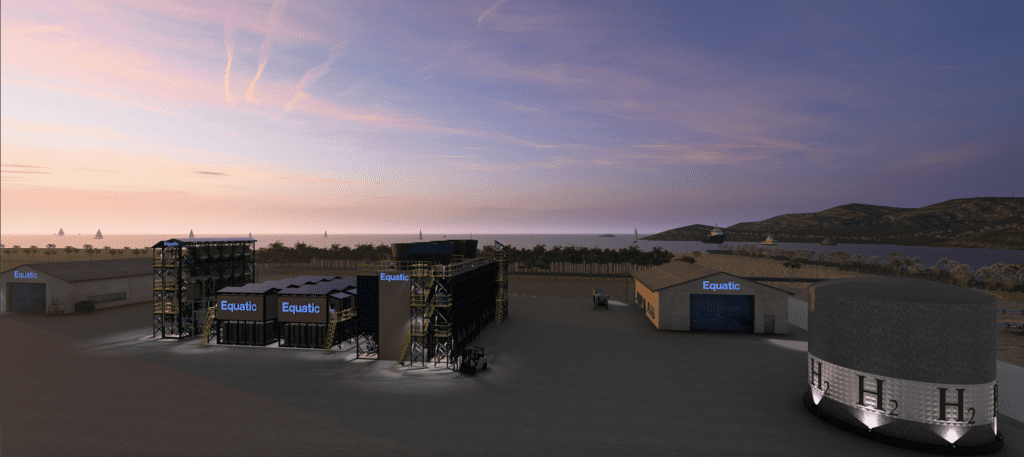
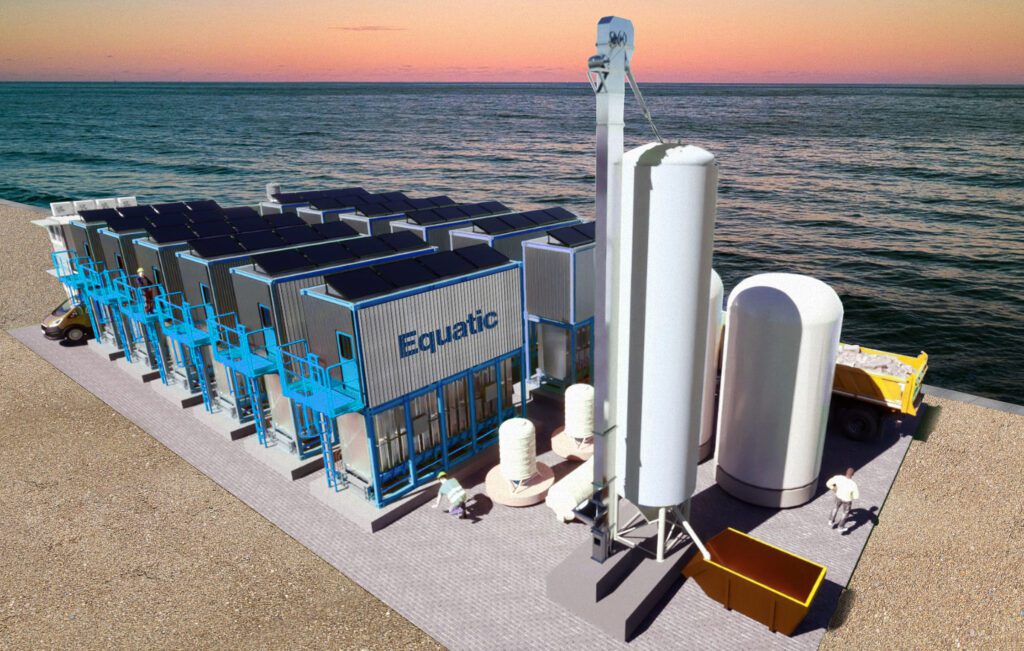
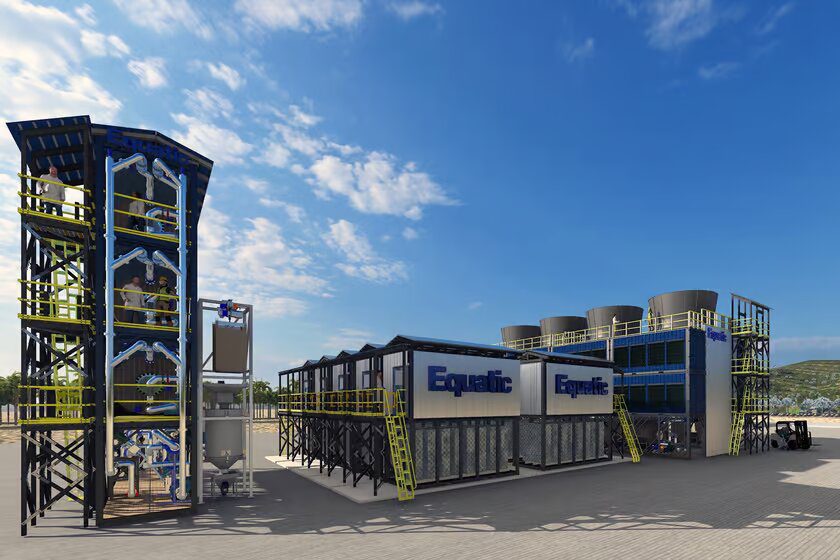
Equatic-1 is a full-scale demonstration plant built in Tuas, Singapore, through a partnership between UCLA’s Institute for Carbon Management, Singapore’s national water agency PUB, Singapore’s National Research Foundation, and climate tech startup Equatic.
The $20 million facility follows two smaller pilot plants that ran in Singapore and Los Angeles, each removing around 100 kilograms of CO2 per day. Equatic-1 is designed to scale that up 100 times over, to 10 metric tons of CO2 removed daily, while producing roughly 300 kilograms of carbon-negative hydrogen per day as a byproduct.
This isn’t a lab experiment. It’s a deliberate step toward commercial deployment, and the data it generates will shape whether ocean-based removal becomes a real line item in corporate carbon strategies.
How the Equatic Process Actually Works
The process uses electrolysis to run an electrical current through seawater. That splits water molecules into hydrogen and oxygen, and in the process, also pulls dissolved CO2 out of the seawater and surrounding atmosphere.
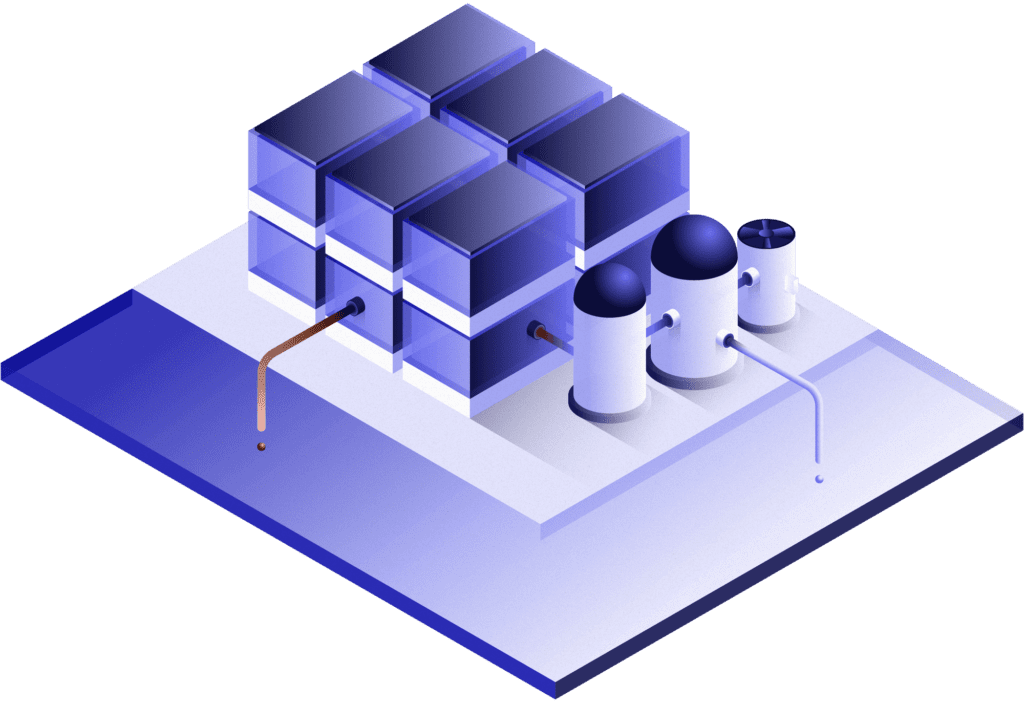
Instead of just capturing that CO2, the process converts it into solid calcium and magnesium carbonates, minerals that lock the carbon away durably. The treated seawater, now able to absorb more atmospheric CO2 again, is returned to the ocean. It’s the same natural mineralization process that already happens in the ocean, just accelerated and concentrated at an industrial site.
The deeper electrochemistry behind the process is documented on Equatic’s own site for readers who want the technical detail.
Commercial Scale and Market Potential
The number that matters most to buyers isn’t tonnes removed. It’s cost per tonne.
Equatic has stated a target of bringing removal costs below $100 per tonne before 2030, the price point widely considered the threshold for carbon removal to compete at industrial scale rather than stay a premium, low-volume offset. Equatic-1’s demonstration phase exists largely to prove that cost curve is achievable outside a lab.
The project has already attracted real capital and real buyers ahead of full commercialization:
- Equatic raised a $11.6 million Series A round co-led by Temasek Trust’s Catalytic Capital for Climate and Health and Kibo Invest.
- Equatic has signed agreements with corporate buyers, including Boeing, for carbon credits from its future commercial-scale plants.
- Carbon credits generated by Equatic-1 itself will be shared among PUB, Singapore’s National Research Foundation, and UCLA’s Institute for Carbon Management, based on funding contribution.
That combination, public research infrastructure paired with private offtake agreements, reflects a broader dynamic in early-stage carbon removal: government-backed credibility tends to come before private capital is willing to scale a technology on its own.
Where Equatic-1 Fits Among Carbon Removal Methods
Equatic-1 doesn’t exist in isolation. Buyers building a removal portfolio are weighing it against several other methods, each with a different cost, maturity level, and durability profile.
| Method | Typical cost per tonne today | Maturity | Durability |
|---|---|---|---|
| Afforestation / reforestation | $5–$50 | Mature, widely deployed | Lower permanence; vulnerable to fire, pests, land-use change |
| Biochar | $80–$200 | Early commercial, scaling quickly | Multi-century storage in soil |
| Enhanced rock weathering | $50–$200 | Early-stage, few commercial projects | Long-term, mineral-based storage |
| Direct air capture | $500–$1,000 today, with projections toward $300 by 2030 | Most mature engineered method; several plants operating | High permanence, typically geologic storage |
| Ocean-based removal (Equatic-1) | Targeting under $100 by 2030; not yet commercial | Pre-commercial, single demonstration plant | Mineral-based storage, similar permanence claims to weathering |
Afforestation stays the cheapest option by a wide margin, which is exactly why it still dominates voluntary carbon markets. But its lower permanence and exposure to fire and land-use change are also why buyers with strict verification requirements are increasingly looking elsewhere. Biochar and enhanced weathering sit in the middle: durable storage at a moderate cost, but both still scaling from a small base of commercial projects. Direct air capture is the most mature engineered method and the one ocean-based approaches most often get compared against, yet it remains the most expensive option today, even with costs expected to fall through 2030.
Equatic’s pitch is essentially to undercut direct air capture’s price while offering the same category of permanent, mineral-based storage that enhanced weathering and biochar rely on. If it hits its sub-$100 target, it would land cheaper than every engineered method above and most nature-based ones too, without the permanence risk that comes with planting trees. That’s a meaningful claim if the demonstration plant’s real-world data backs it up, which is why cost verification matters more here than the tonnes-removed headline number.
What This Means for Businesses Buying Carbon Removal
Most companies with removal commitments are still leaning heavily on forestry-based offsets, largely because that’s what’s been available at scale. But durable, verifiable removal is treated differently under most reporting frameworks than avoidance-based credits, and sustainability teams building disclosures under the ISSB or CSRD are under growing pressure to hold credits they can defend to auditors, not just cheap volume. That’s the gap ocean-based removal is trying to fill. If Equatic-1 hits its cost and verification targets, it becomes a credible option alongside direct air capture, biochar, and enhanced weathering, giving buyers a way to diversify a portfolio that’s currently concentrated in one method.
There’s also a timing advantage worth planning around. Buyers who sign offtake agreements early, the way Boeing has with Equatic, tend to get priority access and better pricing once a technology reaches commercial scale. Waiting until a method is fully de-risked usually means paying more and competing for supply that’s already spoken for.
For climate tech investors, Equatic-1’s funding structure is worth studying on its own terms. Government grants, sovereign-linked capital through Temasek Trust, and early-stage venture money from Kibo Invest are layered together to de-risk a capital-intensive technology before it needs to compete for typical venture-scale rounds. That structure is a reasonable template for how other capital-heavy climate hardware gets funded through its riskiest phase.
One constraint worth factoring into any long-term sourcing plan: ocean-based removal depends on coastal infrastructure and seawater access, so supply will concentrate in specific geographies rather than being available everywhere. Companies negotiating multi-year removal contracts should ask where that supply will physically exist, not just who’s offering to sell it.
Challenges and Limitations
Equatic-1 is a demonstration project, and demonstration projects don’t always translate cleanly into commercial ones. A few open questions matter to anyone evaluating this space.
Electrolysis is energy-hungry, so the economics depend heavily on the cost and carbon intensity of the electricity used to run the plant. The $100-per-tonne cost target is a goal, not a confirmed result, and costs for climate hardware often fall more slowly than projected once a technology leaves the demonstration phase.
Verification is another open question. Measuring exactly how much CO2 has been permanently removed from seawater, versus simply shifted or temporarily stored, requires rigorous third-party MRV (measurement, reporting, verification), and that discipline is still maturing across the ocean-CDR category generally. Alongside it sits marine ecosystem monitoring: discharging treated seawater back into the ocean at industrial volume needs sustained environmental oversight to confirm it isn’t altering local ocean chemistry in unintended ways.
Then there’s the physical reality of scaling. Growing this approach globally means replicating coastal industrial sites, not just software or a supply agreement, which is a slower and more capital-intensive path than most climate solutions. And regulation hasn’t caught up yet. How different countries will classify, credit, and regulate ocean-based removal is still being worked out, so Singapore’s approach may not translate directly elsewhere.
That doesn’t make Equatic-1 unlikely to succeed. It makes it unproven, which is what a demonstration plant is supposed to test.
Scaling Beyond the Demonstration Plant
Once Equatic-1 completes its demonstration phase, the stated plan is to scale and commercialize the technology globally. Whether that timeline holds depends on results that haven’t been generated yet: verified cost per tonne, environmental monitoring data, and whether buyers keep signing agreements at meaningfully larger volumes than Boeing’s early commitment.
If those results come in on target, ocean-based removal moves from an interesting pilot into a category corporate buyers actively allocate budget toward. If they don’t, that’s still useful information for anyone building a removal strategy today, since it narrows down which methods are actually ready for commercial commitments.
Equatic-1 matters less as a piece of climate technology and more as a live test of whether ocean-based carbon removal can meet the cost and verification bar that corporate buyers actually require.
For sustainability leaders and investors, the takeaway is simple: don’t judge Equatic by its expansion plans. Watch the numbers instead. Does verified removal cost come in close to the $100-per-tonne target? Do more buyers sign on beyond Boeing’s early commitment? And what do independent MRV audits say once the plant is actually running? Those answers will say more about ocean-based removal’s commercial future than any growth announcement.