

Lithium-ion battery manufacturing is becoming increasingly exposed to raw material constraints, geopolitical concentration, and rising demand for critical minerals such as graphite and cobalt.
This is pushing battery companies to explore alternative material inputs that can improve both supply resilience and battery performance.
One emerging approach involves converting agricultural biomass into nanocarbon materials for battery applications.
Table of Contents
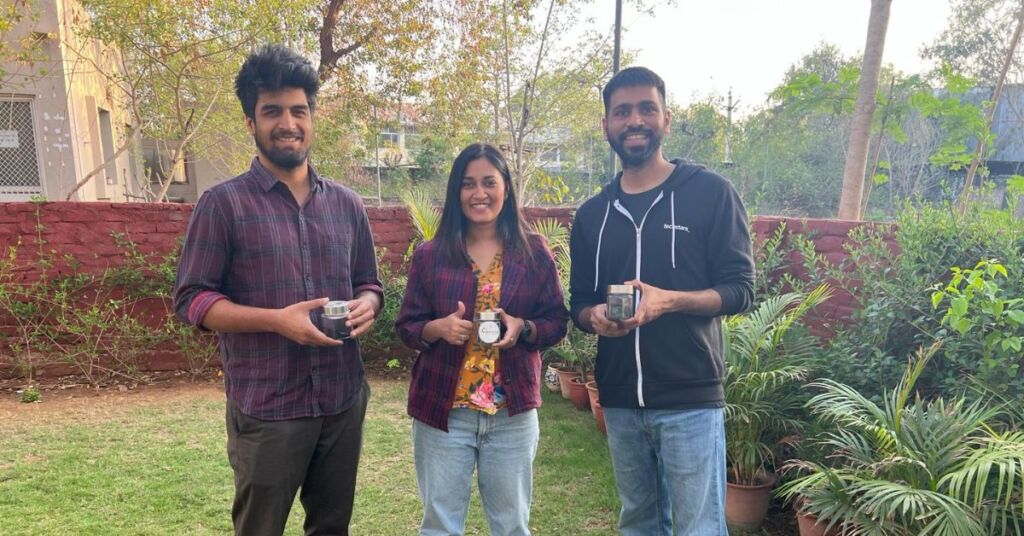
Based in Jaipur, Cancrie is developing biomass-derived nanocarbon from coconut shells as an alternative material pathway for lithium-ion batteries.
The company’s approach reflects a broader shift happening across the battery industry, where manufacturers are beginning to rethink not only battery chemistry, but also how battery materials are sourced, processed, and integrated into supply chains.
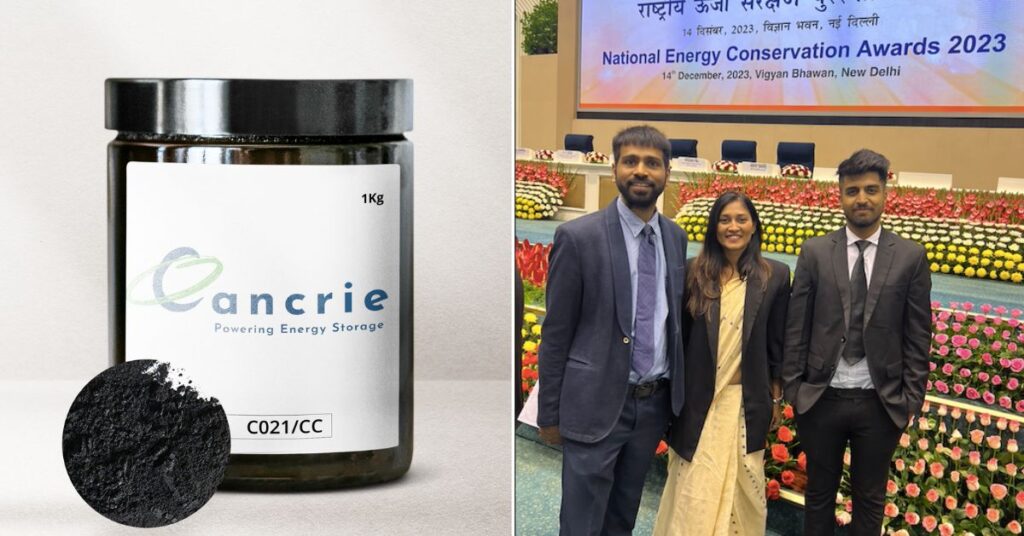
Biomass nanocarbon battery materials are emerging as a potential alternative to conventional carbon inputs used in battery manufacturing. By converting agricultural waste into functional battery materials, companies like Cancrie are exploring ways to reduce dependence on resource-intensive raw materials while creating more localized and renewable supply inputs.
Coconut shells, typically treated as low-value agricultural waste, are processed into nanocarbon materials that can improve conductivity and energy storage performance inside lithium-ion batteries.
Beyond the sustainability angle, this shift also carries supply chain implications.
As battery demand continues to rise with the growth of electric vehicles and energy storage systems, manufacturers are facing increasing pressure around raw material availability, import dependence, and long-term supply security.
Alternative material pathways such as biomass-derived nanocarbon are now being explored not just for environmental reasons, but also as part of a broader strategy to build more resilient and diversified battery supply chains.
Addressing Environmental Concerns
The rapid expansion of electric vehicles and large-scale energy storage systems is increasing pressure on global battery supply chains.
Battery manufacturers today face growing challenges around the availability and pricing of critical materials such as graphite, lithium, and cobalt.
Many of these supply chains are geographically concentrated, creating concerns around import dependence, geopolitical exposure, and long-term material security.
As production volumes scale, manufacturers are also under increasing pressure to reduce the environmental footprint associated with battery material extraction and processing.
This is driving interest in alternative material pathways that can improve supply resilience while supporting performance and cost efficiency.
Biomass-derived nanocarbon is emerging as one such area of exploration within the broader battery materials industry.
Alternative Carbon Materials for Battery Manufacturing
Instead of relying entirely on conventional carbon inputs, Cancrie developed a process to convert agricultural biomass, particularly coconut shells, into nanocarbon materials for battery applications.
The approach reflects a growing industry interest in alternative battery materials that can support both performance improvements and supply diversification.
Coconut shells offer a commercially viable biomass source due to their availability, carbon content, and agricultural waste profile.
After processing, the resulting nanocarbon can be integrated into battery systems to improve conductivity and electrochemical performance.
The broader significance lies not only in material innovation, but also in reducing dependence on resource-intensive extraction pathways traditionally associated with battery manufacturing.
Agri-waste Upcycling
Agricultural waste is increasingly being explored as a potential feedstock for advanced material manufacturing.
Instead of treating biomass residues as low-value byproducts, companies are beginning to evaluate their role in producing functional industrial materials for sectors such as energy storage.
In the case of battery manufacturing, biomass-derived nanocarbon offers a way to convert locally available agricultural waste into high-value carbon materials with electrochemical applications.
This approach supports a broader industry movement toward circular material systems, where waste streams are reintegrated into production processes instead of being discarded.
For battery manufacturers, the relevance extends beyond sustainability.
Alternative biomass feedstocks can help diversify raw material sourcing while creating opportunities for more localized and potentially cost-efficient supply chains.
Commercialization and Market Impact
As interest in alternative battery materials continues to grow, commercialization becomes a critical factor.
For emerging battery inputs, technical performance alone is not enough.
Manufacturers also evaluate material availability, processing scalability, integration compatibility, and long-term cost viability before adoption can occur at scale.
Cancrie’s use of coconut-shell-derived nanocarbon reflects this broader commercial reality.
Agricultural biomass offers a relatively abundant feedstock that can support larger-scale material production while reducing dependence on conventional carbon sourcing pathways.
The company’s work also highlights how battery innovation is increasingly moving beyond chemistry alone.
Attention is shifting toward the economics and resilience of material supply chains, particularly as battery demand accelerates across electric mobility and energy storage sectors.
Enhancing Battery Performance
Performance remains one of the key barriers in the commercialization of alternative battery materials.
For any new material input to gain industry adoption, it must demonstrate compatibility with existing battery systems while supporting measurable improvements in efficiency, lifespan, or energy density.
Nanocarbon materials are gaining attention because of their ability to improve conductivity and optimize electrochemical reactions inside battery cells.
In lithium-ion systems, these improvements can influence charging efficiency, thermal stability, and long-term battery durability.
Cancrie’s biomass-derived nanocarbon is being positioned within this broader category of performance-enhancing battery materials.
The company reports improvements in battery energy density through integration with lithium-ion hybrid battery systems, highlighting the growing commercial interest in alternative carbon materials that can support both performance and supply chain diversification.
Rethinking Battery Materials in a Constrained Supply Chain
The significance of Cancrie’s innovation goes beyond performance improvements.
Battery supply chains today are heavily dependent on critical materials such as graphite, lithium, and cobalt. These materials face increasing pressure from rising demand, price volatility, and geopolitical concentration.
By developing biomass nanocarbon battery materials from coconut shells, Cancrie introduces an alternative material pathway.
This reduces reliance on conventional raw materials while creating a more localized and renewable input source.
For battery manufacturers, this is not just a sustainability benefit.
It is a supply chain strategy.
Real-world Applications
The commercial relevance of alternative battery materials ultimately depends on where they can be integrated at scale.
Early applications for biomass-derived nanocarbon are emerging across battery segments where cost sensitivity, durability, and charging efficiency are critical factors.
This includes sectors such as electric two-wheelers, stationary energy storage systems, and hybrid battery technologies.
In markets like India, two-wheelers represent a significant share of electric mobility adoption, making battery efficiency and lifecycle improvements commercially important for manufacturers.
Nanocarbon materials are also being explored in lead-acid and hybrid battery systems, where incremental improvements in conductivity and battery lifespan can reduce replacement frequency and operational costs.
These early-stage applications provide an important commercialization pathway for alternative battery materials before broader adoption across large-scale lithium-ion manufacturing ecosystems.
Decarbonization and Material Efficiency
Battery manufacturers are under growing pressure to reduce the environmental impact associated with material extraction, processing, and cell production.
This is increasing interest in alternative material inputs that can support lower-emission manufacturing pathways while improving resource efficiency.
Biomass-derived nanocarbon presents one possible approach by converting agricultural residues into functional battery materials instead of relying entirely on conventional extraction-intensive inputs.
Beyond emissions reduction, material efficiency is becoming increasingly important as battery production scales globally and competition for critical resources intensifies.
For manufacturers, the long-term relevance of alternative materials lies not only in sustainability reporting, but also in improving supply resilience, resource utilization, and production economics.
From Agricultural Waste to Battery Supply Chain Input
Coconut shells are traditionally treated as low-value agricultural waste, but their conversion into nanocarbon materials changes their role within industrial supply chains.
Instead of remaining part of the agricultural waste stream, they become functional inputs for battery manufacturing.
This reflects a broader transition toward circular material systems, where industrial sectors increasingly look at waste streams as potential sources of advanced materials.
For regions with abundant agricultural residues, biomass-derived battery materials could support more localized supply chains for carbon-based inputs.
This reduces dependence on imported raw materials while creating opportunities for greater supply flexibility and resource efficiency.
As battery manufacturing continues to scale globally, interest in alternative material pathways is likely to increase, particularly in areas linked to cost stability, critical mineral dependence, and long-term supply resilience.
Cancrie’s approach highlights how battery innovation is expanding beyond cell chemistry alone.
The industry is also beginning to rethink how battery materials are sourced, processed, and integrated into manufacturing ecosystems.
For manufacturers, the long-term opportunity lies in building supply chains that are not only higher performing, but also more diversified, adaptable, and resource-efficient.