



Table of Contents
Emerging energy technologies are often judged by their novelty, but for businesses, the real question is different.
Can they reduce operational emissions, improve long-term reliability, and support measurable sustainability outcomes?
Betavolt’s miniature nuclear battery enters the conversation at a time when industries are under increasing pressure to track energy use, reduce maintenance-related emissions, and align with evolving ESG reporting requirements.
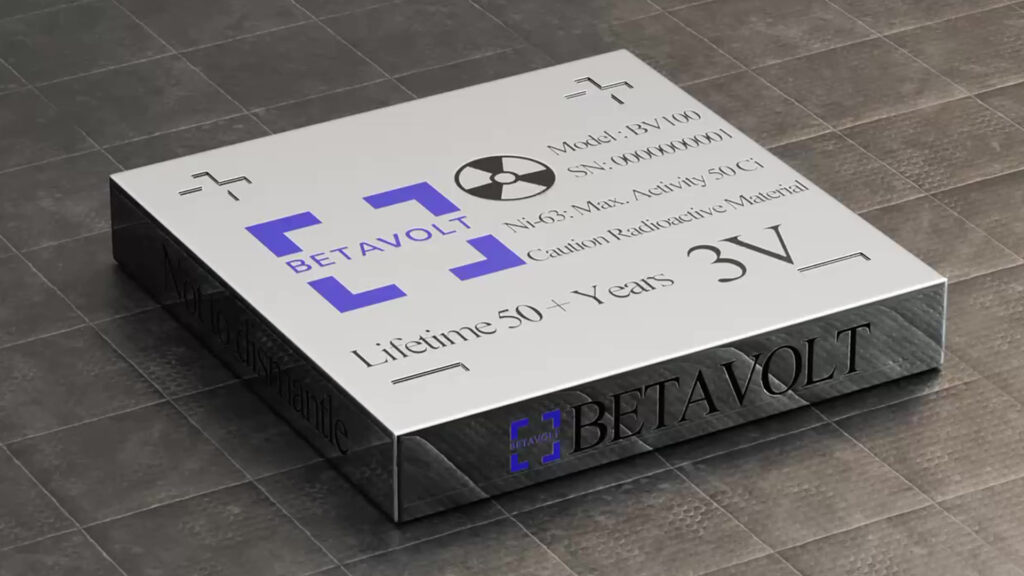
Unlike conventional batteries that require frequent replacement, a long-duration energy source capable of operating for decades introduces a different kind of value. It shifts the focus from performance alone to lifecycle impact, maintenance reduction, and long-term material management.
For sectors that depend on remote infrastructure, environmental monitoring, and distributed sensor networks, this raises a critical question.
Can ultra-long-life energy systems become a tool for operational decarbonization and more reliable sustainability reporting?
The Technology Behind Betavolt’s Miniature Nuclear Battery
Betavolt’s miniature nuclear battery is an innovative leap in energy storage technology, designed to be exceptionally compact while offering remarkable longevity. Measuring just 15 x 15 x 5 millimeters—smaller than a typical coin—the battery is constructed using ultra-thin layers of radioactive isotopes and diamond semiconductors. It operates as a betavoltaic device, a technology that captures the energy released by the decay of radioactive isotopes, specifically a nickel isotope in this case.
As the isotope decays, it emits beta particles (electrons), which are then converted into electrical energy by the semiconductor layers. This process allows the battery to generate a continuous stream of power for up to 50 years without the need for replacement, a significant advantage over traditional battery technologies that require frequent charging or disposal.
What makes Betavolt’s nuclear battery even more intriguing is its safety and sustainability features. According to the company, the radiation emitted by the nickel isotope is of such low intensity that it poses no harm to the human body, making it a potential solution for applications requiring long-duration, low-maintenance energy in regulated environments, which require long-lasting, reliable energy with minimal maintenance.
While the battery is described as recyclable, the real sustainability opportunity lies in how the material lifecycle is managed.
Given the use of radioactive isotopes such as Nickel-63, a conventional ownership model may not be sufficient. Instead, a product-as-a-service approach could be more effective, where the manufacturer retains ownership of the core materials.
Under such a model, companies would deploy the battery as a long-term service rather than a purchased asset, with mandatory take-back mechanisms at the end of its lifecycle. This ensures controlled recovery of radioactive materials and aligns with circular economy principles.
For businesses, this approach reduces compliance risks while enabling full traceability of high-value materials across decades of use.
Sustainability fact sheet and lifecycle impact
From a sustainability perspective, the value of Betavolt’s nuclear battery lies in its lifecycle performance rather than peak power output.
Traditional lithium-ion batteries used in remote sensors or industrial devices typically require replacement every 3 to 5 years, depending on usage conditions. Over a 50-year period, this can result in 10 to 15 replacement cycles, each involving manufacturing, transportation, installation, and disposal.
In contrast, a long-duration nuclear battery eliminates most of these recurring processes, reducing material throughput and maintenance-related emissions over time.
This creates a different sustainability profile:
- Lower cumulative material extraction across decades
- Reduced operational emissions linked to maintenance logistics
- Potential reduction in electronic waste generation
However, these benefits must be balanced against the higher upfront material complexity and the need for strict handling and recovery mechanisms for radioactive components.
For ESG reporting, this shifts the focus from short-term efficiency metrics to long-term lifecycle accounting.
Efficiency, power density, and ROI considerations
While nuclear batteries offer high energy density over long durations, their power density remains relatively low compared to conventional battery systems.
This makes them unsuitable for high-power applications such as smartphones or electric vehicles, despite initial claims.
The business case, therefore, depends on a different equation.
The higher upfront cost must be evaluated against the elimination of repeated battery replacements, reduced maintenance labor, and lower operational disruptions over decades.
For specific use cases such as remote infrastructure and industrial monitoring, the return on investment may be driven more by avoided costs and improved system reliability than by raw energy output.
Strategic B2B applications and supply chain resilience
The real value of long-duration nuclear batteries lies not in consumer electronics, but in infrastructure where reliability, maintenance access, and lifecycle costs are critical.
One of the most relevant use cases is remote monitoring systems. Power grids, oil pipelines, offshore infrastructure, and deep-sea communication cables rely on distributed sensors that are often difficult and expensive to service. Each maintenance cycle involves travel, labor, and additional emissions, sometimes referred to as the “truck roll” footprint.
A battery capable of operating for decades can significantly reduce these interventions, lowering both operational costs and associated emissions.
This also improves continuity in data collection, which is critical for long-term environmental monitoring and ESG reporting systems.
In agriculture, long-life energy systems could support AI-driven farm monitoring, enabling continuous data collection for soil conditions, irrigation efficiency, and climate impact tracking in remote areas without reliable power infrastructure.
Similarly, environmental monitoring networks used for climate tracking, biodiversity assessment, and industrial compliance could benefit from uninterrupted operation, improving data reliability over long timeframes.
From a supply chain perspective, this introduces resilience. Systems that do not depend on frequent battery replacement are less exposed to disruptions in material supply, logistics, and labor availability.
This shifts the conversation from device-level performance to system-level reliability, lifecycle efficiency, and operational continuity.
Navigating the regulatory moat
The use of radioactive materials introduces a complex regulatory landscape that extends beyond standard energy technologies.
Companies operating across multiple regions would need to comply with strict regulations governing the transport, use, storage, and disposal of nuclear materials. This creates a significant barrier to adoption, particularly for global supply chains.
From an ESG perspective, this raises critical considerations.
Tracking the lifecycle of radioactive components requires robust data systems to ensure compliance, traceability, and risk management. Any failure in handling or recovery could lead to environmental, legal, and reputational consequences.
This aligns closely with emerging requirements for audit-ready ESG data and traceable material flows.
At the same time, the long lifespan of such batteries offers a measurable advantage in sustainability reporting. Reduced replacement cycles translate into lower electronic waste generation over time, which can positively impact ESG metrics related to waste and material intensity.
This creates a dual challenge for businesses: balancing long-term sustainability benefits with short-term regulatory complexity.
Cautionary Tales: Lessons from the Industry
While Betavolt’s claims are undoubtedly intriguing, the history of startups in the energy sector reminds us to approach such announcements cautiously. A cautionary example is the case of NBD, a startup that raised significant investment for a battery promising a lifespan of thousands of years. Despite the initial enthusiasm, the device failed to materialize, leading to regulatory action for alleged fraud.
Betavolt’s miniature nuclear battery is not just a question of technological feasibility, but of operational and systemic readiness.
Its potential lies in enabling long-duration energy systems that enable long-term data continuity and more accurate measurement of energy use across decades over time.
However, the real challenge is not adoption alone.
It is whether modern supply chains are prepared to manage, track, and recover radioactive materials across decades of use.
For businesses operating under increasing ESG scrutiny, this raises a fundamental procurement question.
Can organizations build the systems required to ensure traceability, compliance, and circular material recovery for technologies that operate far beyond traditional product lifecycles?