

75F | IoT Building Automation & Energy Management
75F is a building automation technology company that designs, manufactures, and operates an Internet of Things (IoT) based Building Management…

Ace Green Recycling, Inc. is a battery recycling technology company that develops proprietary, hydrometallurgical processes to recover critical materials from end of life lead acid and lithium ion batteries. The company was co-founded in 2019 by Nishchay Chadha, who serves as CEO, and Dr. Vipin Tyagi, who serves as CTO. It is incorporated in Delaware, with dual corporate headquarters in Houston, Texas, and Singapore.
Ace’s core technologies are GREENLEAD, used for lead acid battery recycling, and LithiumFirst, used for lithium ion chemistries including LFP and NMC batteries. Both operate at room temperature using fully electrified processes, without smelting or thermal treatment.
The company currently operates a lithium ion recycling facility in India, in operation since 2023, and has licensed its lead recycling technology to ACME Metal for a facility in Taiwan, operating since 2024. Ace has publicly disclosed plans to build additional lead and lithium facilities in the United States, Armenia, Australia and Thailand.
Ace has entered into a definitive business combination agreement with Athena Technology Acquisition Corp. II, a special purpose acquisition company, under which Ace would become a publicly listed company on Nasdaq under the ticker AGXI. As of the most recent public filings, the transaction had not yet closed and remained subject to shareholder and regulatory approval.
SDG 9 applies because Ace has developed proprietary hydrometallurgical technology as an alternative to conventional smelting based battery recycling, representing industrial process innovation applied at commercial scale.
SDG 12 is central to Ace’s business model. Recovering lithium, lead, cobalt, nickel and graphite from spent batteries directly supports more efficient use of finite mineral resources and reduces reliance on virgin material extraction.
SDG 13 is relevant because the company positions its process as producing zero direct, or Scope 1, emissions. This contrasts with higher emission thermal smelting methods traditionally used in battery recycling, and the process also displaces some emissions associated with primary metal mining and refining.
Ace Green Recycling’s processes are hydrometallurgical rather than pyrometallurgical, meaning materials are recovered through chemical reactions in solution at or near room temperature rather than through high temperature smelting. Conventional battery recycling typically relies on furnaces that consume large amounts of energy and generate direct emissions and slag byproducts.
The company’s GREENLEAD process targets lead acid batteries, producing battery grade lead without thermal reduction. Its LithiumFirst process targets lithium ion chemistries, including both LFP and NMC, using modular, fully electrified equipment designed to be deployed at smaller scale than traditional smelters, which the company states lowers capital expenditure per facility.
Ace reports that its lithium technology has been technically assessed by consulting firm Arthur D. Little, and that it holds a research agreement with the U.S. Department of Energy’s National Renewable Energy Laboratory.
Ace Green Recycling positions itself within the battery recycling technology segment, serving battery aggregators, black mass producers, battery OEMs, existing recyclers, refineries and commodity trading companies as customers and partners rather than end consumers. The company differentiates itself by offering hydrometallurgical processing for both lead acid and lithium ion chemistries, while many competitors specialize in only one battery type. Ace’s licensing model, alongside its own facility ownership, allows it to enter markets such as Taiwan without direct capital deployment. Independent industry trackers list Redwood Materials, Ascend Elements and Altilium among its competitors.
Ace Green Recycling occupies a genuinely differentiated position in the battery recycling sector. Few companies offer commercial scale hydrometallurgical recovery for both lead acid and lithium ion chemistries under one technology platform. Its zero Scope 1 emissions framing addresses a real weakness of legacy smelting based recycling, and its modular, licensable model has allowed it to enter markets like Taiwan without owning every facility outright.
That said, much of Ace’s growth story remains forward looking. Several announced facilities, in the United States, Armenia, Australia and Thailand, are planned rather than operational, and the company’s pending SPAC merger with Athena Technology Acquisition Corp. II has been delayed and amended multiple times since it was first announced in December 2024, which points to execution risk common among early stage industrial technology companies pursuing public listings.
For procurement teams and investors, the company’s core recovery rate and purity claims are drawn from its own press materials rather than independently published third party audits, and its total prior venture funding is reported inconsistently across data providers. Ace’s trajectory is worth monitoring, but current claims about scale should be read alongside its still largely pre commercial international buildout.
75F is a building automation technology company that designs, manufactures, and operates an Internet of Things (IoT) based Building Management…

AgBoost Tech Consultancy (ATC) is an India-based geospatial and artificial intelligence technology firm that builds decision-support systems for the agriculture,…
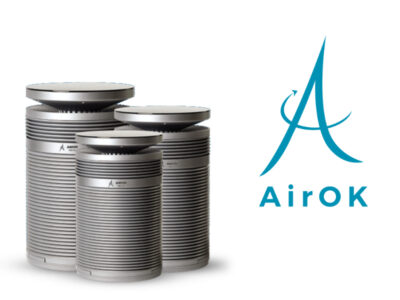
AirOK Technologies is an Indian cleantech manufacturer specializing in indoor and outdoor air purification systems. The company was founded by…