

75F | IoT Building Automation & Energy Management
75F is a building automation technology company that designs, manufactures, and operates an Internet of Things (IoT) based Building Management…


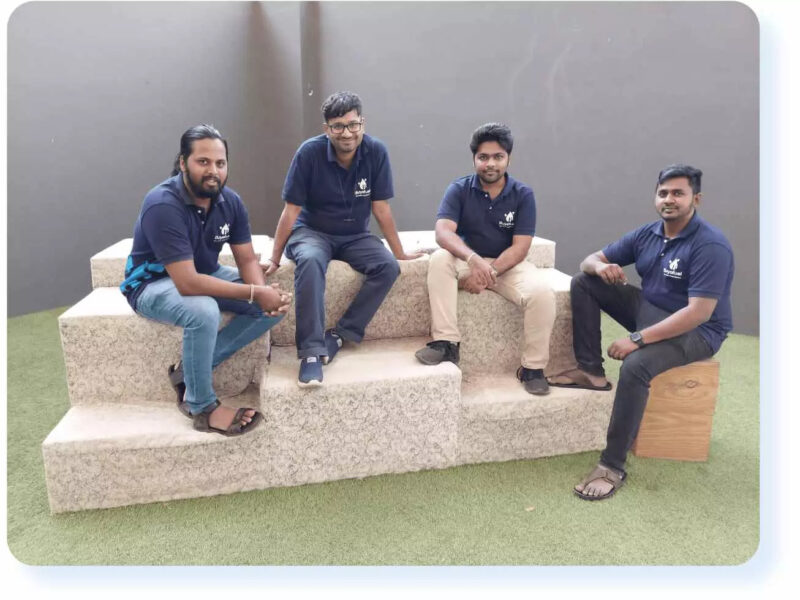
Buyofuel is a tech-driven business-to-business digital marketplace for biofuels and related raw materials, headquartered in Coimbatore, Tamil Nadu. The company was founded in 2020 by Kishan Karunakaran, Venkateswaran Selvan, Sumanth Kumar Selvarasu, and Padmakumar Nair Prasad, and operates under the legal entity Buyo India Private Limited.
The platform connects three groups of stakeholders across the biofuel value chain: raw material and waste aggregators, biofuel manufacturers, and industrial fuel consumers. It facilitates trading of solid biofuels such as biomass briquettes and pellets, liquid biofuels including biodiesel and bio furnace oil, gaseous biofuels such as bio-CNG, and related raw materials and by-products.
Buyofuel began as a regional biofuel market in Tamil Nadu and has since expanded operations to multiple states across India, including Karnataka, Andhra Pradesh, Telangana, Maharashtra, and Punjab. The company was incubated at AIC RAISE, a UN SDG-focused business incubator in Coimbatore, and has since scaled into a nationally operating marketplace.
Buyofuel serves large industrial buyers across cement, steel, automotive components, pharmaceuticals, and food processing sectors. In FY 2024-25, the company crossed INR 100 crore in annual revenue and reported EBITDA and profit-before-tax positive quarters during the year. The company has also begun supplying ethanol to Oil Marketing Companies, expanding beyond its original solid and liquid biofuel trading base.
SDG 7 (Affordable and Clean Energy) applies directly, since Buyofuel’s core offering is a trading platform for biofuels that substitute conventional fossil fuels for industrial consumers. SDG 8 (Decent Work and Economic Growth) is relevant because the platform creates market access and income opportunities for waste aggregators, raw material suppliers, and small biofuel manufacturers who previously operated in a fragmented, informal supply chain. SDG 12 (Responsible Consumption and Production) is directly supported through the company’s core model of converting agricultural residues, industrial waste, and organic by-products into usable fuel, reducing dependence on virgin fossil resources. SDG 13 (Climate Action) applies because the company’s biofuel substitution activity is linked to reported reductions in client carbon footprints through displacement of fossil fuel consumption.
Buyofuel operates as a digital intermediary layer across the biofuel value chain rather than as a manufacturer or generator itself. Its platform structures transactions around a request-for-quote model, in which industrial buyers post fuel requirements and receive counter-offers from verified sellers, with the company’s team validating registered users before transactions are enabled.
The company’s sourcing function locates fragmented, small-scale biomass and waste generators and connects them to biofuel manufacturing partners, while a separate sales function engages industrial consumers seeking to substitute fossil fuels. This two-sided matching model allows Buyofuel to operate without holding physical fuel inventory in most cases, since products are largely manufactured or aggregated on demand.
The platform’s BuyoTrace feature is positioned to provide visibility into the sourcing location, production process, and transportation route of a given biofuel transaction, intended to give industrial buyers documentation to support their own sustainability reporting. The company also provides digital inventory management tools to biofuel manufacturers and periodic sustainability impact reporting to buyers on fuel volumes transacted.
Buyofuel’s expansion into ethanol supply for Oil Marketing Companies represents a shift from its original solid and liquid biofuel trading base toward direct participation in government-linked fuel procurement tenders.
Buyofuel positions itself as an early mover in India’s digital biofuel trading segment, describing itself as the country’s first technology-driven B2B marketplace for biofuels. Its primary customers are large industrial buyers in cement, steel, automotive components, and manufacturing sectors seeking to substitute conventional fossil fuels, alongside a network of biofuel manufacturers and waste aggregators on the supply side. The company differentiates on its digital matching and traceability layer rather than physical fuel production, competing with other emerging biofuel marketplace platforms in the Indian clean energy sector. Its recent entry into ethanol supply for Oil Marketing Companies signals an expansion beyond its original solid and liquid biofuel trading focus into more regulated fuel procurement channels.
Buyofuel represents a distinct model within India’s clean energy landscape: rather than manufacturing or generating renewable fuel itself, it functions as a digital intermediary designed to formalize a historically fragmented and informal biofuel supply chain. Its relevance stems from addressing a structural market failure, the difficulty industrial buyers and small-scale biomass suppliers face in finding and trusting each other, rather than from a proprietary technology or hardware innovation.
The company’s growth trajectory, crossing INR 100 crore in FY 2024-25 revenue and reporting quarters of profitability, suggests the marketplace model has found commercial traction with large industrial clients. Its expansion into ethanol supply for Oil Marketing Companies is a notable development, moving the company into more regulated, tender-based fuel procurement rather than purely open-market trading.
A limitation for readers to weigh is that Buyofuel’s environmental impact claims, including tonnage of fossil fuel displaced and CO2 emissions avoided, are primarily self-reported by the company rather than independently audited or third-party verified. Similarly, its traceability feature, BuyoTrace, is described in company materials but its underlying verification methodology is not independently documented in public sources. As with many supply-chain marketplace models, its sustainability contribution is closely tied to continued growth in transaction volume, and its long-term differentiation from newer or better-funded competing marketplaces will depend on the durability of its buyer and seller network.
75F is a building automation technology company that designs, manufactures, and operates an Internet of Things (IoT) based Building Management…
Ace Green Recycling, Inc. is a battery recycling technology company that develops proprietary, hydrometallurgical processes to recover critical materials from…
AgBoost Tech Consultancy (ATC) is an India-based geospatial and artificial intelligence technology firm that builds decision-support systems for the agriculture,…