

75F | IoT Building Automation & Energy Management
75F is a building automation technology company that designs, manufactures, and operates an Internet of Things (IoT) based Building Management…

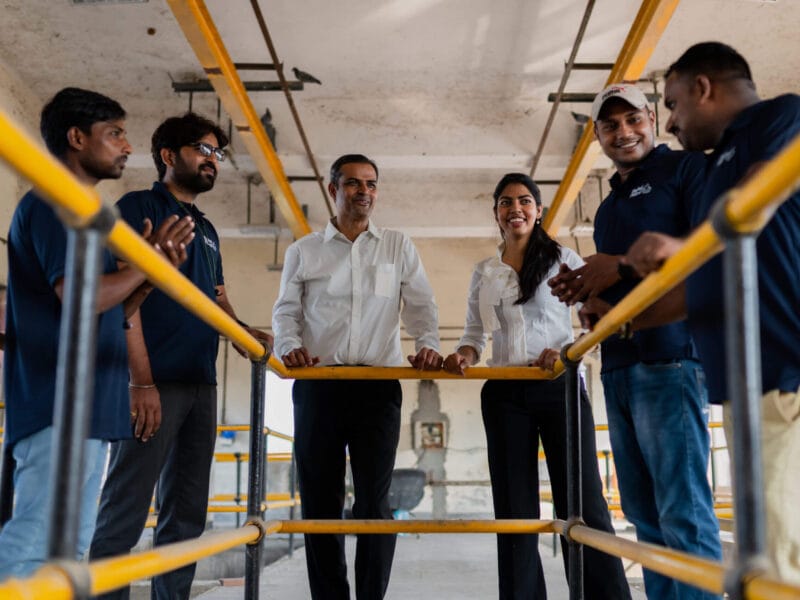
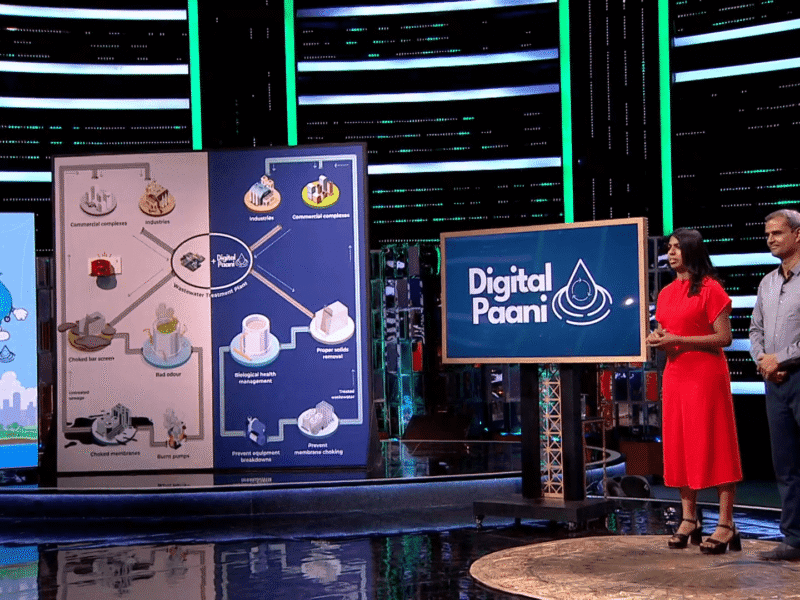
DigitalPaani, operated by Digital EcoInnovision Private Limited, is an Indian climate-tech company that develops an IoT-enabled software platform for automating the operations of wastewater treatment plants across residential, commercial, industrial, and municipal facilities.
The company was founded in 2020 by Mansi Jain and Rajesh Jain, a father-daughter team. Mansi Jain holds a background from Stanford University, while Rajesh Jain brings prior experience managing water treatment facilities through his earlier venture, WAPP Systems. The company is headquartered in Gurugram, Haryana.
DigitalPaani’s platform combines proprietary sensors with a diagnostic algorithm layer to continuously monitor plant performance and generate recommendations on chemical dosing, equipment adjustments, and maintenance actions for on-site operators. The company supports two engagement models, a direct IoT add-on for clients managing their own operations, and a fuller managed-operations arrangement delivered through partner service providers.
The company gained wider public visibility after appearing on Shark Tank India (Season 3). It has secured seed funding from investors including Elemental Excelerator, Echo River Capital, Enzia Ventures, and Bharat Founders Fund, and has been recognized as a Water Innovator by NITI Aayog and FICCI. DigitalPaani’s technology has been deployed across facilities operated by clients such as Tata Power, Reliance, Dr Reddy’s, Britannia, Taj Hotels, and the Delhi Jal Board, and the company has stated plans to expand deployment across major Indian metropolitan markets.
DigitalPaani’s platform directly addresses SDG 6 by helping wastewater treatment plants function reliably, which increases the volume of water that is safely treated and made available for reuse rather than discharged untreated. This directly supports water conservation and sanitation infrastructure objectives. SDG 13 is relevant because improved treatment plant efficiency reduces energy waste and associated emissions tied to inefficient or malfunctioning treatment processes, contributing to broader climate mitigation efforts. SDG 9 applies because the company’s IoT and software layer represents a digital infrastructure upgrade to an industrial process, category, wastewater treatment, that has historically relied on manual, non-digitized operations in India. By retrofitting sensor-based monitoring and automated diagnostics onto existing plant infrastructure, DigitalPaani supports the broader modernization of industrial and municipal infrastructure systems.
DigitalPaani’s delivery model centers on pairing hardware sensors with a software diagnostic layer that continuously ingests operational data from wastewater treatment plants. Custom-built sensors monitor biological process health alongside standard operational parameters such as chemical levels and equipment status. This data feeds into a set of proprietary algorithms designed to identify inefficiencies and predict potential failure points before they disrupt plant operations.
Based on this analysis, the platform generates step-by-step operator instructions covering chemical dosing, equipment adjustments, and maintenance actions, intended to allow lower-skilled onsite personnel to manage plants that would otherwise require specialized expertise. The company frames this as shifting plants from reactive maintenance, responding to breakdowns after they occur, to proactive management guided by continuous monitoring.
Delivery is structured around two models. In the first, clients retain operational control and use DigitalPaani’s IoT and software layer as a decision-support add-on. In the second, DigitalPaani works through partner service providers to deliver a fuller managed-operations offering. Both models are built on the same underlying sensor and algorithm infrastructure, integrated with existing plant equipment rather than requiring full infrastructure replacement.
DigitalPaani operates in India’s wastewater treatment technology segment, positioning itself as a digital operations layer for existing treatment plant infrastructure rather than a plant equipment manufacturer or civil construction contractor. Its primary customers are commercial, industrial, and institutional facility operators managing onsite wastewater treatment plants, including manufacturing companies, hospitality chains, and public sector water utilities.
The company differentiates its offering through the combination of proprietary sensor hardware and algorithm-driven diagnostics, positioning its platform as an active operations management tool rather than a passive monitoring dashboard. Its client roster includes large enterprise and public sector organizations such as Tata Power, Reliance, Dr Reddy’s, Britannia, Taj Hotels, and the Delhi Jal Board, indicating traction among both private industrial operators and government utility bodies.
DigitalPaani addresses a structural inefficiency in India’s water infrastructure: a large share of the country’s wastewater treatment plants are reported to operate below capacity or fail entirely due to manual, inconsistent management practices. By layering IoT sensors and diagnostic software onto existing plant infrastructure, the company offers a comparatively low-capital-intensity intervention that does not require facility operators to replace treatment equipment outright.
The company’s relevance is reinforced by its client base, which spans large private industrial operators and public sector utility bodies, suggesting the platform has found traction across both commercial and government procurement contexts. Its recognition from NITI Aayog and FICCI, along with participation from climate-focused investors such as Elemental Excelerator, lends third-party validation to its technical approach.
As an early-stage company, DigitalPaani’s scale of deployment remains modest relative to the scale of India’s wastewater treatment infrastructure challenge, and procurement teams should independently verify performance claims and cost-saving figures against their own facility conditions before adoption. The company’s dual delivery model, offering both a self-managed add-on and a fully managed operations service, gives it flexibility to serve customers with varying levels of internal technical capacity, which is a meaningful differentiator in a market where operator skill shortages are a recurring adoption barrier.
75F is a building automation technology company that designs, manufactures, and operates an Internet of Things (IoT) based Building Management…

Ace Green Recycling, Inc. is a battery recycling technology company that develops proprietary, hydrometallurgical processes to recover critical materials from…

AgBoost Tech Consultancy (ATC) is an India-based geospatial and artificial intelligence technology firm that builds decision-support systems for the agriculture,…