

75F | IoT Building Automation & Energy Management
75F is a building automation technology company that designs, manufactures, and operates an Internet of Things (IoT) based Building Management…

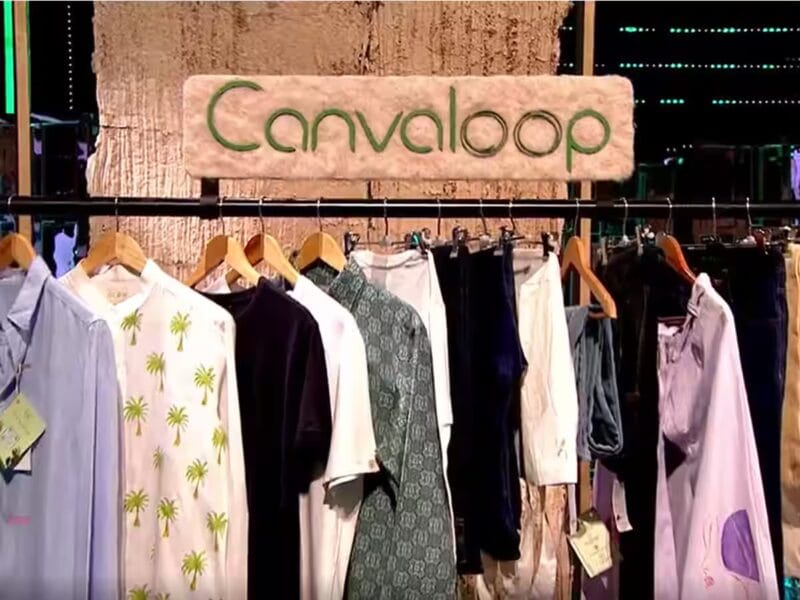
Canvaloop is a biomaterials manufacturer based in Surat, Gujarat, India, that converts agricultural and bast crop residues into textile-grade fibers and yarns. The company was incorporated in 2020 by Shreyans Kokra under the name Canvaloop Fibre Private Limited.
The company processes feedstocks including hemp, banana, pineapple, flax and nettle residues into fiber products marketed under names such as HempLoop, FlaxLoop, BanLoop and PineLoop. Its proprietary process is described by the company as climate-light and closed-loop, using less than 10 litres of water per kilogram of fiber, recycling process water, avoiding solvents, and using bio-waste for heat generation.
Canvaloop operates a factory in the Sachin GIDC industrial area of Surat and maintains a separate office and R&D facility in the city. It has raised approximately $2 million in funding across multiple rounds from investors including Gujarat Venture Finance Limited (GVFL), Rockstud Capital, Theia Ventures and Social Alpha, and gained wider public visibility after appearing on Shark Tank India.
The company positions its fibers as inputs designed to work with existing spinning and weaving infrastructure, aiming to make adoption easier for textile mills and fashion brands already using cotton or synthetic fiber lines. Alongside fiber production, Canvaloop has stated an intent to build farm-to-garment traceability capability across its supply chain.
Canvaloop’s stated mission centers on reducing the environmental footprint of textile raw material production while creating an additional income stream for farmers whose crop residue would otherwise be burned or discarded.
Canvaloop's process directly supports SDG 6 because its fiber extraction method is designed to use minimal water and to recycle process water within a closed loop, addressing one of the textile industry's largest water-consumption problems. SDG 8 applies because the company's model is built around paying farmers for agricultural residue that would otherwise have no commercial value, creating an added income stream in rural farming communities. SDG 12 is relevant because Canvaloop's core business converts what is classified as agricultural waste into a manufactured textile input, replacing virgin raw materials such as cotton or synthetic fiber with a waste-derived alternative. SDG 13 applies because the company's stated purpose includes reducing the seasonal burning of crop residue, a practice that generates significant carbon and particulate emissions, while also offering a lower-input alternative to conventional fiber production methods used across the textile value chain.
Canvaloop's process begins with sourcing agricultural and bast crop residues, primarily hemp, banana, pineapple, flax and nettle, that are typically discarded or burned after harvest. These residues are processed through a proprietary closed-loop extraction method that the company describes as chemo-mechanical in nature, converting raw plant biomass into spinnable, textile-grade fiber.
The company states that its process avoids the use of chemical solvents common in some alternative fiber extraction methods, instead relying on mechanical processing supported by bio-waste as a heat source. Water used in processing is recycled within the system rather than discharged, with the company citing usage of less than 10 litres per kilogram of fiber produced.
A central part of Canvaloop's approach is engineering its fibers to be compatible with existing spinning and weaving machinery used by conventional textile mills, rather than requiring specialized new equipment. This is intended to lower the barrier for mills and brands to substitute agri-waste fiber into existing denim, apparel, home textile and accessory production lines.
The company maintains an R&D function focused on expanding its feedstock range and improving fiber performance characteristics such as durability, moisture handling and finish. It has also stated an objective of building end-to-end traceability from farm to finished garment, intended to give textile mills and brand partners visibility into the sourcing and processing chain behind the fiber, though the specific technology stack used for this traceability system is not detailed in public sources.
Canvaloop operates in the sustainable and alternative textile fiber segment, supplying agri-waste-derived fiber and yarn as a raw material input rather than finished garments. Its primary customers are textile mills, yarn spinners and fashion or apparel brands seeking alternatives to cotton and synthetic fibers.
The company differentiates its offering through feedstock diversity, sourcing from multiple crop residues (hemp, banana, pineapple, flax, nettle) rather than a single waste stream, and through engineering its fiber for compatibility with existing mill machinery. Within the broader agri-waste and alternative fiber space, Canvaloop is identified by industry trackers as a peer of other waste-to-fiber material science companies, including firms working on similar crop-residue and textile-waste conversion technologies. Its position remains that of an early-to-growth stage supplier rather than an established, large-scale fiber producer.
Canvaloop represents a category of textile innovation focused on turning agricultural residue into a usable industrial input rather than treating it as waste. The company's core proposition, converting crop byproducts such as hemp, banana and pineapple fiber into spinnable material, addresses two persistent problems in Indian agriculture and global textile manufacturing at once: the environmental cost of residue burning and the water- and chemical-intensive nature of conventional fiber production.
Its emphasis on machinery compatibility is a practical strength. Alternative fiber companies often struggle with adoption because mills are reluctant to invest in new equipment; by designing for existing spinning and weaving infrastructure, Canvaloop lowers that barrier for textile manufacturers exploring sustainable substitutes for cotton and synthetics.
At the same time, the company remains a relatively small, early-growth manufacturer. Its production scale-up plans, from roughly 30 to 300 tonnes per month, indicate a company still building out industrial capacity rather than one operating at the volumes required by large global apparel supply chains. Public information on independent verification of its water-use and emissions claims, as well as on formal certifications, is limited, meaning procurement teams should treat specific environmental figures as company-reported until independently confirmed.
Overall, Canvaloop is a notable example of India's growing agri-waste-to-textile sector, with credible institutional backing and increasing media visibility, operating within a competitive field of similar material science ventures globally.
75F is a building automation technology company that designs, manufactures, and operates an Internet of Things (IoT) based Building Management…
Ace Green Recycling, Inc. is a battery recycling technology company that develops proprietary, hydrometallurgical processes to recover critical materials from…

AgBoost Tech Consultancy (ATC) is an India-based geospatial and artificial intelligence technology firm that builds decision-support systems for the agriculture,…