

75F | IoT Building Automation & Energy Management
75F is a building automation technology company that designs, manufactures, and operates an Internet of Things (IoT) based Building Management…

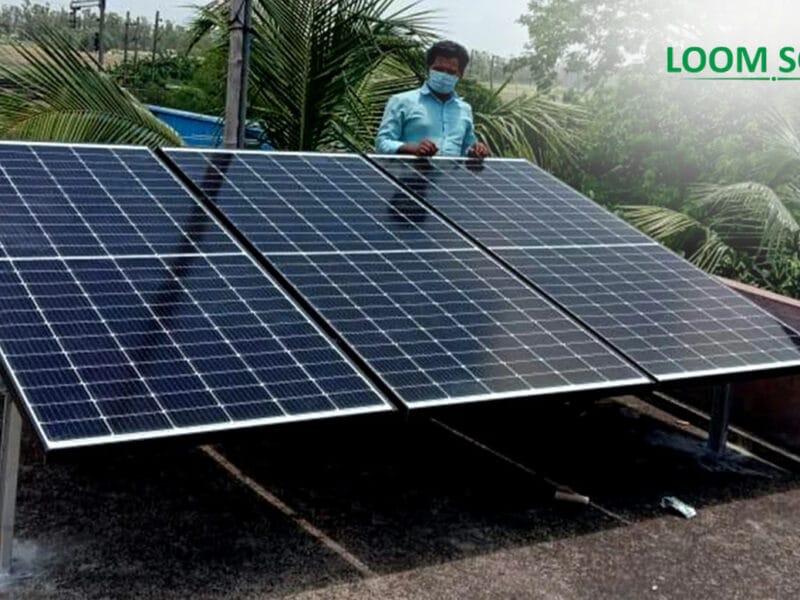
Loom Solar Pvt. Ltd. is an Indian manufacturer of solar power generating equipment, producing solar photovoltaic panels, lithium-ion batteries, and on-grid and off-grid inverters. The company was founded in 2018 by brothers Amol Anand and Amod Anand and is headquartered in Faridabad, Haryana.
The company operates two manufacturing facilities in Haryana with a combined production capacity of 300 MW, along with six warehouses across India. It is developing an additional 1.2 GW solar module manufacturing facility, planned for commissioning in FY27.
Loom Solar sells directly to residential, commercial, industrial, agricultural, and institutional customers through a distribution network of more than 10,000 resellers spanning over 500 districts in India, alongside e-commerce channels including its own website, Amazon, and Flipkart. Its products are also exported to more than 10 countries, with reported reach in North America, Europe, and other regions.
The company has been profitable and bootstrapped since inception, supplemented by external funding raised in 2023. Loom Solar has been registered as an approved vendor under the Government of India’s PM Surya Ghar: Muft Bijli Yojana rooftop solar subsidy scheme across all Indian states, and its products are listed under the government’s Approved List of Models and Manufacturers (ALMM). As of March 2026, the company reported having crossed 100,000 customer installations.
SDG 7 is directly relevant because Loom Solar's core business is manufacturing and distributing solar panels, batteries, and inverters that generate and store renewable electricity for homes and businesses, expanding access to affordable, clean power, including in areas with limited grid infrastructure. SDG 9 applies because the company operates domestic manufacturing facilities in India, is expanding production capacity through a new 1.2 GW facility, and invests in in-house research and product testing, contributing to industrial capacity and technological development in the renewable energy sector. SDG 13 is relevant because solar power generation and battery storage displace reliance on fossil-fuel-based grid electricity, supporting the transition to low-carbon energy sources at the household and small-business level.
Loom Solar operates as a vertically integrated manufacturer, producing solar panels, batteries, and inverters across two in-house manufacturing facilities in Haryana rather than relying solely on third-party production. The company maintains an in-house research and development function that tests products before they proceed to installation, and its manufacturing and quality processes are certified to ISO 9001:2015, with products manufactured in adherence to Bureau of Indian Standards (BIS), International Electrotechnical Commission (IEC), and Ministry of New and Renewable Energy (MNRE) guidelines.
Its go-to-market approach combines a large offline reseller network of more than 10,000 dealers across over 500 Indian districts with a direct e-commerce channel through its own website and third-party marketplaces such as Amazon and Flipkart, a structure that has supported its classification as a direct-to-consumer (D2C) brand. The company has registered as an approved vendor on the government's PM Surya Ghar portal, integrating product selection, installation, and subsidy access into a single customer journey for rooftop solar buyers.
Product development has centered on incremental technology upgrades within established solar cell technologies, including half-cut Mono PERC cells, bifacial panel designs, and more recently N-Type TOPCon panels, aimed at improving efficiency and low-light performance. The company has described its operating model as bootstrapped and consistently profitable, funding manufacturing capacity expansion from operating cash flow supplemented by external investment.
Loom Solar operates in India's residential and small-commercial rooftop solar equipment market, positioning itself as a domestic manufacturer serving cost-sensitive customers, including those in tier 2 and tier 3 cities and rural areas, alongside residential, MSME, commercial, and agricultural buyers. Its primary customers purchase through its reseller network or e-commerce channels rather than through large utility-scale procurement, distinguishing it from EPC-focused or utility-scale solar players. The company has been ranked among India's fastest-growing direct-to-consumer brands by Inc42, reflecting revenue growth driven by its combined offline and online distribution model. Reported industry rankings place it among a large group of active Indian solar equipment manufacturers and resellers, alongside larger integrated players.
Loom Solar represents a notable case of a domestically manufactured solar equipment brand scaling primarily through direct-to-consumer channels rather than traditional EPC or utility contracts. Its dual focus on manufacturing capacity and last-mile distribution, spanning a 10,000-plus reseller network alongside e-commerce, has allowed it to reach smaller cities and rural markets that larger, utility-focused solar manufacturers have been slower to serve.
The company's reported financial trajectory, including a near three-fold revenue increase in FY24 to over Rs 150 crore and a tripling of net profit, alongside its stated bootstrapped and profitable status, suggests a business model that has scaled without heavy reliance on external capital, a departure from the funding-intensive growth patterns common among Indian clean-energy startups. Its recent empanelment under the PM Surya Ghar scheme and crossing of 100,000 customer installations point to growing integration with India's national rooftop solar subsidy infrastructure.
Potential limitations for procurement teams to weigh include the company's relatively narrow certification portfolio, limited to ISO 9001:2015 among internationally recognized sustainability or quality standards commonly held by larger manufacturers, and a product mix concentrated in smaller-scale residential and commercial systems rather than utility-scale deployment. As the company expands into a larger 1.2 GW manufacturing facility, its ability to scale quality control and export operations proportionally will be a relevant factor for larger procurement decisions.
75F is a building automation technology company that designs, manufactures, and operates an Internet of Things (IoT) based Building Management…
Ace Green Recycling, Inc. is a battery recycling technology company that develops proprietary, hydrometallurgical processes to recover critical materials from…

AgBoost Tech Consultancy (ATC) is an India-based geospatial and artificial intelligence technology firm that builds decision-support systems for the agriculture,…