

75F | IoT Building Automation & Energy Management
75F is a building automation technology company that designs, manufactures, and operates an Internet of Things (IoT) based Building Management…

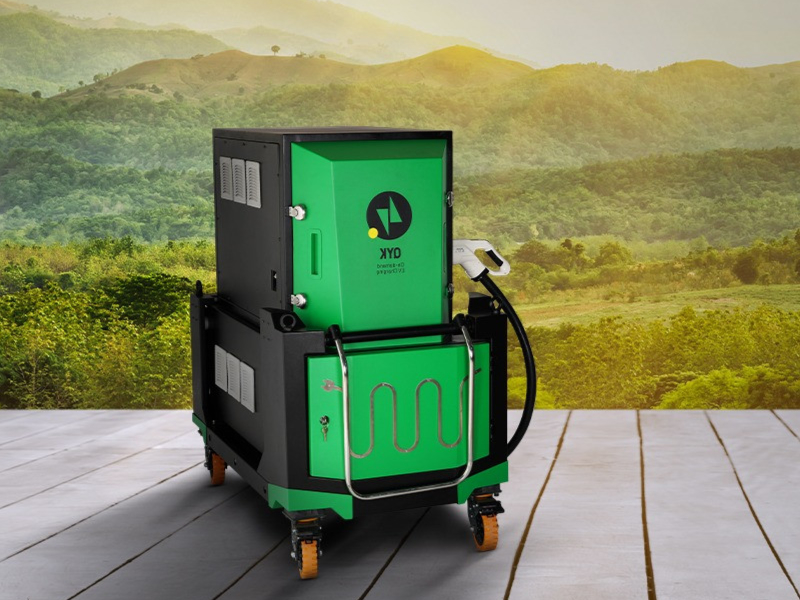
Mojo Green is a Bengaluru, India based clean energy company that designs and manufactures mobile, lithium-ion battery integrated generators intended to replace diesel generators for temporary and remote power needs. The company’s flagship product, QYK GEN, is positioned as a zero-emission alternative to diesel gensets for use cases including telecom tower backup, construction site power, mobile EV fast charging, and power for film, television, and event production.
The company was founded in 2020 by Dhilly Babu Sundara Moorthy and Harshith Talasila and is based in Bengaluru, India. According to Social Alpha, the venture emerged from an Entrepreneurship-in-Residence engagement, and its battery-integrated technology combines EV fast charging, renewable energy integration, and demand side management. The underlying approach centers on storing energy during off-peak periods and discharging it at a faster rate when needed, an approach the founders describe as an electric flush-tank concept.
Tracxn + 3
Mojo Green operates as a hardware manufacturer and technology provider, building swappable battery systems designed to be mounted on vehicles or trailers, with dual charging (grid and solar) and IoT-based remote monitoring. The company positions its products as a way for diesel-dependent industries to reduce emissions, noise, and fuel-related operational costs, while providing energy traceability for ESG reporting purposes.
Mojo Green's core product directly advances SDG 7 by providing a battery-based, solar-compatible alternative to diesel power generation for off-grid and temporary power needs, expanding access to cleaner energy in sectors that have historically depended on fossil fuel generators. The company's stated objective of replacing diesel generators with zero-emission alternatives supports SDG 13 by reducing localized greenhouse gas and diesel combustion emissions across construction, telecom, and event applications. Because mobile battery generators reduce noise and exhaust emissions in populated and urban settings, such as construction sites and telecom installations within cities, the company's work also connects to SDG 11's aim of making urban infrastructure and services more sustainable and less polluting for surrounding communities.
Mojo Green's technical approach centers on combining lithium-ion battery storage, power electronics, and monitoring software into a single mobile unit. Rather than requiring new grid infrastructure, the company's systems are designed to charge from existing low-power connections, or from solar, over an extended period and then discharge at a higher rate when power is needed, a method the founders describe as similar to a flush-tank: the battery charges slowly overnight or under off-peak hours and discharges power at a much faster rate even during peak hours.
medium
This design is intended to avoid the cost and lead time associated with upgrading local electrical infrastructure to support high-power applications such as EV fast charging. The system is described by the company as a charger-in-a-box concept that packages the transformer, cables, electrical points, metering, batteries and software of a traditional fast-charging station into a single unit.
medium
The units are built to be swappable and mobile, mounted on vehicles or trailers so they can be relocated between sites such as telecom towers, construction sites, or event venues. IoT-based telematics provide real-time monitoring of the batteries and energy flow, which the company positions as supporting both operational management and third-party ESG or energy-source verification. Software layers reported by the company also include battery management, user access control, and remote monitoring dashboards for operators managing multiple deployed units, such as fleet or charging station operators.
Mojo Green operates in the mobile and portable power segment, positioned as a battery-based alternative to diesel generator rental and ownership. Its primary customers span telecom tower operators, construction firms, event and film production companies, and organizations seeking on-demand EV charging without permanent charging infrastructure. According to funding trackers, the company is among the funded competitors in a mobile electric generator and EV charging solutions market that includes companies such as SparkCharge and Ampd Energy. Mojo Green differentiates its offering through swappable battery packs, dual grid-and-solar charging, and IoT-based monitoring aimed at supporting ESG energy tracking for its customers.
Tracxn
Mojo Green addresses a narrow but persistent infrastructure gap: the reliance on diesel generators for temporary, remote, and high-demand power needs across telecom, construction, events, and EV charging. By packaging battery storage, power electronics, and monitoring software into a mobile, swappable unit, the company offers customers a way to avoid both diesel-related emissions and the capital cost of permanent grid upgrades, particularly relevant for fast EV charging deployments where grid capacity is often the binding constraint.
As an early-stage company with total disclosed funding in the range of a few hundred thousand dollars, Mojo Green remains small relative to better-capitalized international competitors in mobile power and EV charging. Its backing from climate-focused investors and accelerators, including Social Alpha and Third Derivative, points to recognition within the climate-tech ecosystem, though public evidence of large-scale commercial deployment beyond pilot projects and early installations in Bengaluru is limited.
The company's proposition is most relevant to procurement teams in telecom, construction, and event production seeking to reduce diesel dependence without major infrastructure investment. Its long-term significance will depend on its ability to scale battery manufacturing, expand geographic reach beyond its current base in India, and demonstrate measurable emissions and cost reductions at scale.
75F is a building automation technology company that designs, manufactures, and operates an Internet of Things (IoT) based Building Management…

Ace Green Recycling, Inc. is a battery recycling technology company that develops proprietary, hydrometallurgical processes to recover critical materials from…

AgBoost Tech Consultancy (ATC) is an India-based geospatial and artificial intelligence technology firm that builds decision-support systems for the agriculture,…