

If your business exports products, supplies multinational companies, or wants into global procurement networks, sustainability certifications aren’t optional anymore. Buyers use them as a pre-qualification filter, often before a contract ever reaches negotiation.
That changes how you should think about certification. It’s not a marketing badge. It’s a way to get past the first cut.
This guide covers the international certifications that actually carry weight with global buyers, investors, and supply chain partners: what each one signals, who asks for it, and how to choose based on your business goals rather than what’s trending. If you’re building a certification roadmap specifically for the Indian market, our certifications guide for India covers that ground in more depth.
Table of Contents
Why Global Sustainability Certifications Matter
Certification decisions used to be driven by brand image. Now they’re driven by whether you can win and keep business.
Start with procurement, because it’s the most direct mechanism. Large buyers have started building certification requirements straight into supplier onboarding paperwork. No certificate, no shortlist. It’s become a filter, not a preference.
Export readiness works the same way in a quieter form. Products entering the EU, US, or UK markets face scrutiny that goes well beyond customs paperwork, and a recognized certification pre-answers questions a broker or retailer would otherwise have to raise manually.
There’s also a practical reason multinational buyers push certification down their supply chains: they simply can’t audit every tier themselves. Certification does that verification work on their behalf, at a scale internal audit teams can’t match.
Investors read it differently again. They tend to treat certification and reporting evidence as a proxy for management quality, not purely for environmental performance. It signals that a company has the discipline to track and prove things, which matters as much as the underlying numbers.
Regulation is starting to catch up to all of this, requiring the kind of evidence certifications already produce. We’ll get into that later.
And for consumer facing brands, don’t discount the basics. Certification is still one of the few sustainability claims a shopper can actually go and verify themselves.
Choosing the Right Certification Based on Business Goals
One certification rarely covers everything. A manufacturer exporting textiles might need GOTS for the product and ISO 14001 for the facility. Match the certification to the goal, not the other way around.
| Business goal | Certification to look at |
|---|---|
| Export products | GOTS, FSC |
| Green buildings | LEED, WELL |
| Manufacturing operations | ISO 14001, ISO 50001 |
| Ethical sourcing | Fairtrade, SA8000 |
| Circular product design | Cradle to Cradle |
| Corporate wide sustainability | B Corp |
| Join multinational supply chains | EcoVadis |
| Prove climate credibility to investors | SBTi, CDP |
Leading Global Sustainability Certifications
Corporate ESG
B Corp. Administered by B Lab, it evaluates a company across governance, workers, community, environment, and customers. Investors and enterprise buyers treat it as shorthand for stakeholder governance, not just environmental performance. Global brands like Patagonia and Ben & Jerry’s carry it, which is part of why procurement teams recognize it on sight.
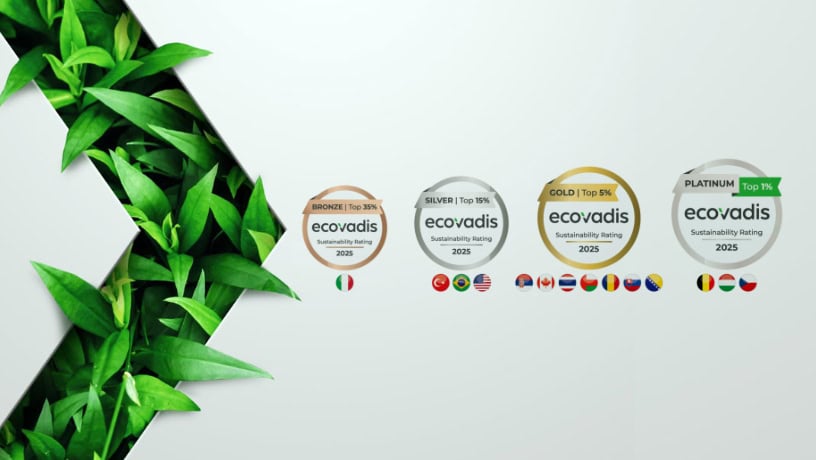
EcoVadis. This one isn’t a certification in the traditional sense, it’s a supplier sustainability scorecard, and for the exact question this guide is answering it may matter more than anything else on this list. Large multinational buyers including Nestlé, L’Oréal, and Coca-Cola now require suppliers to hold a current EcoVadis rating as a condition of doing business at all. If your goal is joining a multinational supply chain, start here.
SBTi. The Science Based Targets initiative validates whether a company’s emissions reduction targets actually align with climate science, rather than certifying a facility or a product. Investors and corporate customers increasingly cite it directly when judging how credible a supplier’s or portfolio company’s climate commitments really are.
CDP. Formerly the Carbon Disclosure Project, CDP runs a global environmental disclosure system covering climate, water, and forests, and scores companies from D minus up to A. Disclosure through CDP is technically voluntary, but in practice it has become close to mandatory: companies like Microsoft and Pfizer now write annual CDP disclosure directly into their supplier code of conduct, and CDP’s own investor signatories represent well over $100 trillion in assets requesting the data.
Buildings
LEED. Developed by the U.S. Green Building Council, LEED rates buildings on energy, water, waste, and construction practices. It’s the certification international investors and corporate tenants ask for first when evaluating a property.
WELL. Focuses on occupant health inside a building: air quality, lighting, water. Increasingly requested alongside LEED by corporate tenants with wellness commitments in their own ESG reporting.
Manufacturing
ISO 14001. An environmental management system standard. It doesn’t certify outcomes, it certifies that a company has a functioning system for managing environmental risk. That’s exactly what procurement teams want to see during supplier audits.
ISO 50001. Same logic, applied to energy management. Common in manufacturing and heavy industry, and often requested alongside 14001.
Circular Economy
Cradle to Cradle. Issued by the Cradle to Cradle Products Innovation Institute, it assesses a product across material health, circularity, clean air and climate, water stewardship, and social fairness. Strong recognition in packaging, architecture, and fashion.
Ethical Supply Chains
SA8000. Developed by Social Accountability International, SA8000 focuses on labor conditions, fair wages, and working hours. Manufacturers and sourcing teams use it to demonstrate they’ve addressed modern slavery risk in multi tier supply chains.
Fairtrade. Covers fair wages and ethical sourcing for farmers and workers. Fair Trade USA and Fairtrade International run separate but comparably rigorous programs, which is worth knowing if a buyer specifies one over the other.
Forestry
FSC. FSC certifies responsibly sourced wood, paper, and forest derived materials. Standard requirement in packaging, print, furniture, and increasingly cellulosic fashion fibers.
PEFC. A forestry certification scheme that’s stronger in parts of Europe. Functions similarly to FSC and sometimes gets specified as an alternative depending on the buyer’s region.
Agriculture
Rainforest Alliance. Covers biodiversity, farmer livelihoods, and sustainable land use, most visible in coffee, tea, and cocoa supply chains.
Textiles
GOTS. GOTS certifies organic textiles across the entire supply chain, from raw fiber to finished product. Not US or UK based, but essential for anyone selling into those markets. Widely required by fashion buyers doing supplier vetting.
OEKO-TEX. Focused on harmful substance testing in textiles rather than the full supply chain. Buyers often want this alongside GOTS, not instead of it. They answer different questions.
Which Certifications Are Recognized by International Buyers?
Certification only helps your business if the people buying from you actually recognize it. That varies more than most guides admit.
EU buyers lean toward certifications with strong third party audit trails. GOTS, FSC, and B Corp all clear that bar. US retailers tend to prioritize Fair Trade USA and LEED, partly because both have deep domestic recognition among consumers. UK retailers frequently specify Soil Association Organic for food and textiles, on top of whatever global certification a supplier already holds.
Global brands with their own supplier codes, think large apparel or electronics companies, often name specific certifications directly in supplier onboarding paperwork.
EcoVadis is the clearest case of this. Companies like Nestlé and L’Oréal don’t just favor it, they write it into supplier requirements outright, which means a supplier can hold every other certification on this list and still get stuck at onboarding without an EcoVadis score. If you’re trying to get into one of these supply chains, check their supplier requirements page before choosing a certification. Guessing wastes time and money.
Certifications and ESG Reporting
Certification and ESG reporting solve different problems, and businesses sometimes treat them as interchangeable. They’re not.
Think of certification as evidence: a third party confirming, at a specific point in time, that your factory, your product, or your company meets a defined standard. Reporting is what happens after that. It’s how you actually tell investors, buyers, and regulators what you’re doing, and the certification data is usually the backbone of that story rather than the story itself.
Businesses with strong certifications but weak reporting still struggle to convert that credibility into investor or buyer confidence. The evidence exists, but nobody’s told the story. The two need to work together.
Common Mistakes Businesses Make
The most common one is choosing a certification because it’s popular rather than because it’s relevant. B Corp gets attention and press coverage, but none of that helps a manufacturer whose buyer is specifically asking for ISO 14001.
Close behind that is ignoring what the actual customer wants. The right certification is the one your biggest buyer or target market recognizes. Not the one with the biggest name.
Then there’s the maintenance problem. Most of these certifications require recertification on a cycle, and a lapsed certificate can raise more questions during an audit than never having pursued one at all. It looks like something slipped, because it did.
Some businesses also mix up what’s actually being certified. GOTS certifies a textile. B Corp certifies a company. A buyer asking for one won’t accept the other as a substitute, and that confusion tends to surface at the worst possible time, mid-negotiation.
Underneath all of these is a bigger one: treating certification as marketing first. It’s audit evidence first, marketing value second. Lean too hard on the marketing angle and you’re one step from getting flagged for greenwashing, which does more damage than the certification was ever going to prevent.
Regulation Is Catching Up to Certification
Regulation is starting to formalize what certification already does informally, which raises the stakes for getting this right now.
The EU’s Corporate Sustainability Due Diligence Directive requires large EU and non-EU companies doing significant business in the EU to identify and address human rights and environmental risks throughout their global value chains. Member states must fold it into national law by 26 July 2026, and SMEs aren’t directly in scope, but they face indirect pressure because larger companies within scope have to collect detailed due diligence data from their own suppliers. Certification data becomes one of the fastest ways to answer that request.
Digital Product Passports are moving the same direction. Under the EU’s Ecodesign for Sustainable Products Regulation, any business that manufactures, imports, distributes, or sells physical goods into the EU market falls into scope, including companies based outside Europe. The first products in scope are batteries, followed by textiles, furniture, tyres, energy related products, ICT, and chemicals starting in 2027. A product passport requires verified data on material composition and sourcing, repairability, carbon footprint, and substances of concern, data that a solid certification program has often already collected.
The direction is consistent across all of it: verifiable data over claims, and traceability that goes deeper than a single supplier tier. Businesses that already hold relevant certifications and organize the underlying data won’t be scrambling when these rules land.
None of this is going away. Businesses competing globally will increasingly be evaluated on verifiable sustainability performance rather than marketing claims. The right certification still depends on your industry, your customers, and your strategic objectives, but the common thread running through all of it is transparency and credibility.