

75F | IoT Building Automation & Energy Management
75F is a building automation technology company that designs, manufactures, and operates an Internet of Things (IoT) based Building Management…

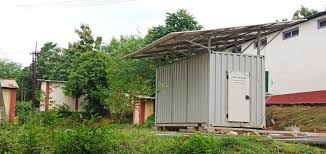
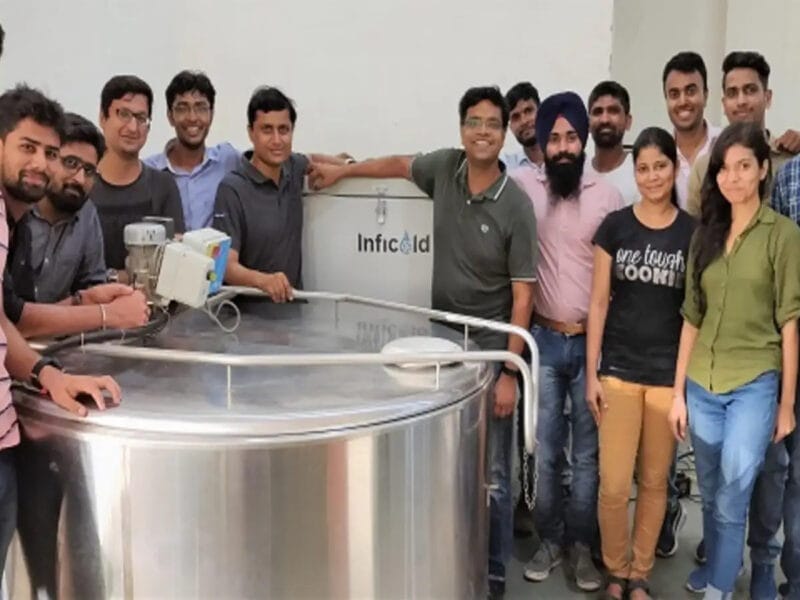
Inficold India Pvt. Ltd. is an Indian manufacturer of solar-powered cold storage, milk cooling, and thermal energy storage equipment for agricultural and food supply chains. The company was founded in 2015 by Dr. Nitin Goel and Dr. Himanshu Pokharna, both IIT Bombay graduates who previously worked together at Intel and at thermal technology company Sheetak Inc.
The company’s core innovation is a retrofittable thermal energy storage system that stores cooling energy in a phase change material, functioning similarly to ice storage. This allows refrigeration and cooling equipment to keep operating during power outages or after dark, without relying on electric batteries or diesel generators. The technology was developed in partnership with the National Institute of Solar Energy, an institute under India’s Ministry of New and Renewable Energy.
Inficold operates a 65,000 square foot manufacturing facility in Hapur, Uttar Pradesh, where it fabricates the steel structures, refrigeration components, heat exchangers, and electronic control systems used in its products. The company maintains a sales and service office in Bangalore, with service engineers also based in Delhi and Guwahati.
Since launching its solar-integrated product line in 2019, Inficold has expanded installations across more than 19 Indian states, with additional deployments in a small number of African countries. Its customer base spans dairy cooperatives, individual farmers, food processors, and institutional buyers, including at least one state government hospital using Inficold equipment for vaccine cold storage. The company has received backing from Shell Foundation and the UK’s Foreign, Commonwealth and Development Office to help scale manufacturing and distribution of its cold chain equipment.
Inficold’s cold storage and milk cooling systems directly reduce post-harvest food loss for smallholder farmers and dairy producers, supporting SDG 2 by helping preserve perishable produce that would otherwise spoil before reaching market. The company’s thermal energy storage systems are charged using solar photovoltaic power rather than grid electricity or diesel generators, aligning with SDG 7’s goal of expanding access to affordable, clean energy in areas with unreliable power infrastructure. By extending the shelf life of fruits, vegetables, milk, and other perishables, Inficold’s solutions reduce food waste across the agricultural supply chain, supporting SDG 12’s focus on responsible production and loss reduction. Because the systems displace diesel-generator backup and reduce dependence on carbon-intensive grid electricity in off-grid and semi-urban regions, they also contribute to SDG 13 by lowering the carbon footprint associated with agricultural cold chain operations.
Inficold’s approach centers on thermal energy storage using phase change materials, primarily water converted to ice, as an alternative to electrochemical batteries for solar-powered refrigeration. The company’s ColdVault system is installed between the outdoor and indoor units of a standard refrigeration or cooling setup, storing cooling energy as ice when power is available and releasing it during outages, at night, or during peak demand periods, without modifying the underlying cooling hardware.
This retrofit-compatible design allows the technology to be applied across cold storage rooms, bulk milk coolers, instant milk chillers, and air conditioning systems. Because the storage medium is water rather than lithium-ion or lead-acid batteries, the systems avoid the degradation, fire risk, and periodic replacement costs associated with battery backup.
The underlying technology was developed jointly with the National Institute of Solar Energy under India’s Ministry of New and Renewable Energy, and the founders hold multiple patents related to thermal storage and solar-integrated cooling. Manufacturing takes place at the company’s Hapur facility, where components including steel structures, stainless steel housings, refrigeration condensing and evaporating units, and electronic control panels are fabricated in-house, allowing Inficold to customize systems for specific site conditions such as temperature range, capacity, and solar resource availability.
Inficold operates in India’s cold chain equipment market, competing primarily with other solar and thermal-storage cold chain manufacturers such as Ecozen, Ecofrost, and SokoFresh. The company differentiates itself through its retrofit-compatible thermal storage design, which can be added to existing refrigeration hardware rather than requiring a full system replacement, and through its water-based, battery-free approach to solar backup. Its primary customers are dairy cooperatives, farmers, food processors, and institutional buyers such as government facilities requiring vaccine cold storage. Tracxn ranks Inficold second by total funding among a set of 13 active competitors in its space.
Inficold occupies a focused niche within India’s cold chain sector: battery-free, solar-integrated thermal storage for farm and dairy-level refrigeration. This addresses a genuine structural problem in Indian agriculture, where cold storage infrastructure is concentrated in large cities while the point of highest spoilage risk is at the farm or village level, often in areas with unreliable grid electricity. By using a retrofit-compatible design based on water-to-ice thermal storage rather than batteries, the company offers a lower-maintenance alternative to diesel generators and battery backup, which are common failure points in existing rural cold chain solutions.
The company’s traction indicators, including a decade of operation, multiple funding rounds, a National Technology Award, and backing from Shell Foundation and the UK FCDO, suggest a credible and moderately established player rather than an early-stage concept. Its scale remains regional: installations are concentrated in India with limited African presence, and its customer base is weighted toward smaller agricultural and dairy operations rather than large industrial cold chain buyers. Independent verification of specific patent claims, cumulative deployment numbers, and the current status of some cited awards was limited to secondary sources, which procurement teams should account for when evaluating the company.
75F is a building automation technology company that designs, manufactures, and operates an Internet of Things (IoT) based Building Management…

Ace Green Recycling, Inc. is a battery recycling technology company that develops proprietary, hydrometallurgical processes to recover critical materials from…

AgBoost Tech Consultancy (ATC) is an India-based geospatial and artificial intelligence technology firm that builds decision-support systems for the agriculture,…