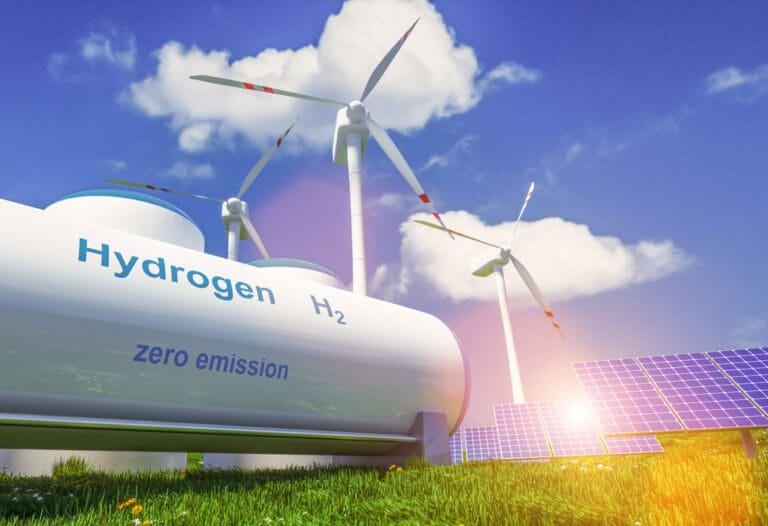



Solar energy is no longer being treated as a side component of sustainability strategy. Across manufacturing, logistics, infrastructure, and industrial operations, renewable energy procurement is becoming tied to energy security, emissions reporting, investor expectations, and long-term operational resilience.
Table of Contents
Rising energy volatility, stricter climate regulations, investor pressure, and supply chain sustainability requirements are prompting companies to reconsider how energy is produced, monitored, and reported. Solar infrastructure is now adopted not only to reduce costs but also to lower Scope 2 emissions, enhance sustainability disclosures, and prepare for future carbon pricing.
India is emerging as one of the most important solar growth markets globally. Policy support, domestic manufacturing expansion, digital energy monitoring, green financing instruments, and corporate renewable procurement models are accelerating adoption across residential, commercial, and industrial sectors.
The discussion around solar is also moving beyond installation scale alone. Renewable energy projects are now being evaluated through the lens of data visibility, lifecycle sustainability, carbon accounting, and long-term operational resilience.
Why Solar Energy Matters More in 2026 Than Ever Before
In 2026, solar energy stands as strategic infrastructure at the heart of operational resilience, ESG performance, and long-term decarbonization goals. Its adoption underscores a shift from clean energy to a foundational business strategy.
For businesses, the pressure is coming from multiple directions at once. Rising grid instability, volatile fossil fuel prices, climate disclosure requirements, investor scrutiny, and sustainability expectations from global supply chains are forcing companies to rethink how energy is sourced and managed.
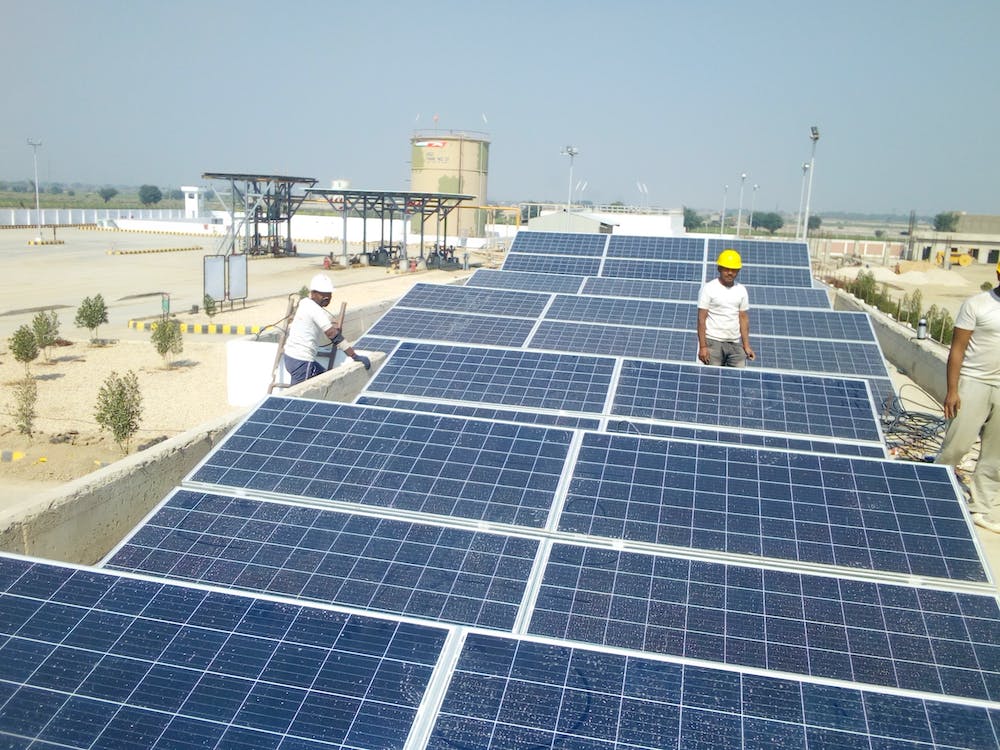
Renewable energy procurement is now directly connected to corporate sustainability performance. Companies that reduce dependence on fossil-fuel-based electricity can lower Scope 2 emissions, improve ESG ratings, and strengthen their position with investors, regulators, and procurement partners.
The pressure is strongest in export-oriented sectors where sustainability disclosures are increasingly influencing procurement decisions, investor confidence, and supplier eligibility within global markets.
In India, solar adoption is accelerating across industrial parks, manufacturing facilities, logistics operations, commercial buildings, and MSMEs. Falling technology costs, domestic manufacturing expansion, and supportive renewable energy policies are making solar deployment more commercially viable than ever before.
Group Captive and Open Access procurement models are gaining momentum because large energy consumers now want more than lower electricity costs. Renewable procurement is becoming tied to carbon reporting, long-term energy price stability, investor expectations, and supply chain sustainability requirements.
Another major shift is the digitization of renewable infrastructure itself. AI-enabled monitoring systems, IoT sensors, and Digital MRV platforms are allowing organizations to track energy generation, emissions reductions, operational efficiency, and compliance metrics in real time.
Solar is no longer being treated purely as an energy cost decision. For many industrial operators, renewable infrastructure is starting to function as part of a broader sustainability and operational intelligence layer.
For India, this transition also represents a major economic opportunity. The country’s renewable energy push is creating new ecosystems around manufacturing, financing, recycling, carbon markets, energy analytics, and sustainability technology platforms, making solar one of the central pillars of India’s long-term green economy strategy.
Solar Technologies Defining the 2026 Market
The solar industry in 2026 is no longer competing only on installation scale. The focus is shifting toward efficiency, lifecycle performance, digital integration, and long-term operational reliability.
Earlier phases of solar adoption were heavily driven by falling panel prices and rapid deployment targets. Today, businesses are paying closer attention to how renewable infrastructure performs over decades, how efficiently it integrates with energy management systems, and how well it supports broader sustainability reporting requirements.
Older PERC systems are gradually losing momentum as commercial and industrial projects move toward TOPCon and Heterojunction (HJT) architectures that offer stronger efficiency, lower degradation, and better long-term performance under demanding operating conditions.
Bifacial solar panels are also becoming common across utility-scale and industrial projects. Instead of capturing sunlight from only one side, bifacial systems generate electricity from reflected light as well, improving total energy output without proportionally increasing land or infrastructure requirements. For large-scale deployments, that efficiency advantage can significantly improve long-term project economics.
Research and investment are already moving beyond conventional silicon technologies. Perovskite and tandem solar cells continue attracting attention because of their potential to push efficiency levels beyond traditional limits while enabling lighter and more flexible solar applications.
The bigger change is happening beyond hardware itself. Renewable infrastructure is becoming increasingly software-driven, measurable, and connected to operational sustainability systems.
Modern commercial solar systems are now integrated with AI-enabled monitoring platforms, predictive maintenance systems, IoT-connected sensors, battery analytics, and Digital MRV infrastructure. Large deployments operate as continuously monitored energy networks capable of generating operational and sustainability data in real time.
The role of solar infrastructure is expanding well beyond electricity generation. Large renewable deployments are now expected to support emissions tracking, compliance reporting, operational optimization, and audit-ready sustainability documentation alongside energy production itself.
India’s domestic manufacturing ecosystem is evolving alongside this transition. The expansion of the Approved List of Models and Manufacturers (ALMM) framework to include solar cells alongside modules reflects a broader policy push toward supply chain localization and manufacturing resilience. Combined with Production Linked Incentive schemes and industrial policy support, this is accelerating investment into advanced cell manufacturing, vertically integrated supply chains, and domestic renewable infrastructure capacity.
The industry is moving far beyond the earlier race for installation scale alone. Efficiency, software integration, lifecycle performance, manufacturing resilience, and sustainability reporting are now shaping how large renewable projects are evaluated.
Solar Costs, Green Financing, and 2026 Policy Shifts
The economics of solar energy in India are changing rapidly. Earlier phases of adoption were driven largely by falling panel prices and government subsidies. In 2026, the market is becoming far more sophisticated, shaped by energy security concerns, green financing ecosystems, industrial decarbonization goals, and long-term operational risk management.
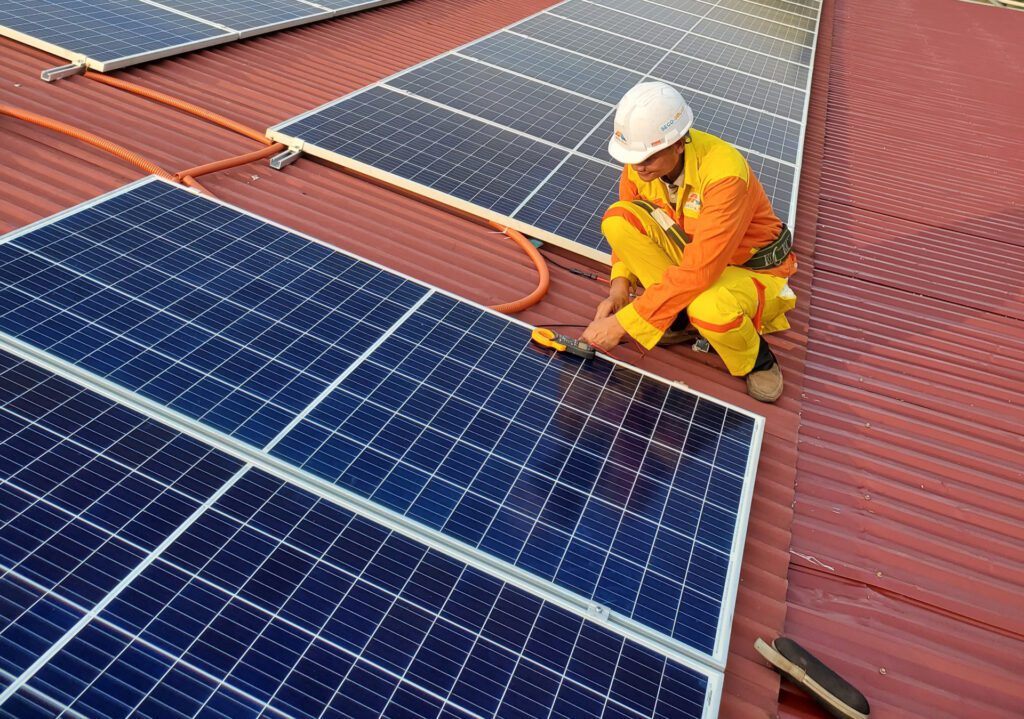
Large energy consumers are approaching renewable procurement very differently than they did a few years ago. Earlier adoption cycles were heavily centered around cost savings and government incentives. In 2026, energy volatility, emissions pressure, investor scrutiny, and long-term procurement risk are playing a much larger role in solar investment decisions.
Commercial and industrial rooftop projects in India typically range between ₹38,000 and ₹60,000 per kW, depending on project scale, storage integration, technology choices, and site complexity. While hardware costs remain important, many organizations are now evaluating solar based on lifecycle efficiency, operational reliability, and long-term decarbonization value rather than upfront installation economics alone.
Financing models are evolving alongside the market itself. Earlier growth cycles depended heavily on subsidies and falling hardware costs. Current investment decisions are increasingly shaped by long-term energy pricing, emissions exposure, financing access, and supply chain sustainability pressure.
Group Captive and Open Access models are becoming particularly important within this transition. Instead of relying entirely on onsite rooftop deployment, businesses are sourcing renewable electricity from off-site projects through long-term procurement agreements. For energy-intensive sectors such as manufacturing, warehousing, logistics, and industrial operations, these structures often provide greater scalability and more predictable pricing while helping organizations accelerate Scope 2 emissions reductions.
India’s policy environment is evolving alongside these market shifts. The PM Surya Ghar: Muft Bijli Yojana has entered a more mature implementation phase with stronger digital onboarding systems, improved subsidy tracking, and broader ecosystem integration. While initially positioned around residential adoption, the program is also contributing to growth across local installation networks, distributed energy infrastructure, and MSME-level energy resilience.
The expansion of the Approved List of Models and Manufacturers (ALMM) framework to include solar cells alongside modules reflects a broader push toward domestic manufacturing and supply chain localization.
These policy shifts are becoming important as global renewable supply chains face geopolitical uncertainty, trade restrictions, and rising sustainability scrutiny. For India, strengthening domestic renewable manufacturing is no longer only an industrial policy objective. It is also becoming part of long-term energy security and economic resilience planning.
Renewable infrastructure is no longer being evaluated purely through electricity generation metrics. ESG disclosures, emissions reduction planning, financing access, and carbon management strategies are now influencing how large solar projects are assessed.
For many industrial operators, solar is now tied as much to long-term resilience and emissions strategy as it is to electricity pricing.
Digital MRV, AI, and Audit-Ready Sustainability Data
One of the least visible but most important shifts happening in the solar industry is the transformation of renewable infrastructure into a data and intelligence layer for sustainability management.
Earlier generations of solar adoption were mostly measured through installed capacity and electricity savings. In 2026, the conversation is becoming far more operational and data-driven. Businesses need verifiable sustainability metrics tied to emissions reductions, renewable energy usage, energy efficiency, and compliance reporting.

This is where Digital MRV systems are becoming central to the renewable energy ecosystem. Monitoring, Reporting, and Verification frameworks were traditionally slow, fragmented, and heavily manual, especially across large industrial operations. Modern solar infrastructure is changing that through connected sensors, AI-driven analytics, cloud-based monitoring systems, and automated reporting workflows.
Large renewable deployments are now expected to function as measurable infrastructure layers capable of supporting audit preparation, emissions reporting, compliance documentation, and operational sustainability analysis rather than simply generating electricity.
Artificial intelligence is accelerating this transition further. AI-enabled monitoring systems can identify degradation patterns, predict maintenance failures before downtime occurs, optimize generation performance based on weather and load conditions, and improve battery storage efficiency over time. For large facilities operating across multiple sites, these capabilities can significantly improve long-term asset utilization while reducing operational inefficiencies.
The growing complexity of ESG disclosures is also increasing demand for centralized sustainability data systems. Frameworks such as BRSR, CSRD, GRI, LEED, and IGBC require measurable environmental performance rather than broad sustainability claims. As a result, renewable energy monitoring is becoming tightly connected with emissions reporting, carbon accounting, compliance documentation, and supply chain sustainability assessments.
Renewable energy systems are gradually becoming part of larger digital sustainability infrastructure used for emissions reporting, compliance tracking, and long-term operational planning.
In practical terms, the future value of solar infrastructure may depend not only on how much electricity it generates, but also on how effectively it can produce measurable sustainability intelligence.
Circular Economy and Solar Panel Waste Management
As solar deployment accelerates globally, the industry is beginning to confront a less discussed reality of the clean energy transition: renewable infrastructure itself will eventually become a large-scale waste stream.
Most solar panels remain operational for 25 to 30 years, which means many of the systems installed during the early expansion of the renewable sector are only now approaching end-of-life stages. For rapidly growing markets such as India, this creates a difficult challenge. The same infrastructure helping reduce fossil fuel dependence today could eventually contribute to major material recovery and landfill pressures if recycling systems fail to scale alongside deployment.
That tension is pushing the conversation around solar beyond electricity generation alone. Increasingly, businesses and policymakers are being forced to evaluate renewable infrastructure through a full lifecycle lens involving manufacturing, durability, maintenance, reuse, recycling, and material recovery.
Solar panels contain valuable materials such as aluminium, glass, silicon, copper, silver, and semiconductor components. Recovering these materials efficiently could eventually become strategically important as renewable deployment expands and pressure on global resource supply chains increases.
India is gradually strengthening its approach toward solar waste management through Extended Producer Responsibility frameworks that place greater accountability on manufacturers and producers for collection, recycling, and environmentally safe disposal of end-of-life infrastructure. While the regulatory ecosystem is still evolving, the direction is becoming clear. Renewable energy systems will eventually be expected to meet the same lifecycle accountability standards facing other industrial sectors.
Earlier phases of solar adoption focused heavily on installation economics and electricity generation capacity. Lifecycle sustainability, recyclability, maintenance efficiency, and long-term material recovery are now becoming more relevant within procurement and ESG evaluation processes.
Material Flow Cost Accounting (MFCA) is gaining attention within this transition because it allows organizations to track how resources move through operational systems, where inefficiencies occur, and how material losses can be reduced over time. Applied to renewable infrastructure, this approach can help businesses better understand panel degradation, lifecycle utilization, maintenance efficiency, and future recovery potential.
AI-driven monitoring and predictive maintenance systems are also extending the operational lifespan of solar assets themselves. Large commercial installations now use connected monitoring systems capable of identifying degradation patterns and performance inefficiencies long before equipment failure occurs.
The economic implications are also becoming important. Solar recycling is gradually evolving into a standalone sustainability sector involving material recovery, reverse logistics, circular manufacturing, and renewable infrastructure processing. As deployment scales globally, recovering valuable materials from aging infrastructure may eventually become as strategically important as manufacturing new panels.
What makes this transition particularly important is that it changes how the renewable sector defines sustainability itself. Clean energy generation alone is no longer enough. The long-term credibility of the solar industry will depend on whether renewable infrastructure can operate within genuinely circular systems capable of minimizing waste, extending asset lifespans, and recovering materials responsibly at scale.
Business Models Driving India’s Solar Economy
India’s solar sector is moving far beyond the early phase of rooftop installations and subsidy-driven adoption. In 2026, the industry is evolving into a much broader operational ecosystem shaped by industrial decarbonization, renewable procurement strategies, digital infrastructure, and sustainability reporting requirements.
The biggest shift is that businesses are no longer approaching solar as a standalone energy purchase. Renewable energy is being integrated into procurement strategy, investor communication, compliance planning, and long-term operational risk management.
This is especially visible across manufacturing and export-oriented sectors where sustainability performance is becoming commercially important. Companies supplying to global markets are under growing pressure to demonstrate measurable emissions reductions, renewable energy usage, and credible ESG disclosures. As a result, renewable procurement is gradually becoming part of competitive positioning rather than just a utility decision.
That shift is accelerating the growth of Group Captive and Open Access solar models across India. Instead of relying entirely on rooftop installations, businesses are sourcing renewable electricity from off-site projects through long-term agreements. For large industrial operations, this approach often provides better scalability, more predictable energy pricing, and faster progress toward Scope 2 reduction targets.
The industry is also moving beyond the earlier growth model that prioritized installation expansion above everything else. Operational efficiency, lifecycle performance, energy analytics, and infrastructure intelligence are becoming commercially important as renewable deployments scale.
This is creating demand for businesses that operate beyond panel installation alone. Companies focused on predictive maintenance, asset optimization, remote monitoring, battery management, and energy analytics are becoming important as solar deployments scale across industrial and commercial sectors.
The digitization of renewable infrastructure is also reshaping the industry. Solar systems are now generating large volumes of operational and sustainability data, creating growing demand for software platforms capable of tracking renewable performance, emissions reductions, ESG disclosures, and audit-ready sustainability metrics.
What large operators now want is centralized visibility across energy usage, renewable generation, emissions performance, and sustainability reporting rather than disconnected systems managed across multiple teams.
India’s domestic manufacturing push is further expanding the solar economy beyond deployment alone. Policy measures such as ALMM expansion and Production Linked Incentive schemes are encouraging investment into solar cells, modules, storage systems, and vertically integrated supply chains. This has broader implications for energy security, industrial resilience, and supply chain localization as global renewable markets face geopolitical and trade uncertainties.
Entirely new sustainability sectors are also emerging around solar recycling, lifecycle tracking, material recovery, and circular manufacturing. As aging renewable infrastructure reaches end-of-life stages, waste management and resource recovery are becoming economically important parts of the industry.
Solar is now intersecting with carbon markets, ESG reporting systems, industrial policy, climate finance, and digital infrastructure in ways that barely existed a few years ago.
That convergence is transforming solar from a pure energy sector into a foundational layer of India’s broader sustainability economy.
Solar Energy and India’s Carbon Credit Economy
India’s emerging carbon market ecosystem is starting to reshape how renewable energy projects are valued, measured, and financed. As businesses face growing pressure to reduce emissions and disclose measurable sustainability performance, renewable energy projects are evolving beyond electricity generation into verified decarbonization assets.
In 2026, India’s Carbon Credit Trading Scheme (CCTS) is beginning to shape the country’s domestic carbon market framework. The system is designed to create a structured mechanism for measuring, verifying, and trading emissions reductions across sectors. Renewable energy projects, including solar infrastructure, are expected to play a major role within this transition.
For businesses adopting solar energy, the value proposition is no longer limited to operational savings. Renewable energy deployment can also contribute to measurable Scope 2 emissions reductions, strengthen ESG disclosures, improve sustainability ratings, and potentially support participation in carbon credit ecosystems.
Large industrial renewable projects have historically dominated carbon credit generation. However, improvements in digital MRV systems, IoT-enabled monitoring, and automated emissions tracking are gradually making carbon accounting more accessible for smaller organizations as well.
This is especially important as sustainability reporting becomes more data-driven and audit-focused. Organizations need verifiable documentation showing how renewable infrastructure contributes to emissions reductions and decarbonization targets.
Voluntary carbon markets are also pushing renewable infrastructure into a larger climate-finance conversation where renewable energy certificates, verified emissions reductions, and traceable energy data are becoming commercially valuable environmental assets.
Technology is also beginning to reshape how environmental attributes are tracked and validated. Blockchain-based verification systems and decentralized carbon infrastructure models are being explored to improve transparency, traceability, and trust within carbon markets.
For India, this creates opportunities far beyond energy production alone. The convergence of renewable energy, carbon accounting, digital monitoring systems, and sustainability reporting is creating entirely new ecosystems around climate finance and measurable environmental performance.
As carbon markets mature, solar infrastructure is likely to become important not just as a source of renewable electricity, but as a measurable decarbonization asset within broader ESG and operational sustainability strategies.
The Future of Solar in India’s Sustainability Transition
Solar energy in 2026 is no longer just about generating cleaner electricity. It is becoming part of a much larger transformation involving carbon management, ESG accountability, digital sustainability management, circular economy systems, and climate-focused business strategy.
The pressure is becoming especially visible across manufacturing, infrastructure, logistics, and export-driven sectors where environmental performance is moving closer to a core business requirement rather than a standalone sustainability initiative. Emissions transparency, renewable energy usage, and measurable climate targets are gradually becoming tied to financing access, procurement eligibility, investor confidence, and regulatory readiness.
India’s solar sector is evolving rapidly within this environment. Domestic manufacturing expansion, digital monitoring systems, AI-driven energy intelligence, green financing mechanisms, carbon market development, and circular economy regulations are reshaping how renewable infrastructure is deployed and managed across industries.
The renewable transition is also creating new commercial ecosystems around sustainability software, lifecycle analytics, carbon accounting, climate finance, and infrastructure intelligence. Solar infrastructure itself is gradually becoming a source of operational intelligence capable of supporting audit-ready ESG reporting and long-term decarbonization planning.
The next phase of solar adoption will likely be defined not only by how much renewable energy is generated, but also by how effectively organizations can measure, verify, optimize, and integrate sustainability performance into everyday business operations.
As India continues expanding its renewable energy ecosystem, solar is expected to remain one of the foundational pillars of the country’s broader sustainability and green economic transition.