


Table of Contents
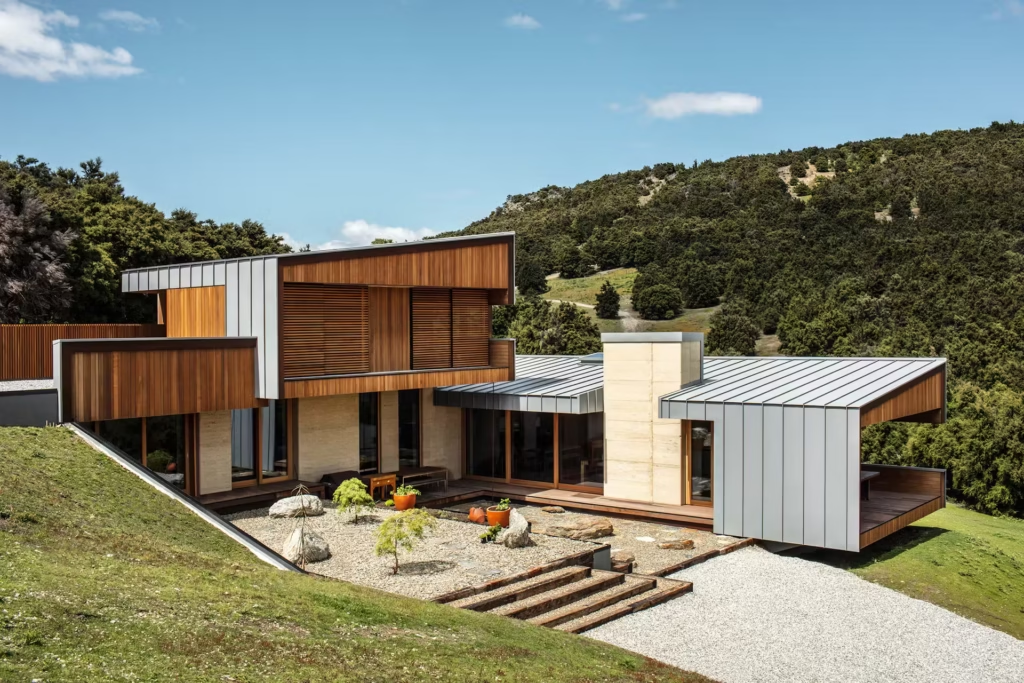
Construction is one of the largest contributors to global carbon emissions. Traditional clay and concrete bricks come with a heavy footprint, requiring energy-intensive kilns and cement production. A growing set of innovators are rethinking this equation with Earth blocks, a soil-based alternative that blends sustainability with practicality.
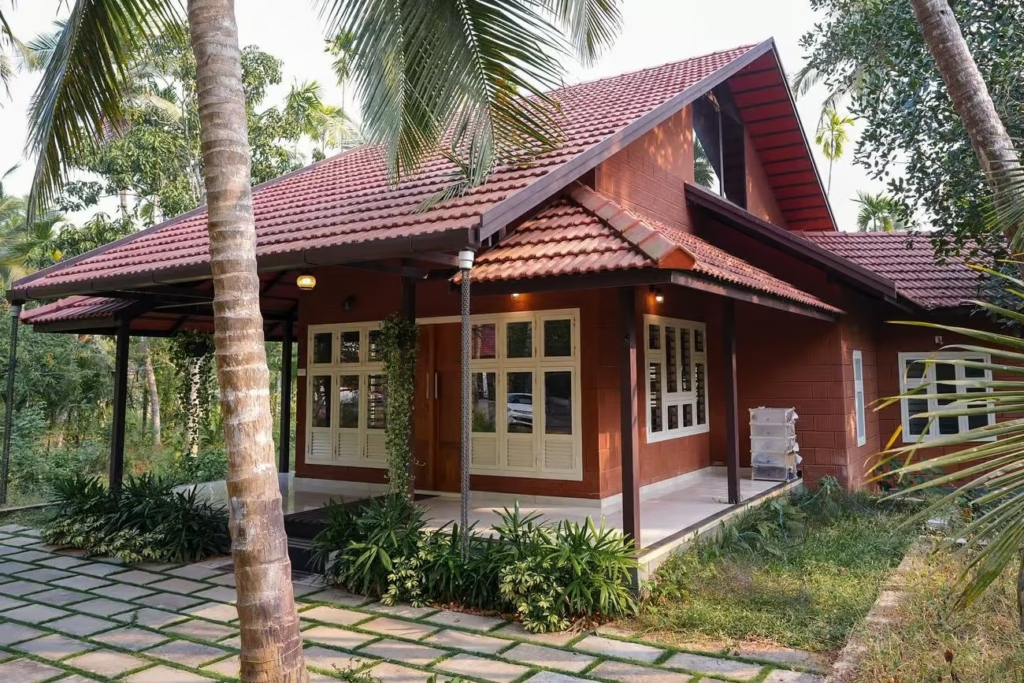
These compressed, stabilized blocks are made from local soil with just 6–9% cement, cutting down the need for fired bricks while recycling waste soil from construction projects. Unlike many experimental green materials, Earth blocks have been tested in real conditions, including the rebuilding of homes after earthquakes and tsunamis.
A billion-dollar market taking shape
The Asia Pacific Earth Block market is projected to reach USD 970 million, according to industry estimates. This growth is fueled by two main drivers:
- Affordability: Earth Blocks can reduce overall housing costs by up to 40% compared to traditional methods.
- Sustainability: With cement production contributing nearly 8% of global CO₂ emissions, builders are seeking greener alternatives.
A Sustainable Shift in Building Materials
The value of Earth blocks lies in their ability to combine eco-friendliness with cost efficiency. By eliminating the need for high-temperature kilns, they reduce greenhouse gas emissions at scale. Studies suggest that walls made from stabilized Earth blocks consume up to 20–30% less energy for heating and cooling compared to conventional concrete.
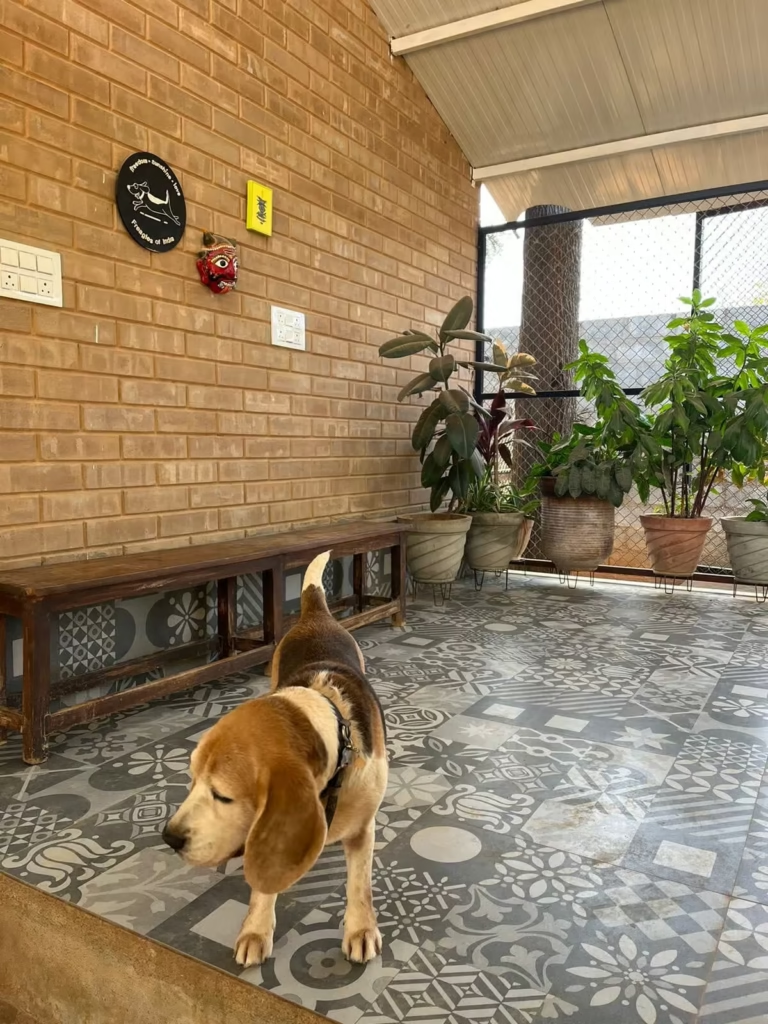
As mentioned earlier, Earth blocks are 40% cheaper than concrete blocks. These savings come not only from material costs but also from reduced labor and finishing requirements. Since many factory-produced blocks come with smooth finishes, builders can skip plaster and paint, cutting both time and expenses.
Innovation in design adds to their appeal. Some Earth block variants include built-in holes for electrical conduits, speeding up wiring and reducing labor costs. Interlocking designs work like Lego, minimizing mortar use and cutting waste.
Strength and Reliability in Disaster Contexts
One common perception is that soil-based materials are fragile. Earth blocks challenge that notion. With compressive strength of around 3–4 MPa (similar to conventional fired bricks), they meet building codes in several regions and have been used for disaster-resilient housing. Their modular interlocking versions also reduce construction errors and allow faster builds, lowering the overall risk in projects.
Still, challenges exist. Regulations for alternative materials are inconsistent, and in many countries, Earth blocks are not yet mainstream in urban construction codes. This slows down adoption and deters large-scale investments from real estate developers who prefer tried-and-tested standards.
A Competitive Landscape Emerging Globally
Earth blocks are not an isolated idea. Around the world, multiple companies are advancing similar technologies:
- Earth Blocks India – This private limited company is developing decentralized production units that allow communities to create blocks locally, cutting both costs and emissions.
- Dwell Earth in the United States offers both equipment and training, targeting developers who want to integrate compressed earth block technology into sustainable projects.
- Hydraform (South Africa, with presence in India and Australia) – A long-standing player, offering block-making technology used in sustainable housing projects worldwide.
This competition shows the sector is far from a niche experiment. It is becoming a recognized alternative material market, with potential for investment and expansion.
Business opportunities in sustainable construction
For entrepreneurs and developers, Earth Blocks open a dual opportunity: lower construction costs while meeting rising demand for eco-friendly housing.
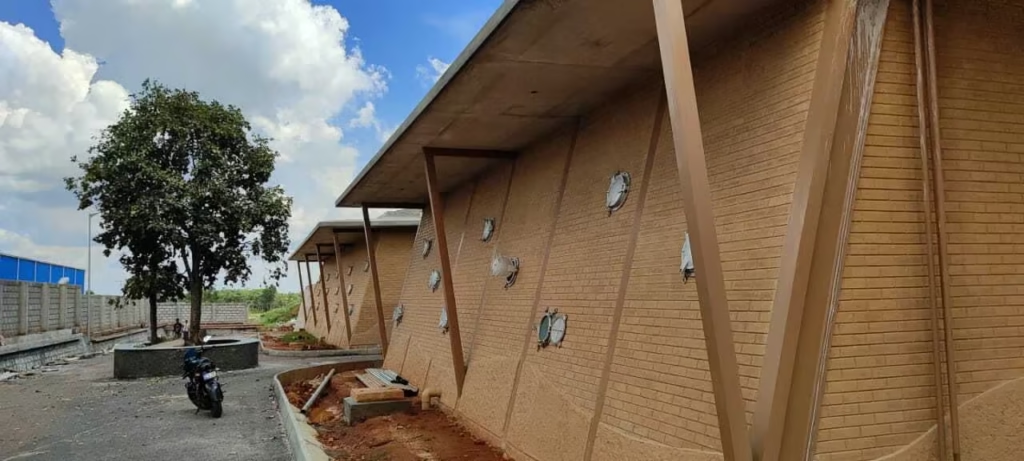
The cost savings make projects more accessible for low- and middle-income families, while the sustainability angle aligns with green financing initiatives and government housing schemes.
Barriers to Mainstream Growth
Despite the advantages, Earth blocks face hurdles.
- Perception: Many still associate soil-based construction with “cheap” or temporary housing, which creates resistance in urban and premium markets.
- Policy gaps: Building codes in several regions lag behind material innovation, making large-scale projects riskier for developers.
- Scaling limits: Production requires specialized presses and quality control. Without proper training, blocks can fail to meet strength standards, which harms credibility.
For sustainable businesses, these barriers highlight the need for ecosystem support, from training programs to regulatory updates.
Why This Matters for Sustainable Business
Earth blocks demonstrate that sustainability in construction does not have to be a trade-off. Businesses adopting these blocks can reduce costs, meet climate targets, and market their projects as eco-conscious. At the same time, startups in this space have room to grow through equipment manufacturing, franchise-style production centers, or direct partnerships with developers.
With the global push for net-zero cities and resilient infrastructure, Earth blocks are well positioned as a marketable solution with real economic and environmental value. Yet scaling up will require collaboration between innovators, regulators, and investors willing to see soil not as primitive, but as the future of smart construction.