

Table of Contents
Smartphones are replaced every few years, but the accessories built around them follow a very different lifecycle, often ending up as long-term plastic waste.
What makes compostable phone cases interesting is not just their environmental benefit, but how they represent a new category of circular consumer products built around material innovation and end-of-life design.
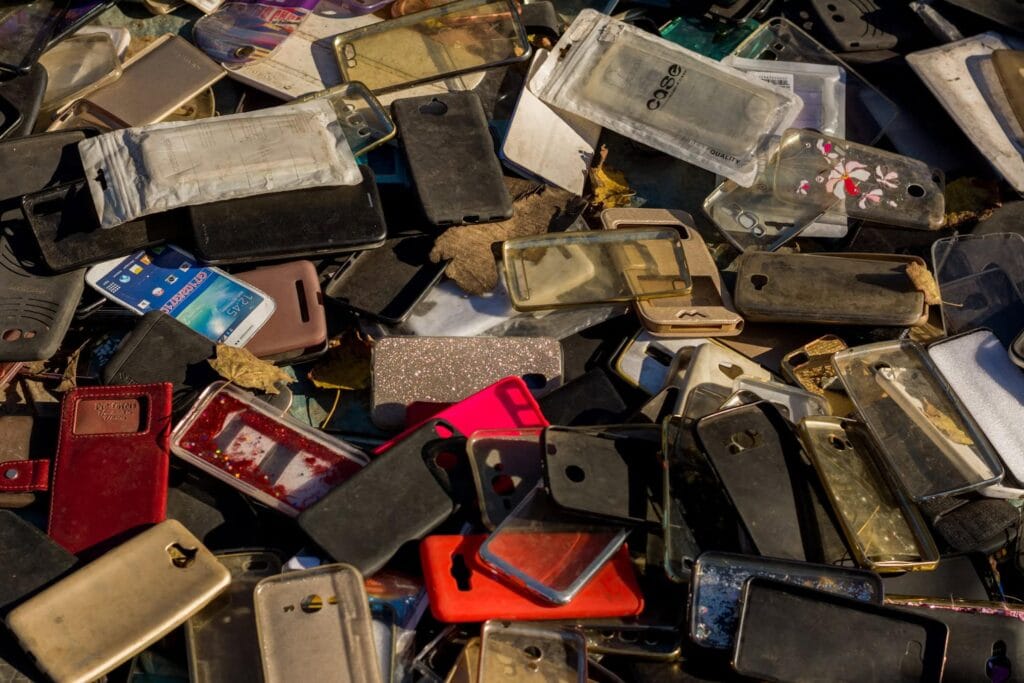
This shift highlights how even small consumer accessories are becoming part of broader circular product systems.
What Are Compostable Phone Cases?
A compostable phone case is made from plant-based and biodegradable materials that can fully break down in composting conditions. Unlike traditional plastic cases that persist for decades or longer, these materials are designed to break down within controlled composting environments.
It reflects a broader shift toward circular design, where products are created to re-enter natural systems rather than ending as waste.
The underlying innovation in compostable phone cases lies in their material science. Most are crafted from biopolymers blended with natural fibers like flax straw, bamboo, or cornstarch.
Companies like Pela Case and Wave Case have been early pioneers in this movement. They have built brands around combining material innovation with functional and aesthetic product design.
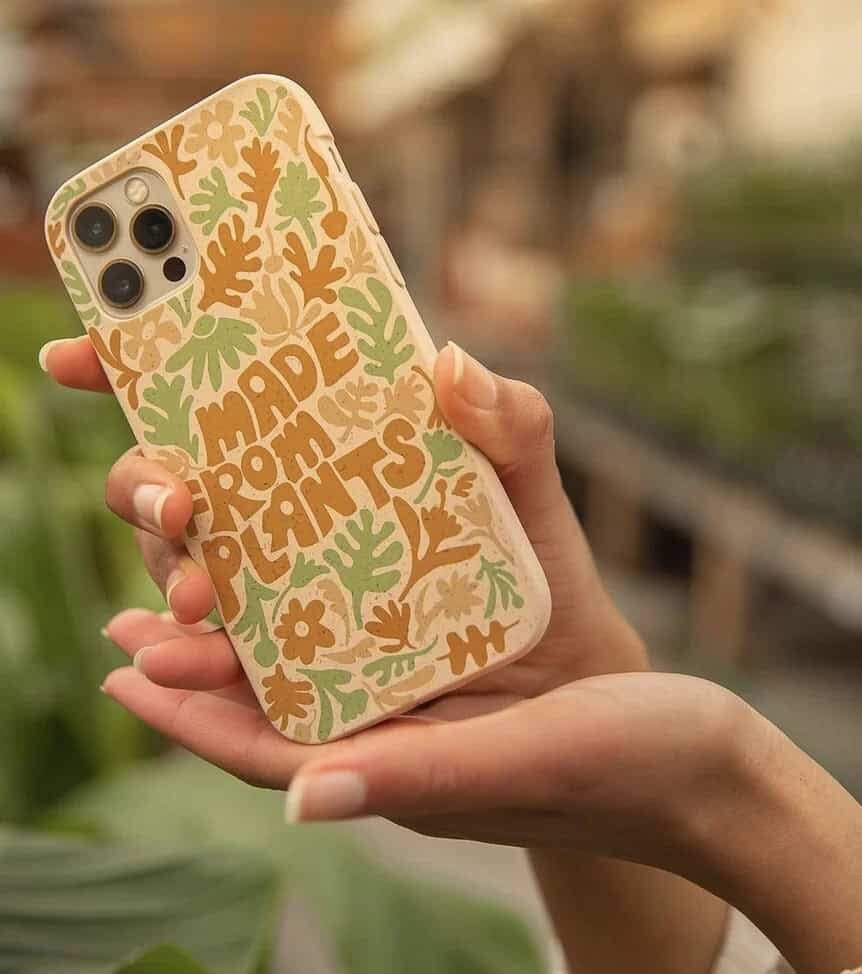
The most famous example comes from Pela Case, which uses its proprietary Flaxstic blend, a mix of flax straw waste and biopolymer elastomers. It’s flexible, durable, and 100% compostable.
Other notable players include:
- EcoBlvd – known for bright designs made from plant-based materials.
- Woodcessories, which uses wood and bio-based polymers.
- Popsicase, made from PPLA, a renewable polymer derived from plants.
- Tallpine Cases, featuring wood fiber blends with a minimalist touch.
While material compositions vary across brands, the underlying goal remains consistent, delivering functional performance while reducing long-term environmental impact through material design.
How Compostability Works
Compostable phone cases are designed to break down within 6 to 18 months under composting conditions. Some are home-compostable, while others require industrial composting facilities where higher temperatures speed up the process.
In home composting systems, these materials break down when exposed to moisture, microbial activity, and regular aeration, similar to organic waste streams.
When properly composted, these materials turn into water, carbon dioxide, and organic matter that enriches the soil. The process results in no toxic residue.
Certifications such as EN 13432, ASTM D6400, and OK Compost are used to verify compostability under defined conditions.
You can read more about these global composting standards on the European Bioplastics Association.
This shift reflects how product design is moving from durability alone to lifecycle responsibility.
Environmental Impact
The numbers speak volumes.
Compostable phone cases generate up to 80% less solid waste, use 34% less water, and emit 30% less CO₂ during production compared to regular plastic cases.
For companies, this creates a clear differentiation opportunity where sustainability is embedded into the product, not just marketing.
Pela Case’s Impact Report reveals that their take-back and recycling programs have kept over 48 million plastic bags’ worth of waste out of landfills and oceans.
By returning to the soil or being upcycled, these cases reduce dependence on petroleum-based plastics and help cut down on ocean microplastic pollution, a massive win for both people and the planet.
Operational Limitations and Tradeoffs
Despite their advantages, compostable phone cases come with operational and product-level tradeoffs that businesses need to consider.
- Compostable cases typically come at a higher price point, often between $40 and $60.
- Durability can vary depending on material composition, particularly under high-impact usage.
- Not all are home-compostable; some require industrial conditions.
- If tossed into a landfill, they won’t decompose properly due to the lack of oxygen and microbial activity.
This reflects a broader tradeoff in circular product design, where sustainability, durability, and cost must be balanced carefully for long-term adoption.
Biodegradable vs Compostable Materials
This is one of the most common misconceptions.
All compostable products are biodegradable, but not all biodegradable products are compostable.
Biodegradable simply means it breaks down eventually, sometimes over decades, and may still leave behind toxins or microplastics.
Compostable, on the other hand, means it breaks down quickly and completely under composting conditions, leaving behind nutrient-rich soil with zero harmful residue.
In practice, certified compostable labels are used to distinguish materials that meet defined decomposition standards.
Market Impact and Certifications
Compostable phone case brands are leading the way in responsible business practices.
Companies like Pela are B Corp certified, 1% for the Planet members, and Climate Neutral Certified, proving their entire operation, from materials to manufacturing, meets high ethical and environmental benchmarks.
And they’re tackling a serious issue: according to UNEP, less than 5% of plastics are recycled globally. Compostable materials present a scalable, eco-friendly alternative in a world drowning in plastic waste.
These certifications are not just labels, they act as verification systems that allow companies to communicate material integrity and lifecycle claims with credibility. As regulations around greenwashing tighten globally, such third-party validation is becoming essential for market trust.
The Business Potential Behind Compostable Phone Cases
Compostable phone cases are not just an eco-friendly alternative, they represent a shift in how consumer products are designed, sold, and recovered. Instead of a linear model where products are used and discarded, these businesses are building around circular systems where materials return to the ecosystem.
This represents a transition from ownership-based consumption to lifecycle-managed product systems.
One of the biggest opportunities lies in private labeling and brand building. Many manufacturers now offer compostable materials at scale, allowing startups to enter the market without heavy R&D investment. This lowers the barrier to entry while still enabling strong sustainability positioning.
Another key opportunity is in building closed-loop systems. Brands that introduce take-back or composting programs can control the product lifecycle beyond the point of sale. This not only strengthens environmental impact but also creates long-term customer engagement.
There is also growing room for differentiation through material innovation and storytelling. Consumers are increasingly interested in where products come from, how they are made, and what happens after use. Companies that can communicate this clearly gain a competitive advantage.
The Consumer Shift That’s Driving Change
The move toward compostable phone cases is part of a larger wave where sustainability is becoming mainstream.
A report from Deloitte reveals that 46% have purchased at least one sustainable product or service in the past year, highlighting a growing trend towards eco-friendly choices worldwide.
While cost concerns have slightly affected adoption rates, the data demonstrates that sustainability is an increasingly important factor in everyday buying decisions.
For businesses, this shift signals more than demand, it reflects a structural change in how purchasing decisions are made. Sustainability is increasingly becoming part of product evaluation, influencing not just brand perception but conversion and retention.
Disposal & End-of-Life
The value of compostable products lies in their controlled end-of-life process.
When directed to industrial composting systems, these materials can break down within months under controlled conditions.
Brands like Pela offer take-back programs that allow products to be returned for proper recycling or composting in regions where local infrastructure is limited.
Improper disposal, such as sending these products to landfills, limits their ability to decompose effectively.
For businesses, this highlights a key dependency, circular product success is directly tied to access to composting infrastructure and user participation.
What This Means for Circular Product Businesses
Circular product businesses are not just redesigning materials, they are redefining how products are created, used, and disposed of.
Compostable phone cases show that sustainability is shifting from branding to product-level innovation. Instead of relying on messaging alone, companies are embedding environmental responsibility directly into the material and design of the product.
This also changes how businesses think about ownership and lifecycle. Products are no longer considered complete at the point of sale. Their end-of-life becomes part of the business model, requiring systems for collection, composting, or reintegration into natural cycles.
At the same time, this model introduces new operational requirements. Companies need to ensure supply chain transparency, maintain material certifications, and align with disposal infrastructure that may vary across regions. Without these systems, even well-designed circular products can fail to deliver real impact.
What this ultimately shows is a broader shift in consumer product markets. Sustainability is no longer an add-on feature. It is becoming a design constraint and a competitive advantage.
For businesses entering this space, the opportunity is not just to replace plastic with plant-based materials, but to rethink the entire lifecycle of the product from creation to disposal.
Products are no longer designed just to last, they are now designed to leave.