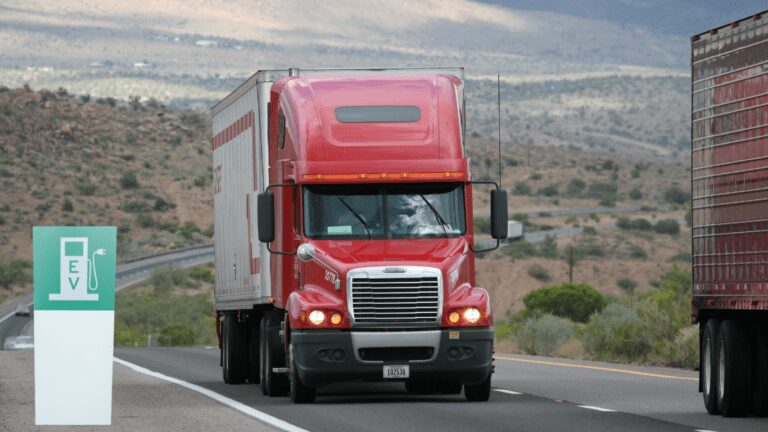


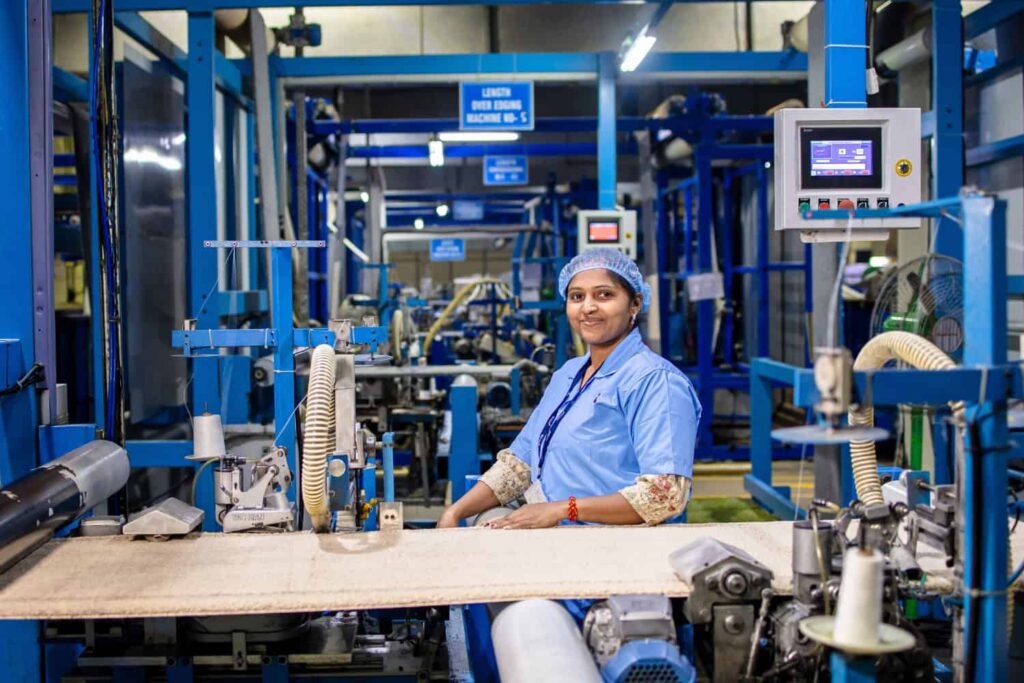
A knitwear unit in Tiruppur with 35 people on the books, which has never had a sustainability officer, is being asked by a European buyer for its carbon footprint, its water recycling logs and a labour audit. A steel exporter out of Gujarat is being given a spreadsheet asking for the BRSR Core metrics. A coffee grower in Kodagu is being asked for the GPS polygons of every plot.
This isn’t a niche problem. According to NITI Aayog’s January 2026 Roadmap for Green Transition of MSMEs, India’s MSMEs contribute nearly 30% of GDP, 45% of manufacturing output and 46% of exports. They also consume over 25% of the country’s industrial energy. When the buyers down the chain require emissions data, the whole chain feels it.
The standard advice is to hire consultants or build an ESG team. Aditya Garodia, MD of Kolkata-based Corona Steel, told Down To Earth that compliance with European carbon standards and certification could run from ₹50 lakh to ₹1 crore, depending on capacity. Other estimates are much lower, so that would be the upper end for a small unit that’s still not something you can afford.
So what are the MSMEs that keep their orders actually doing? Mostly four things:
- Turning electricity bills and GST invoices into emissions data
- Sharing one audit across several buyers
- They couldn’t fund it on their own, so they sought trade-body support.
- Paying for efficiency upgrades through subsidies, zero-capex solar and buyer support
None of it is evenly distributed. In SIDBI and Dun & Bradstreet’s Q2 2025 SPeX survey, 65% of MSMEs named lack of capital as a barrier, rising to 75% among younger firms.
Here’s how the workarounds work, where they’re useful, and where they ultimately fall down.
A voluntary rule can still arrive as a purchase order.
On paper, the pressure was off. SEBI’s March 2025 circular made value chain ESG disclosures voluntary for the top 250 listed companies from FY 2025-26. Assessment and assurance of that data would remain voluntary from FY 2026-27, and “value chain” was restricted to partners that individually account for 2% or more of purchases or sales.
Brussels did the same. The Omnibus I Directive (in force since 18 March 2026) limits mandatory CSRD reporting to EU companies with more than 1,000 employees and over €450m in turnover. Suppliers with 1,000 employees or fewer can opt out of data requests beyond the scope of the EU’s voluntary SME standard.
So has the pressure gone? Not really.
Requirements now come via purchase orders rather than statutes. SEBI’s glide path will see mandatory BRSR Core assessment or assurance extended to the top 1,000 listed companies in FY 2026-27. The companies will still have to account for their supply chains, and Scope 3s will generally be based on spend estimates. A supplier that can provide measured plant data will have something their ledgers can’t.
Exporters have less room. CBAM entered its definitive phase on 1 January 2026. Importers will start buying certificates from February 2027 and will make their first declarations by 30 September 2027. (According to the European Commission)
The EU importer has the legal liability. The cost will often work its way back up the chain through lower prices, renegotiated contracts, or lost orders.
The numbers show why buyers are nervous:
- The Global Trade Research Initiative estimated that India’s steel and aluminium exports to the EU fell by 24.4% in FY25 (before any certificate payments). They also warned of 15-22% price pressure once the payments do start.
- A June 2026 ICRIER (Indian Council for Research on International Economic Relations) working paper looks at a 23.94% fall in iron and steel exports to the EU at a carbon price of $86.01/tonne.
- Coal-based routes make up over 80% of Indian steel output, which puts the sector average near 2.55 tonnes of CO2 per tonne of steel, against a global average of about 1.85.
Those are estimates, not forecasts. They’re still the numbers your buyer’s finance team are looking at.
The India-EU trade deal (concluded 27 January 2026, unsigned as of mid-October) does not exempt Indian exports from the CBAM. The EU is also considering extending CBAM to a range of downstream goods (i.e. fabricators and component makers), not just steel producers. The final rules are still being negotiated.
Farm and forest products have their own clock. The EU Deforestation Regulation comes into force on 30 December 2026 for large and medium operators and on 30 June 2027 for micro and small operators. EU buyers of Indian coffee, rubber, and wood will demand plot-level origin information from their suppliers.
Your electricity bill is the first bit of the emissions report.
The hardest part isn’t the maths. It’s finding the data.
Chandan Steel (Gujarat-based stainless steel producer) exports around 40,000 of its 60,000 tonnes per annum. It has no compliance department. It melts scrap, which keeps its emissions at around 1 tonne of CO2 per tonne of steel (well below the sector average), and it is targeting 0.4 to 0.5. Director Chaitanya Chandan notes that several smaller European buyers (those buying a container or two) have already gone.
Binayak Hi-Tech Engineering in West Bengal is the other side of the coin. They export 90% of what they make. Atul Jhunjhunwala, their MD, tells us they wrote to their electricity supplier for 8 to 9 months and never got the grid emissions data that their customers required. He makes the point that only a portion of a product’s footprint is actually in your factory. The rest is down the supply chain.
That’s the real constraint for the vast majority of small manufacturers. If the supplier can’t provide verified data, then you start with published factors (the Central Electricity Authority’s grid emission factor is the most common example), and the source bills are your evidence.
The maths is pretty straightforward for a factory accounts person. For example, a forging unit uses 1800 kWh of electricity and 2 scm of piped gas to make 6,000 tonnes. With a grid factor of 0.675 kg CO2/kWh and a gas factor of 2.05 kg/cubic metre, that’s 1,215 tonnes plus 410 tonnes, for a total of 1,625 tonnes. Divided by output, that’s 0.271 tonnes per tonne. A 2200 tonne order would therefore be around 596 tonnes.
Check the current factors before you copy those numbers, because grid factors get updated and this is gate-to-gate. A buyer will also want the footprint of the steel you bought in.
Invoice-driven carbon tools automate the same steps by reading your electricity bills, fuel invoices, purchase registers and e-way bills. Several Indian providers are now targeting the MSME space. Examples include Climes, which offers automated emissions calculation from GST and utility data. Carbon Minus provides dashboards and footprint reports tailored to SME sectors. When choosing a provider, MSMEs should look for features like BIS-compliant reporting formats, secure handling of commercial data, and the ability to export reports in formats accepted by common buyer platforms.
Two questions to ask before you sign. Does the output conform to the method that your buyer’s verifier will use? Can you provide a product-level footprint without revealing your tariffs and margins? Down To Earth’s reporting notes that manufacturers worry about disclosing commercially sensitive supplier and cost information.
Do the audit once, send it to every buyer
Metal fabricators are up against carbon spreadsheets. Apparel, home textile, and consumer goods suppliers are battling audit fatigue as they face overlapping social and environmental audits from multiple overseas buyers in the same quarter.
The solution is portable evidence. A Sedex SMETA audit can be shared with multiple buyers via the Sedex platform. The same applies to an EcoVadis rating (one rating scorecard for multiple customers who request it). In the garments sector, you can combine the Social & Labour Convergence Programme with Sedex to let an exporter build a single social dataset for multiple European retail customers.
Sequencing matters as much as credentials. C S Textile, a small knitwear and home textile exporter out of Tiruppur, is a good example of how to do it:
- Start with a funded baseline. Fairtrade India and the Centre for Social Markets’ Sustainability Clinic (both funded by the EU SWITCH-Asia programme) will work with selected Tiruppur MSMEs to help them assess their environmental performance. This replaces a consultant retainer.
- Stack credentials that use the same evidence. Your water, energy and worker records will feed multiple certifications.
- Run one shared audit. A single SMETA audit can serve multiple buyers.
- Fix the fast payback items first. Compressed air leaks, LED lighting, and water metering are all low-cost and will deliver a quick return.
The cost logic is pretty straightforward. Don’t start with the most expensive standard. Start with what your biggest buyers will accept, then fund the deeper certification with the orders that the first step unlocks. Cost varies enormously by scope and site, so you need quotes before you work out the sequence.
What a cluster can fund that a single factory can’t
Tiruppur found out the hard way. After pollution of the Noyyal River led to court-ordered shutdowns of dyeing units in 2011, small-job workers couldn’t afford private treatment plants.
Instead, they built common effluent treatment plants with central and state subsidies. Tiruppur now proudly describes itself as the world’s first textile cluster to achieve 100% zero liquid discharge, recycling well over 100 million litres of water per day. A 30-person factory in that cluster can now inherit an export-grade environmental profile it could never have achieved on its own.
Clusters can also fail the audit test. Panipat in Haryana (famously one of Asia’s largest textile recycling clusters) is circular in practice, but very difficult to document. Recycling is not the same as auditable ESG, and buyers are very aware of the difference.
Trade bodies are increasingly acting as shared helpdesks. Some export promotion councils (EEPC India being a case in point) have started engaging CBAM service providers, removing the need for members to go out and assess the quality of the advice available. The Tiruppur Exporters’ Association has run ESG initiatives with Fairtrade India and the Centre for Social Markets, including a series of workshops with buyer reps. Before you hire anyone, check with your council or association to see what they’re already doing.
Make the upgrade pay for itself.
Electricity is the most expensive controllable cost. NITI Aayog’s roadmap sets average industrial tariffs across the ten major states at ₹8.67 per unit, rising to ₹10.63 in Maharashtra and ₹10.32 in Tamil Nadu. Electricity accounts for 41% of MSME sector emissions. NITI Aayog has estimated that efficiency alone can deliver a 27% reduction in sector emissions, with green electricity delivering an additional 22-26%.
A BEE/SIDBI case study from 2015 looks at a foundry in Kolhapur that invested ₹83 lakh in efficiency improvements (including induction furnaces) and achieved savings of ₹73 lakh per year. Payback was therefore about 14 months. It’s an older case, so use it as a guide to scale rather than as a promise.
Schemes worth checking first
| MSME Sustainable (ZED) Certification | Fee subsidy of 80% for micro, 60% for small and 50% for medium units on Bronze (₹10,000), Silver (₹40,000) and Gold (₹90,000) certification. Free for women-owned MSMEs | Any Udyam-registered unit that needs a credible baseline | Nearly all certified units hold Bronze, so Silver or Gold does more to set you apart |
| ADEETIE (Assistance in Deploying Energy Efficient Technologies in Industries & Establishments) | 5% interest subvention for micro and small units, 3% for medium, on loans of ₹10 lakh to ₹15 crore for energy-efficiency projects, plus audit and project-report support | Units in the 60 Phase, clusters across 14 energy-intensive sectors | You must achieve and sustain at least 10% energy savings to receive the subvention |
| SIDBI green finance | Lending schemes covering energy efficiency, renewables, e-mobility, circular economy and adaptation | Units with a bankable project and an operating history | Terms and eligibility change, so confirm current conditions with SIDBI |
| TRACE (Niryat Disha export support) | Financial support for international testing, inspection and certification | MSME exporters | Check whether your specific certification qualifies |
Reports from 2026 indicate the government is also looking at reimbursing part of the CBAM certification costs for small exporters. Check with your Export Promotion Council before budgeting for it.
Government support schemes and incentives for exporters are regularly updated, and new assistance measures are often announced with little notice. To avoid missing out, MSMEs should make it a routine to check the official websites of relevant ministries, such as the Ministry of MSME, state government industry departments, and the portals of Export Promotion Councils. Subscribing to industry association newsletters, setting up Google Alerts for ESG compliance updates, and participating in trade body webinars can also help stay informed about new schemes and deadlines.
Two financing shifts lower the entry barrier. The revised Udyam limits, effective 1 April 2025, moved some firms into the micro tier, which can lift their ZED subsidy from 60% to 80%. And if you’d rather not borrow, rooftop solar under a power purchase agreement means a developer owns the system, and you pay per unit, often with no upfront spend. Energy service company (ESCO) contracts do the same for efficiency retrofits, paying for them out of the savings. (Read the contract term and exit clauses closely on both)
Some large buyers also train or fund their suppliers directly. Ask your anchor customer what support exists before you pay for anything yourself.
Where this still breaks down
Even with all of this, meeting ESG requirements without a compliance team leaves three gaps.
Data you don’t control. Binayak’s eight-month wait for grid data isn’t unusual. Most product footprints depend on steel, components and electricity from others. Without verified inputs, default values can apply, and defaults tend to be unflattering.
Rules that keep moving. Garodia told Down To Earth that bottlenecks may persist for the first 2 to 3 years, with the industry working it out by around 2028. Meanwhile, some of Binayak’s European customers asked to hold orders until CBAM was clearer. The downstream CBAM extension is unsettled. India’s domestic carbon market had not begun issuing credits as of mid-2026 (According to Business Today), so domestic decarbonisation spend can’t yet be offset against EU charges.
Verification is getting stricter. As BRSR Core assessment expands to the top 1,000 listed companies in FY 2026-27, and as importers file binding CBAM declarations, figures need a paper trail. A policy letter won’t hold up. An electricity bill and a fuel invoice will.
Start with what you already file.
The MSMEs holding on to orders aren’t copying multinational compliance departments. They meter power and water. They turn the GST and utility records they already keep into emissions numbers. They share one recognised audit across buyers, and they use subsidies to cut their highest operating costs.
If you’re a buyer mapping who can help, such as carbon accounting providers, verifiers or energy efficiency specialists, NatNavi Company Intelligence organises sustainability companies by what they actually do. If you’re a supplier, here are the first steps to get started on ESG compliance.
1. Collect your last three months of electricity bills and fuel invoices.
2. Gather your GST records and utility bills for your manufacturing site.
3. Make a simple list of your main raw material suppliers and their contact details.
4. Review any existing audit reports or certifications you may have completed in the past 2 years.
5. Identify your main buyers and check if they have sent any specific ESG, carbon, or social responsibility requirements.
This will give you a clear starting point to estimate your emissions, identify data gaps, and prepare for buyer requests. Even small steps like organising these bills and records can help you understand where you stand and what support you might need next. Once your records are in order, the immediate next step is to reach out to your relevant trade association or export council for guidance, explore available carbon accounting tools to generate initial calculations, or request quotes from local consultants or service providers. Taking these proactive steps can help maintain momentum and move your compliance process forward.